


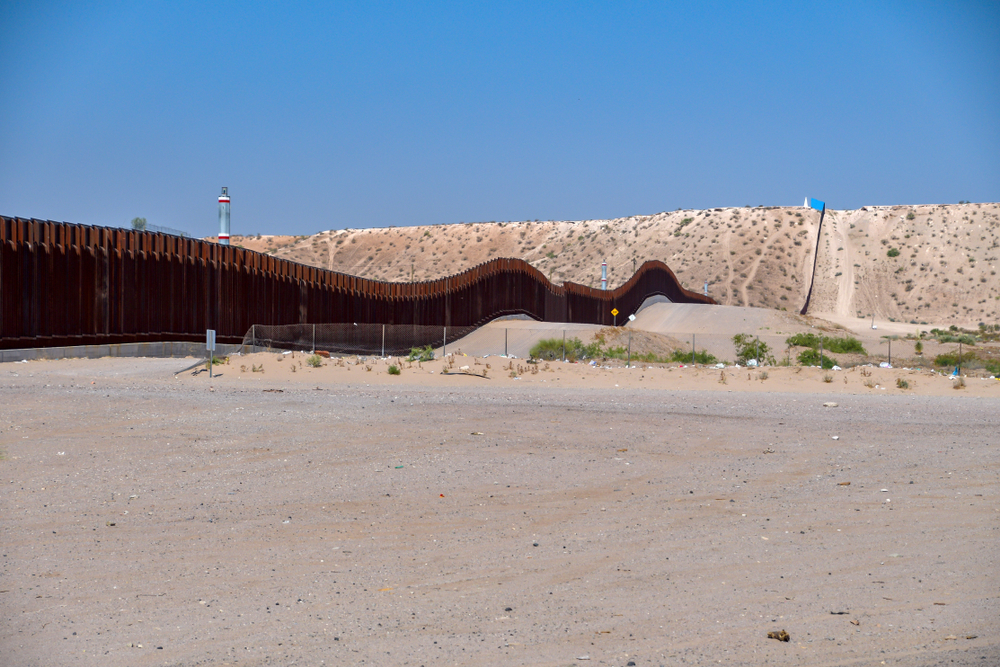
A Corridor Under Threat
Borderlands wildlife advocates already worried about renewed wall construction now face a second barrier plan.
Federal planners intend to add another row of 30-foot steel bollards along the border.
Workers space the bollards four inches apart, blocking large mammals while allowing some smaller species through.
Crews began erecting the first wall in September across the San Rafael Valley south of Sonoita.
Protesters gathered to defend cultural and ecological connections across a critical migration corridor.
Jaguars and ocelots rely on this route between the Huachuca and Patagonia mountain ranges.
Officials then announced plans for a second parallel wall.
The new wall would extend there and across most of Arizona’s border with Sonora.
Builders plan to place the second wall across a graded road when terrain allows.
Wildlife researchers continue documenting jaguars moving north from Mexico into Arizona.
Observers confirmed a new jaguar sighting in November.
Myles Traphagen of Wildlands Network called the plan deeply alarming.
He warned that the design turns borderlands into prison-like landscapes.
Russ McSpadden of the Center for Biological Diversity labeled the proposal outlandish.
Enforcement Zones and Expanding Infrastructure
U.S. Customs and Border Protection said the dual walls serve enforcement and safety purposes.
Spokesman John B. Mennell said secondary barriers protect agents and deter illegal crossings.
CBP’s Smart Wall Map outlines plans for roughly 300 miles in Arizona.
That distance equals about 80% of the state’s southern boundary.
Authorities exempt the Tohono O’odham and Cocopah reservations from wall construction.
Officials plan to deploy surveillance technology and vehicle barriers instead.
Mennell declined to answer questions about costs, timelines, or wildlife gates.
He said planners continue updating the Smart Wall Map.
The map lists secondary walls by segments, including a 56.6-mile stretch.
That zone runs from the Pajarito Mountains through the San Rafael Valley to the Huachucas.
Both mountain ranges have supported wildlife movement until now.
Scientists believe jaguars and ocelots used these corridors to reach Arizona.
Mennell described the project as a Smart Wall enforcement zone.
He said the system combines bollards, roads, cameras, lighting, and detection technology.
Officials typically design enforcement zones about 150 feet wide.
That width extends beyond the 60-foot Roosevelt Reservation boundary.
Asked about land authority, Mennell said agencies remain in the planning phase.
Trails, Wildlife, and a Changing Landscape
The new walls will block access to the Arizona Trail’s southern terminus.
Hikers will no longer reach the border monument at the trail’s end.
Arizona Trail Association director Matthew Nelson explained the new reality.
Hikers will stand on Coronado Peak and look across two walls into Mexico.
Crews already installed concertina wire near the monument.
Nelson requested a meeting with Homeland Security officials after that installation.
Officials told him the trail will now end about 200 feet from the border.
They said lighting will remain unlikely in the national memorial area.
Nelson said the change undermines the emotional payoff for long-distance hikers.
He described months of wilderness ending in a construction zone.
The enforcement zone roadway also creates hazards for small animals.
Some species may squeeze through bollards or small wildlife gaps.
Nelson warned that roads and barriers will degrade the natural environment.
He said the project will permanently alter the trail experience.
He expects erosion from monsoon rains to undermine the wall’s foundations.
Steep Huachuca slopes will accelerate that damage.
Nelson predicted the collapse will reveal wasted public resources.
Congress allows border construction without environmental law compliance.
Lawmakers granted agencies authority to waive protections like the Endangered Species Act.
Administrations have used those waivers to advance wall construction.
