


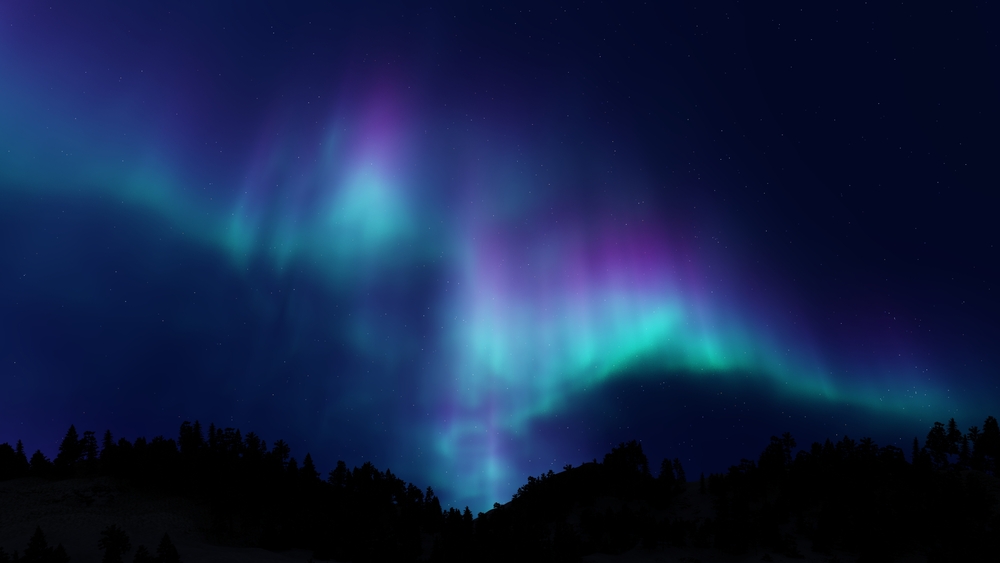
From creation myths to political omens, cultures across the world have long tried to explain the dramatic dance of the Northern Lights. These vivid displays of colour have inspired awe, fear, and imagination for millennia.
Visions Across the Sky
In the aftermath of the Jacobite uprising in England in 1716, strange lights streaked across the night sky. Witnesses described them as “pure flame,” “like the pipes of an organ,” and even a “shower of blood.” Interpretations ranged from giants wielding flaming swords to armies clashing in the heavens. The meaning depended heavily on political and religious leanings. During the Jacobite Rebellion, deposed Catholic Stuarts tried to reclaim the English throne from the Protestant monarchy. Some viewed the lights with anxious amazement, while others read in them the fate of nations and the fall of kingdoms.
In Finnish Lapland, people saw the lights as the flick of an arctic fox’s tail through a snowdrift, a story embedded in the Finnish name revontulet, or “fire fox.”
Today, scientists know that the aurora borealis is caused by solar activity. Energetic particles from the Sun interact with Earth’s magnetic field, creating shimmering patterns visible at high latitudes and occasionally much farther south during geomagnetic storms. Recent solar activity has allowed the northern lights to appear across parts of the UK and the US.
Ancient Witnesses of the Northern Lights
Written records and oral traditions reveal that humans have been fascinated by aurora for thousands of years. Some stories belong purely to myth, while others served practical or spiritual purposes. In Norse cosmology, the rainbow bridge Bifröst, connecting mortals with the realm of the gods, may have reflected observations of aurora.
Scholars once believed the earliest record came from China in 193 BCE, when a Western Jin emperor wrote that “the sky opened in the northeast.” New research suggests even older references exist. Ancient Greek texts, including Aristotle’s Meteorologica around 330 BCE, describe night-time phenomena resembling burning flames, moving torches, and stars. Babylonian astronomical diaries from 567 BCE mention a “very red rainbow” in the east, and Assyrian cuneiform tablets predate these records with references to “red glow” and “red cloud,” often interpreted as omens for kings.
A 3,000-year-old text on bamboo slips, the Bamboo Annals, describes a “five-coloured” night event, possibly linked to extreme solar activity in the 10th century BCE. Researchers cross-reference these historical accounts with scientific data on past solar activity and Earth’s magnetic field to confirm auroral sightings.
Fire, Blood, and Death in the Sky
In regions where aurora appear frequently, such as Iceland, Greenland, northern Scandinavia, Alaska, Canada, and northern Russia, the lights hold spiritual significance. Traditions vary from creation myths to weather forecasting, shamanic practices, and ancestor worship. Indigenous Arctic peoples intertwine spiritual understanding with practical observation, preserving stories that guide behaviour and moral lessons.
Death and struggle often feature in these tales. Some Sami communities warned against teasing the aurora and advised women to cover their hair to avoid entanglement in its rays. Alaska’s Indigenous people still pass down stories cautioning children about the Northern Lights, sometimes portraying them as playful or dangerous spirits.
The aurora australis, seen in the far south, also inspires fear. In First Nations traditions, they symbolize blood, fire, and death. Observing them often required ritual knowledge, restricted to initiated elders. Researcher Duane Hamacher notes that in some communities, aurora are considered taboo, only to be interpreted by the knowledgeable.
Shimmering Dancers and Scientific Names
The modern names aurora borealis and aurora australis date to the 17th century. Galileo Galilei first used the term in Discourse on the Comets (1619), linking Aurora to the Roman goddess of dawn and Boreas to the Greek god of the North Wind. The southern counterpart derives from Auster, Roman god of the South Wind.
Local names reveal cultural perception. In Finnish Lapland, revontulet tells of a fox’s tail scattering sparks across the snow. In Shetland, the lights are the “joyful mirrie dancers,” a reference to their shimmer. The Sami word guovsahasat translates to “the lights you can hear,” reflecting occasional reports of sound alongside the visual display. For these communities, sound and sight are inseparable.
In areas where aurora appear sporadically, observers often project political or spiritual meaning. During the American War of Independence, Welsh poet Hugh Jones interpreted sightings as divine signals urging Britain to uphold Protestant faith. After the 1716 Jacobite sightings, astronomer Edmund Halley recorded the “surprising appearance” of lights, attempting to explain them scientifically. Later sightings during the 1745 uprising inspired Welsh poets to declare them signs of Christ’s power. Researcher Cathryn Charnell-White highlights how people impose spiritual and political significance on natural phenomena during times of upheaval.
From Stories to Science
Auroral stories reveal cultural attitudes toward natural phenomena and trace humanity’s gradual understanding of them. Observed auroral sounds, long considered psychological, are now thought to result from static charge. Modern myths persist. Historian Robert Marc Friedman notes a story claiming Japanese tourists travel to Scandinavia for conception under the Northern Lights. The tale may be fabricated, yet it persists, reinforced by tourism marketing.
Scientists continue to explore the aurora and how communities perceive it. Many indigenous tales remain protected or may have been lost as languages vanish. Auroral history reminds us that imagination, observation, and science coexist, shaping how humans interpret the skies.
