


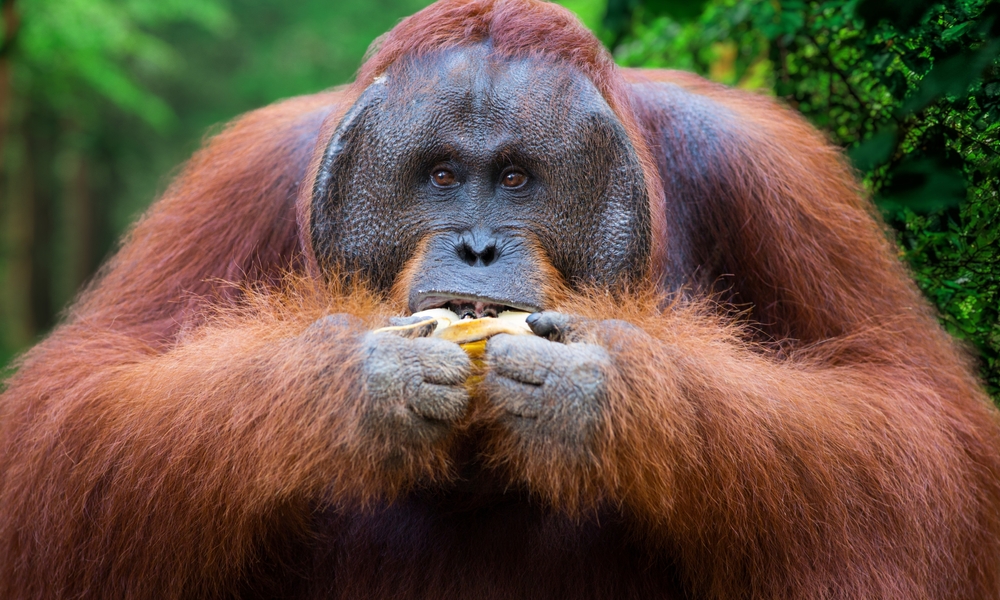
An unusual silence now haunts the forests of north Sumatra in Indonesia, alarming wildlife experts and conservationists. In the mountainous Batang Toru forests, teams had always seen and heard the Tapanuli orangutans, the world’s rarest ape. Since Cyclone Senyar struck Sumatra on 25 November, conservation workers report the critically endangered primates have not been spotted. Their absence raises fears that floods and landslides swept them away, though some hope the animals fled to safer locations. A recently discovered carcass, believed to be an orangutan, intensifies concerns. Fewer than 800 Tapanuli orangutans remain, and any loss could gravely threaten the species’ survival.
Tragedy Found Amid Debris
Humanitarian teams discovered the dead animal semi-buried in mud and logs in Pulo Pakkat village, central Tapanuli district, earlier this week. Deckey Chandra, who works with the team and previously focused on Tapanuli orangutan conservation, described the scene. He said the carcass looked defaced, likely by sludge and fallen logs. Chandra had seen several human fatalities in recent days but noted this was the first wildlife loss he encountered. “They used to eat fruits here,” he said. “Now it seems to have become their graveyard.” Chandra shared photographs of the carcass with local news outlets, showing the grim aftermath.
A Species on the Edge
Conservationists confirm the animal likely belongs to the Tapanuli orangutan species, discovered in 2017. The other orangutans are Bornean and Sumatran species. Cyclone Senyar caused more than 900 deaths from floods, landslides, and extreme rainfall. Hundreds remain missing, and many Sumatran villages lie destroyed. Professor Erik Meijaard, managing director of Borneo Futures in Brunei, studies the disaster’s impact using satellite imagery. He estimates 4,800 hectares of forest suffered landslides, with cloud cover suggesting destruction may reach 7,200 hectares. He believes roughly 35 orangutans inhabited these areas, and complete fatalities would deliver a devastating blow to the population.
Forests Wiped Out
Satellite imagery shows bare soil where primary forest once thrived. Large forest patches disappeared entirely, illustrating the disaster’s intensity. Professor Meijaard, who examined Chandra’s photographs, said the carcass’s face was stripped of flesh. “Even powerful orangutans cannot survive massive landslides,” he warned. Panut Hadisiswoyo, founder of the Orangutan Information Centre, said the carcass likely signals that some Tapanuli orangutans could not escape rushing water and mudslides. Pictures of a Sumatran elephant being swept away by floods in Aceh recently circulated widely, highlighting the broader environmental crisis.
Primates Face Unprecedented Risk
Sumatra hosts endangered species like tigers, elephants, and rhinos, but experts fear for primates like orangutans and gibbons. Cyclone Senyar caused massive landslides across Tapanuli’s mountainous forests, destroying key habitats. Some locals suggest primates sensed the storm and fled, but researchers caution that orangutans cannot always escape. Professor Serge Wich of Liverpool John Moores University explained that during heavy rains, orangutans either shelter in trees or build makeshift leaf umbrellas. “By the time the storm ended, parts of their valleys had collapsed,” he said. “The consequences for the orangutans were inevitable.”
Research Centres in Ruins
The floods also devastated several orangutan research centres, including Ketambe, the world’s first orangutan research facility in Aceh. Dr Ian Singleton, scientific director of the Sumatran Orangutan Conservation Programme, said the centre now lies almost completely destroyed. He emphasized urgent rebuilding is necessary to continue protecting the forests and orangutans in the area.
