


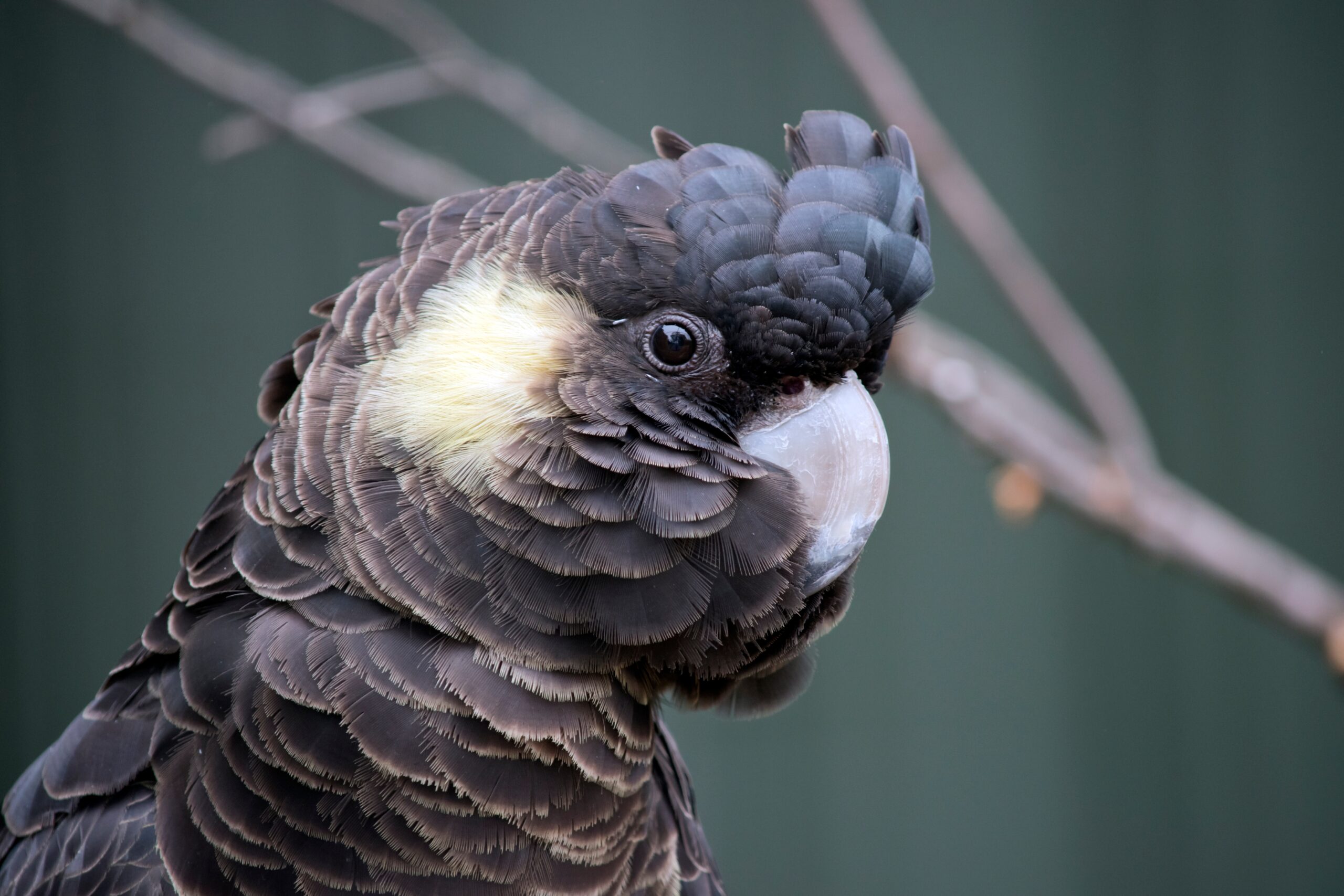
The continued destruction of Western Australia’s northern jarrah forests for bauxite mining could push the endangered Baudin’s black cockatoo to extinction, conservationists have warned.
“Baudin’s or bauxite – we can’t have both,” said Mark Henryon of BirdLife Western Australia, who has long campaigned for stronger protection of the species, describing it as the state’s “forgotten” black cockatoo. The Baudin’s, known for its white cheeks and distinctive squeaky call, uses its long, narrow bill to extract seeds from marri nuts without breaking them – a delicacy now growing scarce.
Once widespread, the species has declined by 90% in 40 years, and a bid last year to list it as critically endangered under state law was rejected due to “insufficient data”. Conservationists say its survival is now threatened by proposed mining expansions by Alcoa and South32, which would clear more than 14,000 hectares of the northern jarrah forest – a key winter feeding ground.
Baudin’s black cockatoos rely on centuries-old trees for nesting and roosting, but mining companies have long practised large-scale clearing to extract bauxite. “These tree hollows can take hundreds of years to develop,” said Matt Roberts of the Conservation Council of WA. “They can’t be rehabilitated or brought back at the pace the Baudin’s needs them to be.”
The state’s Environmental Protection Authority (EPA) received more than 59,000 submissions during public consultation on Alcoa’s proposals – the most in its history. BirdLife WA’s submission warned the plans would have “irreversible and catastrophic” consequences for the Baudin’s, Carnaby’s, and forest red-tailed black cockatoos, predicting the Baudin’s could become functionally extinct within 50 years if mining continues.
Alcoa maintains that its plans would affect less than 1% of the northern jarrah forest over 20 years and says mitigation measures will protect critical habitat. “Environmental factors should be responsibly managed in conjunction with development,” a company spokesperson said.
But for Henryon, the choice remains simple: “We have these birds flying around – they’re part of the south-west’s identity. Are we happy for them to just fade away? If we’re fair dinkum about this, we actually have to do something.”
