


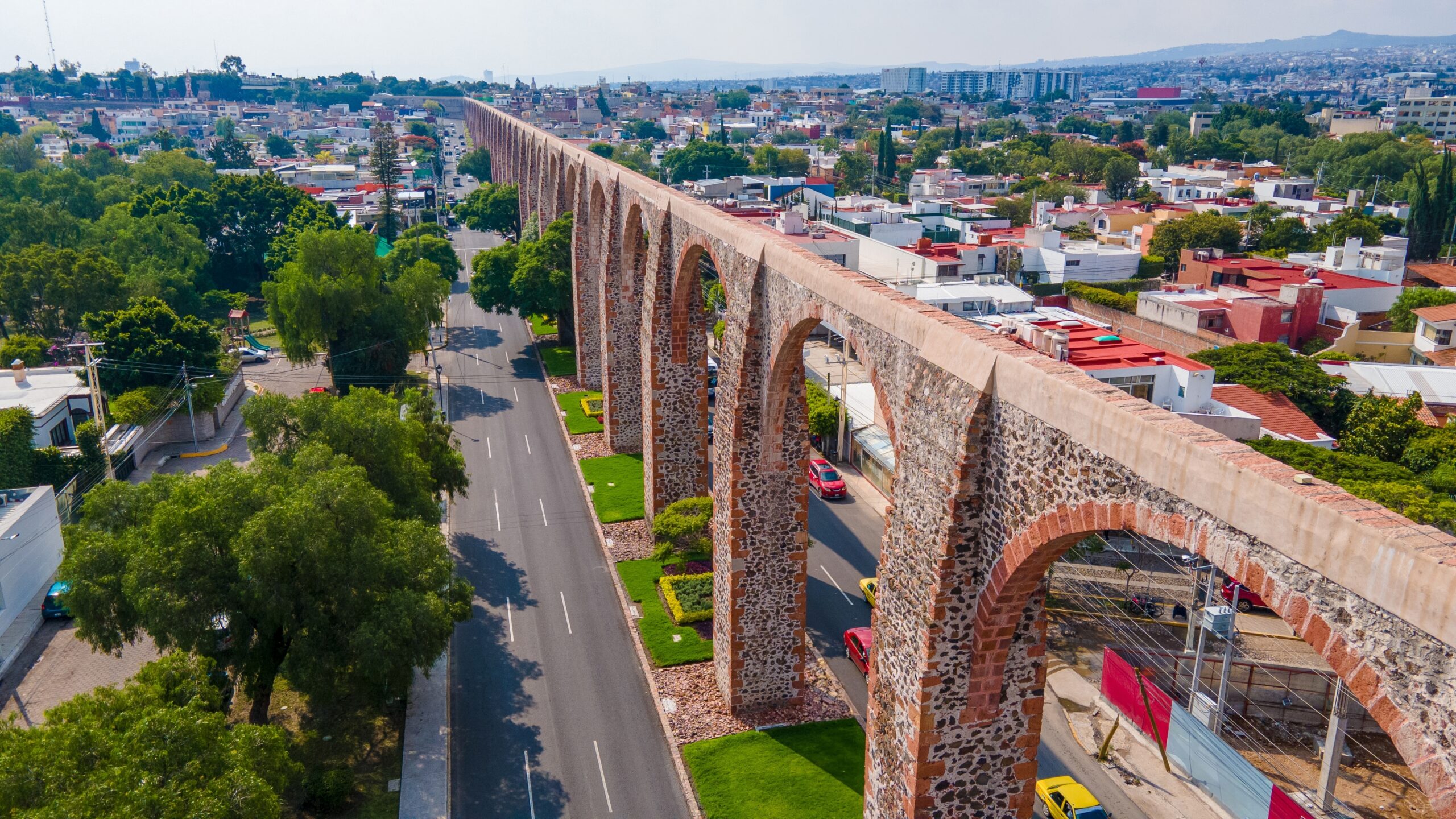
Located in the heart of Mexico, Querétaro enchants visitors with its colonial charm and famous stone aqueduct. But today the city and state carry another title: the capital of Mexico’s data centres.
Global companies like Microsoft, Amazon Web Services and ODATA have chosen Querétaro for their vast, warehouse-like buildings filled with servers. Nobody knows the exact number of centres, but dozens already exist and new projects keep rising.
Ascenty, the biggest data centre company in Latin America, operates two sites of about 20,000 square feet each. A third one is under construction. Analysts forecast over $10bn in investment linked to data centres will arrive in the state within the next decade.
Shaolei Ren, an associate professor of electrical and computer engineering at the University of California Riverside, explains the trend. “The demand for AI accelerates the construction of data centres at an unprecedented speed,” he says.
Why Querétaro attracts global tech giants
Querétaro sits at the crossroads of Mexico, connecting north, south, east and west. Its proximity to Mexico City, high-speed data cable access and government backing make it attractive.
“It’s a very strategic region,” says Arturo Bravo, Ascenty’s country manager for Mexico. “The municipality and central government support technology growth, offering favourable permits, regulations and zoning.”
But why would US firms pick Querétaro instead of staying closer to home? Professor Ren highlights the reasons. “Power grid constraints in the US push companies to seek available energy abroad. Land and energy are cheaper here, and policies are friendlier,” he explains.
Cooling servers consumes massive water
Data centres house thousands of servers that generate enormous heat. To prevent overheating, operators rely on heavy-duty cooling systems. Some centres use water evaporation, which works well but consumes vast quantities. A small site with this method may use 25.5 million litres of water yearly.
Others, like Ascenty, use closed-loop systems that circulate water through chillers. Microsoft, meanwhile, reported its three Querétaro centres rely on direct outdoor air cooling for most of the year. Only during hotter periods above 29.4°C do they use evaporative cooling.
For the fiscal year 2025, Microsoft’s sites consumed 40 million litres of water. That figure remains strikingly high. Across the industry, the numbers are even greater. Google’s 2025 sustainability report revealed its global water consumption rose 28% to 8.1bn gallons in one year.
According to the report, 72% of its freshwater use came from sources at “low risk of water depletion or scarcity.” But even indirect electricity production for these centres requires large amounts of water.
Drought-stricken locals fear for supplies
Last year Querétaro suffered its worst drought in a century, damaging crops and cutting water for households. Local activist Teresa Roldán says citizens asked for transparency about data centre water use, but answers never came.
“Private industries are prioritised in these arid zones,” she says. “We hear about 32 upcoming centres, but people need water more than companies. Authorities give water to private industries, while citizens receive lower-quality supplies.”
Another activist, Claudia Romero Herrara, founder of Bajo Tierra Museo del Agua, shares her concern. She avoids direct comments on the centres due to scarce information but stresses the state’s water crisis.
“This region already lacks enough water for basic needs. The priority must be human consumption, not economic expansion. For two decades public water policy has faced conflicts of interest,” she explains.
Querétaro’s state government defends its role. A spokesperson states: “Water is for citizen consumption, not for industry. The municipality cannot allocate water to any sector. That responsibility lies with the National Water Commission.”
Pollution concerns add pressure
Air quality adds another layer of concern. Data centres depend on diesel backup generators that release harmful pollutants. Professor Ren says: “The dangers of diesel pollutants are well known. A state of Washington study examined their serious impact.”
Bravo insists the companies respect regulations. “We operate under authorities’ terms. These ensure conditions remain acceptable for surrounding communities and public health,” he says.
A booming future despite worries
Despite criticism, construction continues. Ascenty plans more sites in the region. “Every few years a new centre appears. Growth will follow AI expansion,” Bravo predicts. “It’s a bright future for the industry.”
