


Storm Amy, the first named storm of the season, battered Scotland earlier this month. It tore down trees, cut power lines, and caused travel chaos. But experts say the storm’s most lasting damage may be underwater.
When the final homes got their power back, fish farm operator Mowi made a shocking announcement. About 75,000 salmon had escaped from a damaged enclosure in the Scottish Highlands.
The storm’s fierce waves ripped through netting at a pen at Gorsten farm on Loch Linnhe in Lochaber. What looked like a lucky break for the fish may become a disaster for Scotland’s rivers. Marine scientists and conservationists fear serious consequences for native salmon.
The danger of escaped salmon
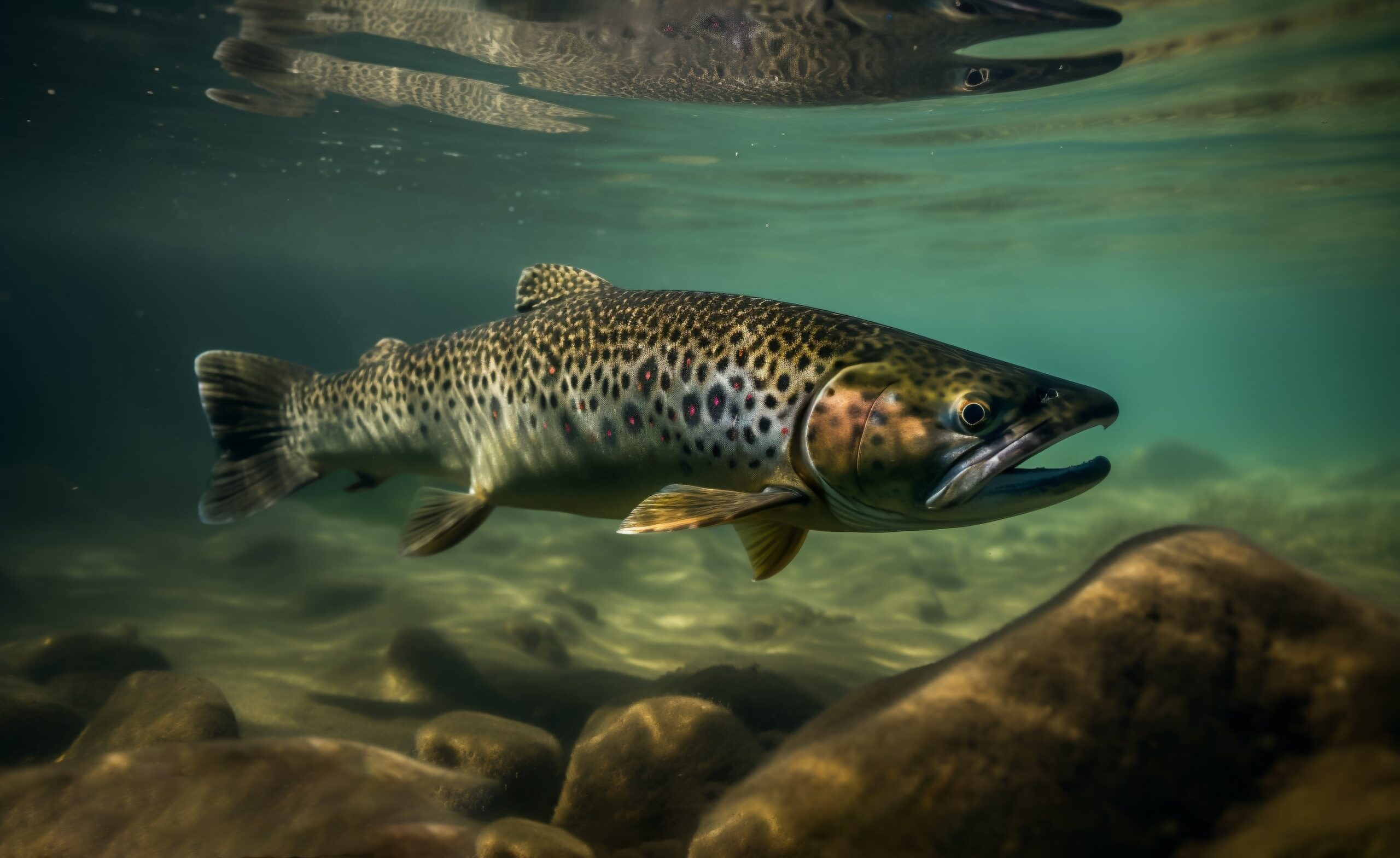
Scottish wild salmon start life in rivers and spend several years there. They later become “smolts” and head to sea. After one to three years in the North Atlantic, they return to their home rivers to spawn. Most die afterward, but a few survive and repeat the cycle.
The main threat now comes from farmed salmon mixing with wild populations. Interbreeding could change the genetic structure of future generations.
Dr. Will Perry from Cardiff University said most farmed salmon in Scotland come from Norwegian strains. “They’re bred for commercial growth, not survival in the wild,” he explained. “When they escape, they pass on maladapted genes that weaken wild stocks.”
Escaped salmon can also spread diseases and parasites like sea lice. These infestations harm wild fish and force them to compete for limited food. Scotland’s Atlantic salmon are already endangered, and this adds even more pressure.
Will the escapees survive?
Most of the runaway fish will die quickly. Farmed salmon lack the instincts and strength to handle the North Atlantic. But some will survive, and that’s enough to matter.
Escapes happen every year, though few on this scale. The last major incident was in February 2023, when 80,000 young salmon escaped during transport from Loch Shin. That was the biggest escape in a decade.
Only 300,000 to 400,000 wild Scottish salmon return to spawn each year. The 75,000 escapees from Loch Linnhe equal roughly a fifth of that population.
It’s unclear how many will join the salmon run already happening in Scottish rivers. Dr. Perry said some will survive and return to spawn. “Research shows that up to 10% of salmon in some rivers are escapees,” he added.
A 2021 study for Marine Scotland found genetic mixing at 55 out of more than 250 monitored sites. Fourteen locations showed major genetic changes. That threatens the strength of native populations already listed as endangered.
Calls for tougher rules and real penalties
Environmental campaigners want stronger rules to prevent escapes. Norway and Chile fine companies heavily for similar incidents. In Scotland, there are no financial penalties, only enforcement notices. Operators report their own escapes, which critics say hides the true scale of the problem.
Seven years ago, a Scottish Parliament committee called for fines. Ministers promised action, but penalties won’t arrive until 2026 or 2027.
Scottish Greens MSP Ariane Burgess accused the government of moving too slowly. “In 20 years, we’ll ask ourselves why we let this happen,” she said.
The Scottish government insists it remains committed to change. It expects fish farms to prevent escapes in the meantime. A spokesperson said the latest escape posed a “low genetic risk” since few of the fish are expected to survive or breed.
Other threats to Scotland’s salmon
Escaped farm fish are only part of the problem. Global warming plays a major role in the decline of wild salmon. These fish are highly sensitive to temperature changes.
Another invader, the pink salmon, introduced to Russian rivers in the 1960s, has now reached Scotland’s waters. Yet some conservation efforts have slowed the overall decline.
In the 1970s, about one million salmon returned to Scottish coasts each year. Today, the figure is less than half. Still, the number that go on to spawn has stayed relatively stable until recently.
Strict conservation rules helped. Any salmon caught before April must be released. After that, local conservation levels decide if keeping the fish is allowed.
The salmon industry defends itself
Salmon farming remains one of Scotland’s biggest exports. Industry figures say it contributes over £760 million to the economy, including the supply chain. It directly employs 2,500 people and supports 10,000 more in related work.
Farmed salmon turned what was once a luxury food into an affordable source of healthy protein for millions. But operators say escapes are sometimes unavoidable. Causes include storms, equipment failure, or seals tearing through nets.
Companies claim they’re investing in better gear, staff training, and stronger enclosures. Mowi, the company behind the latest incident, said Storm Amy dragged mooring anchors and tore the netting when it struck a pipe.
The firm stated that all staff complete annual training on escape prevention. “Mowi aims for zero escapes and invests heavily in people and equipment to reach that goal,” the company said.
A warning for the future
Storm Amy’s aftermath shows how fragile Scotland’s marine balance remains. Every major storm brings new risks for fish farms and wild species alike. Without faster action and stricter controls, future generations of Scotland’s native salmon may not survive the legacy of the storm.
