


Chasing the Eye of the Storm
When hurricanes sweep across the ocean, they stir up creatures from the deep. Predators brave enough to endure the storm find a feast among the chaos.
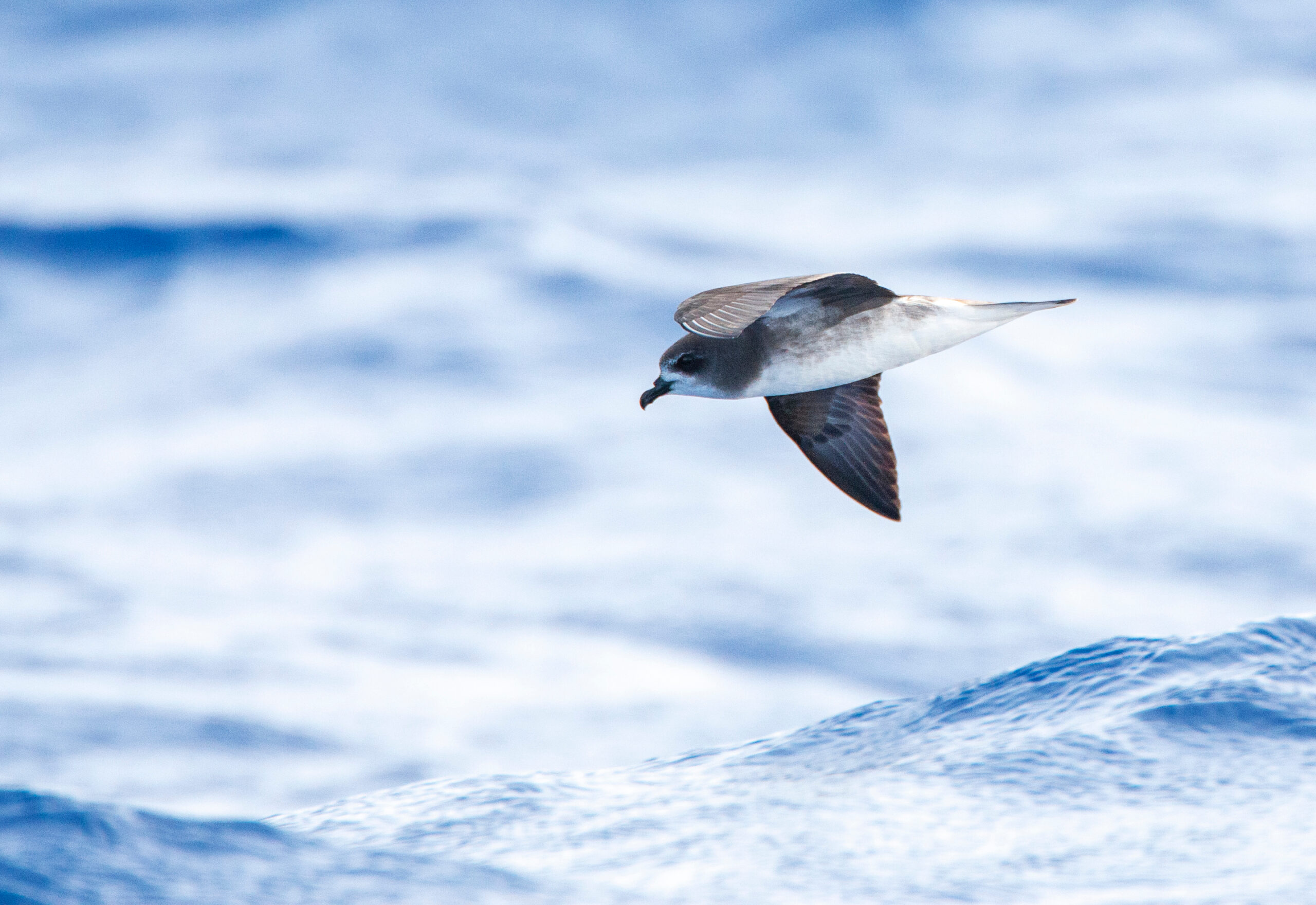
On a rocky plateau, a small nocturnal seabird huddles in its burrow. Below, waves lap gently against the cliffs. At night, it senses a storm forming 1,000 miles off the coast of Morocco.
The tropical cyclone draws energy from the warm ocean surface. Slowly, it grows into a rotating column of air hundreds of miles wide. Lightning streaks across its outer bands, while 150mph winds churn the ocean below.
Birds in the Face of Danger
Hurricanes wreak destruction, but seabirds respond in different ways. Some stay ashore or fly hundreds of miles to avoid strong winds. Frigatebirds climb high to bypass cyclones quickly. Albatrosses, masters of high winds, often seek calm in the storm’s eye.
Other birds see hurricanes as opportunity. Squid, octopus, and cuttlefish rise from the ocean depths, drawn to the surface. One predator, the Desertas petrel, uses the storm to hunt. It darts into the storm bands, sometimes within 124 miles of the eye.
Francesco Ventura, biologist at Woods Hole Oceanographic Institution, describes the peril. “These birds are pigeon-sized and face winds up to 100km/h with ocean swells reaching 26 feet,” he says. “They are truly in the heart of the storm.”
After the cyclone passes, Ventura explains, the petrels follow its wake. They ride the storm while foraging on creatures churned from the ocean’s twilight zone.
Hurricanes Turn the Ocean Upside Down
Humans know hurricanes for devastation on land. Yet these storms also reshape the ocean. Cyclones mix warm surface waters with deep cool currents, sending nutrient-rich waters to the surface.
The underwater upheaval harms ecosystems, destroying turtle nests, shellfish beds, and coral reefs. Migrating animals are displaced, and seabeds churn violently.
Yet this turmoil triggers plankton blooms. Zooplankton follow, attracting small fish and cephalopods from 200-1,000 meters below. For predators like the Desertas petrel, the storm delivers a banquet.
Ventura notes, “They put themselves exactly in the right place at the right time to ride a hurricane.” Only 200 breeding pairs of this seabird exist worldwide, nesting on Buigo Island in the Madeiran archipelago during hurricane season. The timing may seem perilous, but the species thrives in stormy seas.
Uncovering the Secrets of the Desertas Petrel
Desertas petrels forage far from land, and until recently, scientists knew little of their paths. Ventura recalls early clues from sailors and fishermen spotting them thousands of kilometers offshore.
In 2015, Ventura and his team set out to track the birds. He climbed cliffs to reach nesting burrows. At night, the island teems with calls and swooping birds. “It feels like the island is talking,” Ventura says.
Attaching lightweight GPS trackers, he awaited their return. Weeks later, the birds returned, revealing astonishing journeys across the Atlantic.
These petrels travel as far as 12,000km between Africa and the New England coast. They deliberately position themselves in storms to forage, a strategy unlike most seabirds. Ventura explains, “They actively approach cyclones, enter them, and follow their wake for thousands of kilometers over several days.”
Masters of Flight and Energy
Desertas petrels employ “dynamic soaring,” gliding between air masses without flapping. They climb the wind shear, descend downwind, and repeat for thousands of miles. Their high-aspect-ratio wings maximize lift and minimize drag, enabling rapid, energy-efficient travel.
The birds read the Atlantic’s wind patterns. They anticipate shifts and adjust constantly, covering huge distances with precision. When storms stir surface nutrients, plankton blooms attract prey, creating a rich hunting ground for the petrels.
Other seabirds face severe challenges. In winter 2013-2014, storms killed nearly 60,000 seabirds along European coasts, many starving after being blown off course.
Riding the Storm
Desertas petrels are not alone in exploiting air currents. Frigatebirds ride updrafts through massive clouds, and bats use storm fronts for long migrations. Some species, like the Veery thrush, avoid storms, leaving nests early to adjust for severe weather. Researchers still puzzle over how these birds sense hurricane intensity in advance.
Meanwhile, as hurricanes Imelda and Humberto churn the Atlantic, Desertas petrels may already ride the waves. Ventura observes, “The ocean bursts with life during storms. Many species cannot reach this bounty without a hurricane.”
Hurricanes remain destructive yet predictable in seasonality. Ventura concludes, “Some birds may be chasing these hurricanes right now—a wild thought, but entirely possible.”
