


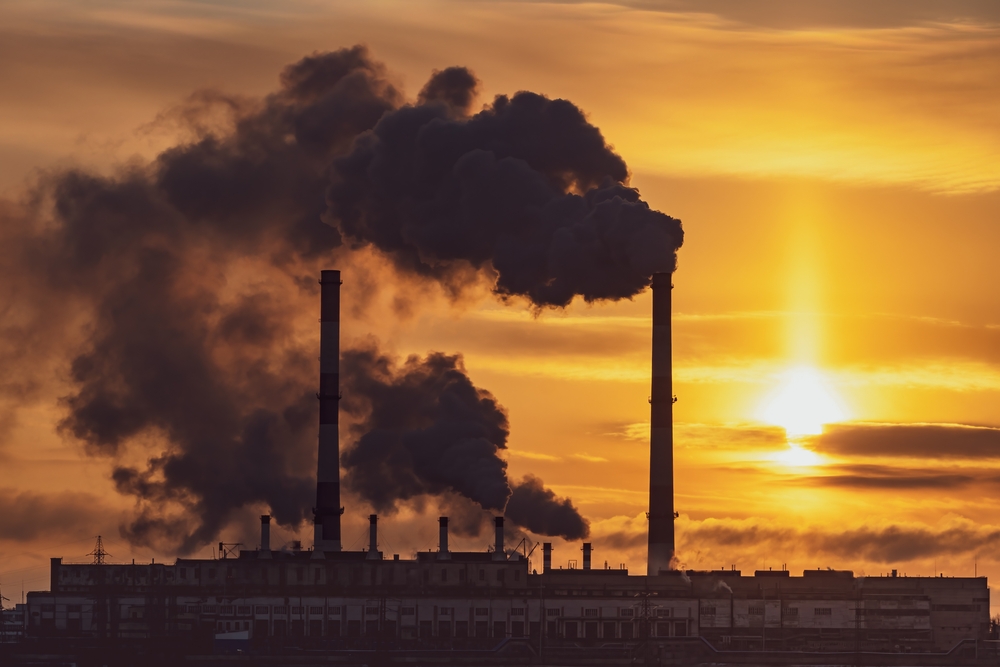
The world is set to release more carbon dioxide from burning fossil fuels this year than ever before. New data shows that global efforts to cut emissions remain far too slow to meet international climate goals as nations gather in Brazil for the UN climate summit COP30. Yet, the rapid growth of renewable energy offers hope that the global warming trend might still be contained.
A Slower Rise in Emissions Brings Some Optimism
Emissions have grown far less quickly over the past decade, thanks to the rise of clean energy. According to clean energy think tank Ember, fossil fuel use in electricity generation has flatlined in 2025, largely due to the expansion of solar power. This supports the idea that global emissions may be nearing their peak, even if the timing remains uncertain.
The data for 2025 is still an estimate, but the outlook is mixed. Emissions from fossil fuels and cement production are expected to rise again to 38.1 billion tonnes of CO2, according to the Global Carbon Budget team. This would represent an increase of 1.1% compared to 2024.
Emissions from land-use changes, such as deforestation, are forecast to decline. The end of the El Niño weather pattern, which often drives higher forest losses, plays a major role. This continues a longer-term trend of reduced emissions from land-use change.
Altogether, total emissions from all human activities are expected to reach 42.2 billion tonnes of CO2 in 2025, slightly down from 42.4 billion in 2024.
A Decade of Slower Growth
The Global Carbon Budget team highlights that emissions have grown much more slowly over the past ten years—only 0.3% per year compared to 1.9% per year in the previous decade. Over the last decade, 35 countries managed to cut their fossil fuel emissions while still growing their economies—almost double the number from the decade before.
“We’re not yet reducing emissions fast enough to tackle climate change,” said Professor Corinne Le Quéré from the University of East Anglia. “But there are many positive developments.”
She noted that emissions have been rising much more slowly “because of the extraordinary growth in renewable energy in China and elsewhere.”
Nearing the Peak of Emissions?
The impact of renewables is particularly visible in the power sector. Electricity generated from fossil fuels is expected to remain flat or even decline slightly this year, according to Ember, marking the first such moment since the Covid-19 pandemic.
What stands out is that this stabilization comes despite a sharp increase in electricity demand, which in the past would have caused emissions to rise. The extra demand this year has been met by wind and especially solar energy.
“For centuries, fossil fuels were the only way to grow the economy,” said Nicolas Fulghum, senior data analyst at Ember. “That’s changed in the past decade. Solar power is growing at a record pace—faster than any energy source in history.”
The Power Sector’s Crucial Role
The electricity sector remains the single largest source of emissions and will play an even bigger role as electric vehicles and heat pumps become more common. “Whatever happens in the power sector has an outsized influence on global emissions,” Fulghum explained.
Ember believes emissions from fossil fuels used to generate electricity have now plateaued and could soon begin a lasting decline. The International Energy Agency (IEA) shared a similar outlook, suggesting that carbon emissions from energy systems could peak within the next few years under current policies.
While uncertainty remains about the exact timing, such a peak would mark a crucial milestone in the global fight against climate change. However, it would not stop the planet from warming, as emissions would still add CO2 to the atmosphere—just at a slower pace.
“As long as we emit CO2, the warming continues,” said Professor Pierre Friedlingstein from the University of Exeter. “To stop further warming, we must bring net emissions to zero.”
A Harsh Reality Check
Another study released alongside COP30 by the Climate Action Tracker group offers a sobering assessment. It projects that global temperatures could rise by up to 2.6°C above pre-industrial levels by the end of the century if current policies remain unchanged. That figure has barely shifted in recent years.
“We’ve never had a better chance to act, and we’ve never been in a worse position,” said Dr Bill Hare from the Climate Action Tracker team. “It’s a diabolical dilemma. If we leave this summit without decisive action and keep supporting gas and oil, we’ll push toward 2.5°C or even 3°C of warming.”
He added, “But the opportunity is still there—to do the opposite and build on the momentum of global technological change.”
