


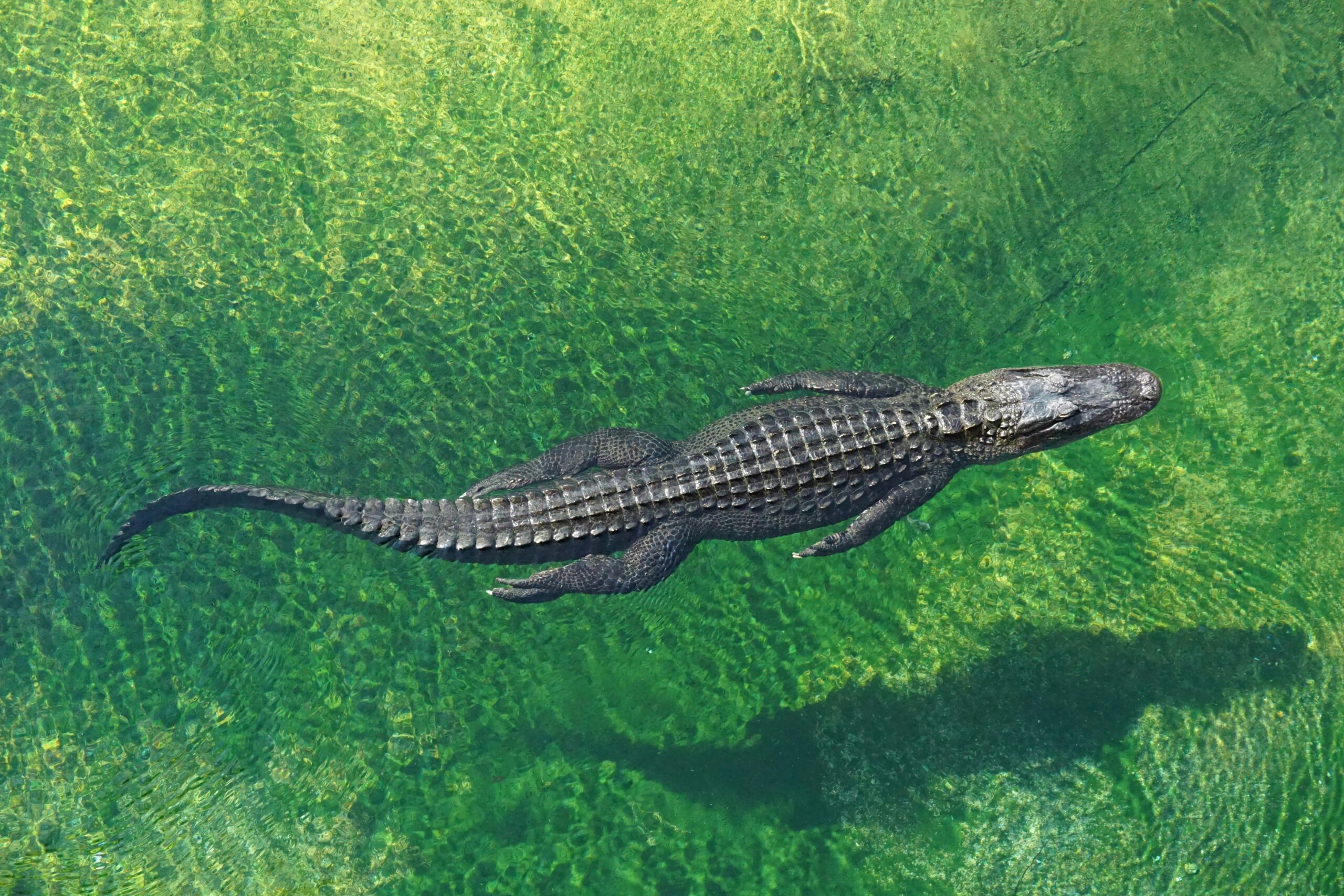
Visitors who crave adventure can paddle through the alligator-filled waters of Okefenokee National Wildlife Refuge in Georgia.
The reserve shelters over 15,000 alligators across 680 square miles of pristine freshwater wilderness.
Located 12 miles west of Folkston and about 59 miles north of Jacksonville, it offers one of the best places to observe alligators in the wild.
The refuge also protects countless species, making it one of America’s most important wetland ecosystems.
Okefenokee stands apart from most wetlands because it acts as a source, not an endpoint, for major rivers.
It feeds the Suwannee River, which flows south to Florida and empties into the Gulf of Mexico, and the St. Mary’s River, which heads east toward the Atlantic Ocean.
This rich ecosystem supports endangered species and sits on UNESCO’s Tentative List for World Heritage recognition.
Paddling Adventures and Trail Highlights
Okefenokee offers three main entrances, with the east entrance housing the Richard S. Bolt Visitor Center.
The center, open daily until 4 p.m., provides maps, guides, and wildlife-spotting advice.
The refuge opens from sunrise to sunset, charging $4.50 for a daily pass.
Canoeists and kayakers can explore 120 miles of marked water trails, including eight color-coded routes.
The 16-mile Orange Trail challenges intermediate paddlers, following the historic Suwannee Canal and connecting with other scenic routes.
More advanced adventurers can tackle the 30-mile Red Trail in the remote northern wetlands, staying overnight at Maul Hammock for stargazing.
Most waterways remain peaceful and reserved for paddlers, but a few routes also permit motorboats.
Guided boat tours and paddle trips at Okefenokee Adventures offer expert insight into the region’s wildlife and Creek cultural heritage.
The name “Okefenokee,” derived from the Creek language, means “trembling earth.”
Cyclists can rent bikes for $20 a day or explore the 7.5-mile Swamp Island Drive through the Suwannee Canal Recreation Area.
Multiple trailheads along the drive let visitors walk short scenic trails surrounded by vibrant wetlands.
Wildlife, Conservation, and Visitor Safety
Okefenokee’s conservation mission protects hundreds of animal species, from gopher tortoises to indigo snakes and wood storks.
The refuge hosts 39 fish species, 64 reptiles, 234 birds, and 50 mammals, along with over 620 plant species.
Pond cypress trees more than 500 years old frame this thriving natural sanctuary.
Morning and dusk provide the best opportunities for wildlife watching, as animals search for food and the dawn chorus fills the air.
Visitors can check the latest viewing updates at the visitor center before exploring.
Officials strongly advise leaving pets at home, as protective alligators move quickly when threatened.
Feeding them is illegal and dangerous, so visitors must keep a safe distance and stay on marked trails.
Binoculars enhance the experience while maintaining safety from the boardwalks.
With its unmatched biodiversity and untamed beauty, Okefenokee remains a jewel of the American wilderness.
