


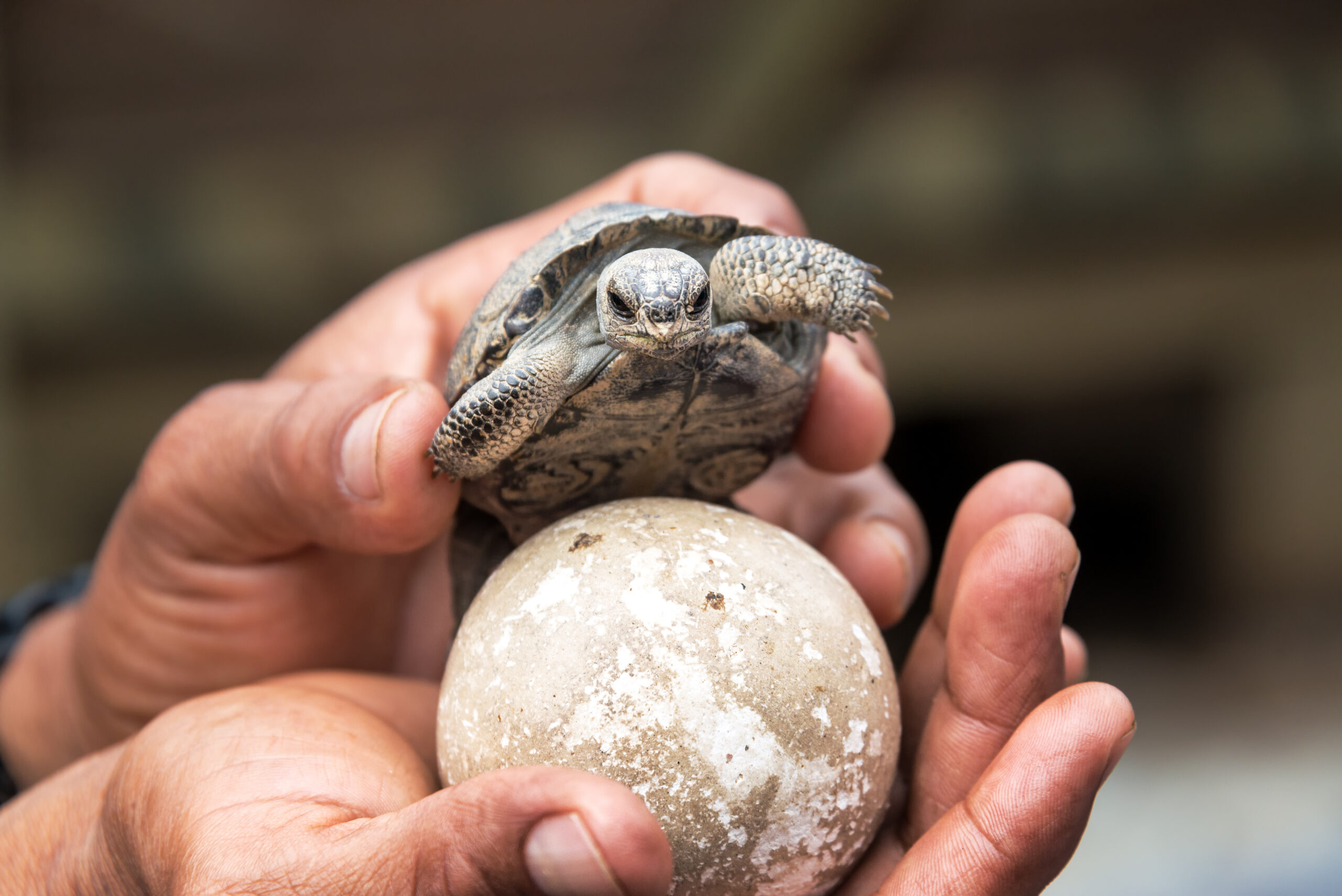
Thirteen Aldabra giant tortoises have hatched in Seychelles following the first successful artificial incubation of the species.
The hatchlings, each starting life on a diet of banana slices and leafy greens, could one day weigh 250kg and live for over a century.
Conservationists collected 18 eggs from a nest on Cousin Island after testing revealed which were fertilised and viable. Thirteen survived.
“This is a huge leap,” said Alessia Lavigne of the University of Sheffield. “It shows what conservation can do.”
The study found that 75% of undeveloped eggs were fertilised but died early, suggesting environmental issues — not genetics — limit hatching success.
Once widespread across the Indian Ocean, giant tortoises now survive mainly on Aldabra Atoll, protected as a UNESCO World Heritage site since 1982.
Artificial incubation could help boost populations if wild nests continue to fail, though researchers stress it’s not a long-term fix.
“We need to understand what’s harming survival in natural nests,” said Dr Nicola Hemmings. “Improving wild conditions is the key.”
The team hopes to share findings with scientists in the Galápagos, home to the world’s only other giant tortoise species.
