


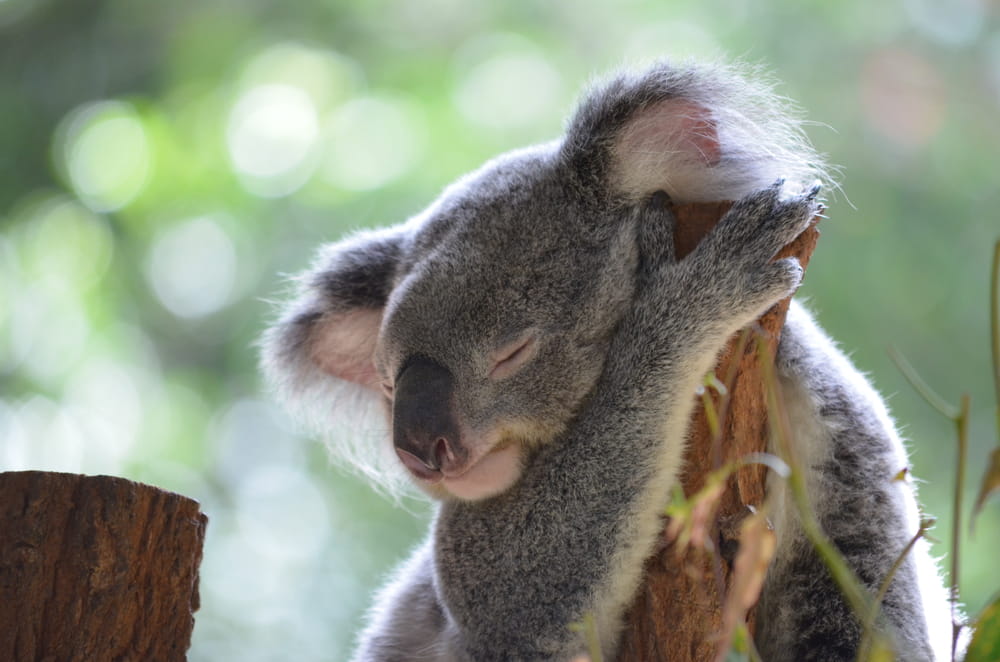
Koalas are among Australia’s most recognisable animals, yet their conservation status defies simple explanation. In some parts of the country, koalas are declining so rapidly they are listed as endangered. In others, their numbers have grown so large that they are stripping landscapes of food and facing mass starvation. This contradiction – often called Australia’s koala paradox – reveals how deeply human intervention has reshaped natural systems.
Too many koalas, not enough trees
On French Island in Victoria’s Western Port Bay, koalas have become victims of their own success. Introduced to the island in the late 19th century to protect them from hunting on the mainland, the animals found ideal conditions: no predators, little disease and abundant eucalyptus forest. For decades, the population grew unchecked.
Today, the consequences are stark. Koalas crowd into single trees, eucalypts are eaten bare, and reports of starving or dead animals are no longer unusual. The trees koalas depend on grow slowly and are not adapted to constant heavy browsing. Once overused, they decline or die, triggering a collapse of the food supply.
A similar situation is unfolding in South Australia’s Mount Lofty Ranges. Recent research projects continued population growth over coming decades, raising concerns that overbrowsing could undermine the long-term survival of the very populations conservationists once sought to protect.
Decline in the north and east
While southern koalas struggle with abundance, populations in Queensland, New South Wales and the ACT face the opposite threat. Here, habitat loss is the dominant force. Land clearing for housing, agriculture and infrastructure has fragmented forests into small, isolated patches.
For koalas, which rely on connected tree canopies, fragmentation is often fatal. Animals are forced onto roads or into urban areas, where vehicle strikes and dog attacks are common. Stress from habitat loss also increases susceptibility to disease, particularly chlamydia, which can cause blindness, infertility and death. Heatwaves, drought and bushfires linked to climate change further compound these pressures.
The result is not a sudden crash but a slow, persistent decline that can go unnoticed until local populations vanish entirely.
Why national numbers mislead
Recent estimates from CSIRO suggest Australia may be home to between 729,000 and 918,000 koalas – far higher than earlier figures. However, scientists caution this does not represent a true population boom. Improved monitoring technology and more comprehensive surveys explain much of the increase.
Crucially, national totals mask extreme regional differences. Overabundant southern populations inflate the overall numbers, while severe declines in the north-east continue largely hidden. A species can appear secure at a national scale while being functionally endangered across large parts of its natural range.
No easy solutions
Managing the koala paradox presents uncomfortable choices. Culling is widely rejected on ethical and political grounds. Sterilisation programs are costly, slow and difficult to implement at scale. Translocation risks spreading disease and often fails if suitable habitat is unavailable. Doing nothing, however, leads to habitat collapse and starvation in overpopulated areas.
At the same time, saving declining populations requires large-scale habitat protection and restoration – measures that clash with ongoing development pressures.
A human-made dilemma
The koala paradox is not the result of natural failure but of uneven human intervention. Predators have been removed, animals moved beyond their original ranges, and habitats destroyed or isolated. Conservation efforts have often focused on protecting individual animals rather than restoring functioning ecosystems.
Ultimately, the lesson is clear: too many koalas can be as dangerous as too few. Without addressing land use, habitat connectivity and ecosystem balance, Australia will continue to face the troubling reality of a beloved species that is both starving and disappearing at the same time.
