


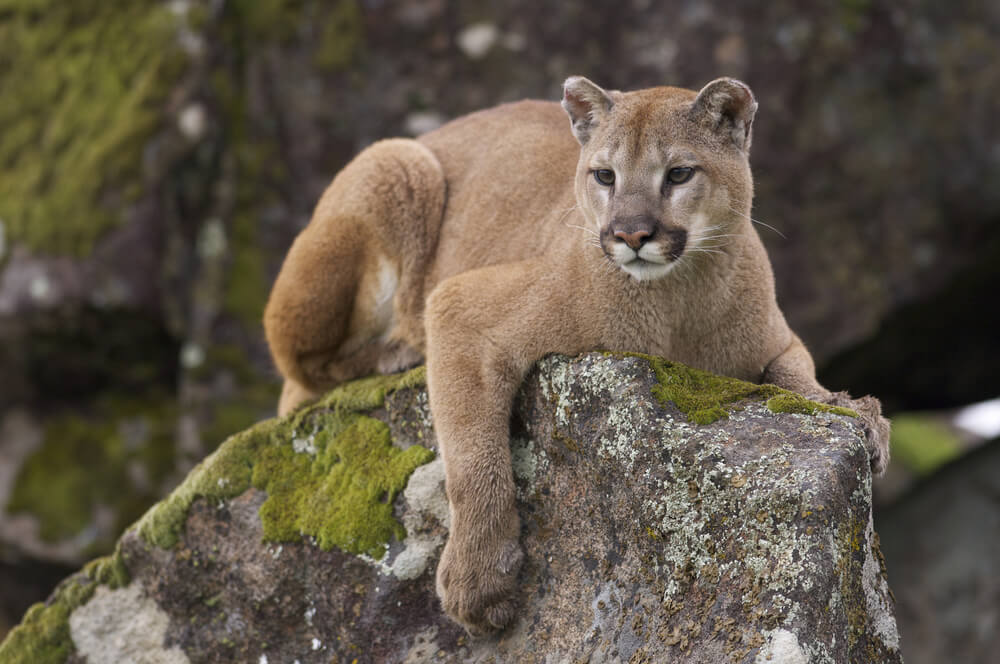
Defenceless penguins face mass killings as pumas recover in Monte Leon National Park in Patagonia, Argentina. After cattle ranching ended in the 1990s, pumas recolonised parts of their historic range. Meanwhile, Magellanic penguins expanded from nearby islands to the mainland, where land predators had been absent. Scientists now warn this interaction has created a “conservation dilemma” that could reduce penguin populations. A new study by Oxford University quantifies the long-term risks for these birds.
Pumas emerge as penguins’ greatest predator
Researchers from the Centro de Investigaciones de Puerto Deseado at the Universidad Nacional de la Patagonia Austral worked with park rangers to monitor penguin populations. Over four years, from 2007 to 2010, they counted carcasses of penguins killed by pumas. Oxford University’s Wildlife Conservation Research Unit then analysed the findings. The study, published in the Journal for Nature Conservation, estimates that pumas killed more than 7,000 adult penguins, roughly 7.6 per cent of the population. Most of these birds were left uneaten, highlighting “surplus killing,” a behavior also seen in domestic cats that hunt more than they consume.
Lead author Melisa Lera describes the number of penguin carcasses as “overwhelming.” She adds, “Pumas killed more penguins than they needed for food, which is consistent with surplus killing observed in other predators.” Scientists see this as a natural consequence of abundant, vulnerable prey encountering recovering carnivores.
Will penguins survive in Patagonia?
Modelling based on the data suggests pumas alone are unlikely to drive the colony to extinction. The birds’ survival depends more on reproductive success and juvenile survival, though heavy puma predation worsens the situation. Co-author Dr Jorgelina Marino says the study “captures an emerging conservation challenge, where recovering carnivores meet novel prey.” She stresses that understanding dietary shifts is essential to guide conservation strategies.
Researchers also note that breeding success and juvenile mortality are key population determinants. Environmental factors such as nutrients, food availability, and temperature—often affected by climate change—could influence penguin reproduction. Park authorities continue close monitoring of both puma and penguin populations to track these evolving dynamics.
