


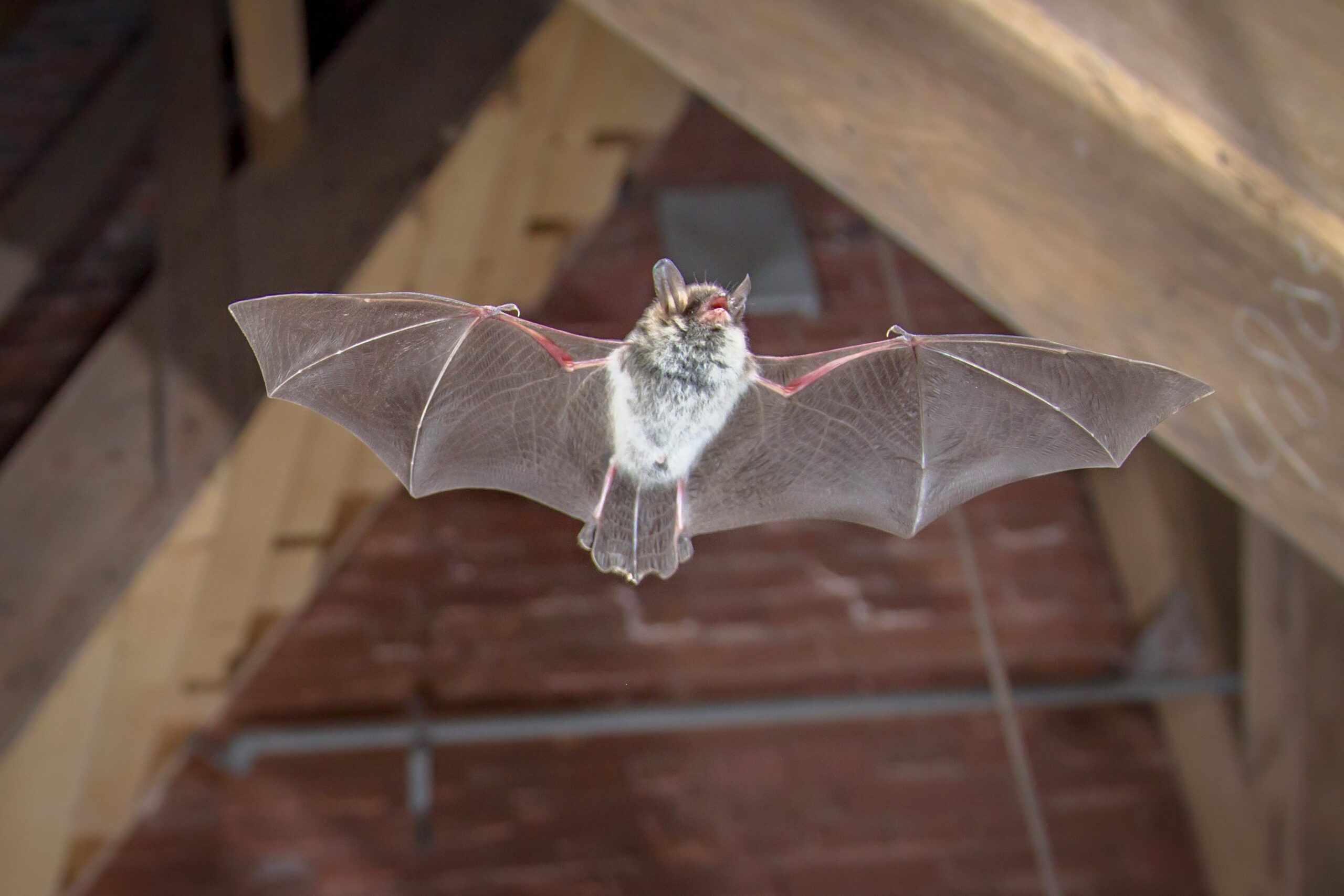
As darkness falls, bat experts move carefully among the gravestones of Guestwick Church in Norfolk. The old wooden door creaks open, revealing a deserted, pitch-black church. The team sets up infrared and thermal cameras and adjusts audio detectors to bat-friendly frequencies. Soon, bats emerge, darting through the aisles while their amplified chatter fills the historic space.
Churches as Vital Bat Homes
“Many churches have stood here for about 1,000 years, and bats have likely shared them for just as long,” says Diana Spencer from the Bats in Churches Project. A recent study in People & Nature, led by citizen scientists with the Bat Conservation Trust, confirms that these historic buildings provide crucial homes for nocturnal wildlife. Researchers estimate that half of England’s churches—over 8,000—host bats, with older churches seeing around 80% occupancy.
“They are basically like man-made forests,” Spencer explains. “They offer nooks for roosting, large open flight spaces, dry interiors, and protection from rain. It’s a perfect environment.”
Meet the Guests
Guestwick Church houses Common Pipistrelles and Natterer’s bats. Pipistrelles emerge first, flying briefly before slipping through tiny door gaps. Natterer’s prefer roof holes to leave and hunt for food. Specialists rely on cameras to track the bats because they are nearly invisible in darkness. About a third of surveyed churches had no idea bats lived inside.
However, some churches notice the bats’ presence immediately. “They’re lovely, but they’re problematic too,” says Graeme Peart of St Margaret’s Church in Saxlingham. Bats became a nuisance about 15 years ago. “Urine and droppings damaged a carpet leading to the altar, which we had to throw away. They also destroyed brass fixtures.”
Finding Solutions
Bats receive legal protection in the UK, making removal difficult. St Margaret’s worked with the Bats in Churches team to build a sealed loft above the vestry. Ecologist Phillip Parker demonstrates the space, explaining, “The bats in the main church live here instead of in the church itself.” The loft contains CCTV cameras to monitor the bats’ behaviour. “During some weeks, a hundred bats may inhabit it, then disappear for about ten days. Without CCTV, we would never know.”
Major projects like this require time, effort, and money. The loft and monitoring cost around £50,000, funded by the Heritage Lottery Fund and partners. Spencer notes that simpler solutions exist. “You can cover areas that might be damaged or apply wax coating to brass to protect it. Anyone discovering bats should contact the National Bat Helpline for guidance.”
Churches in a Changing Landscape
More bats are seeking refuge in churches as woodlands disappear. “We’re losing habitat and knocking down old buildings, while modern homes become warmer and airtight. Fewer spaces remain for bats,” Spencer warns. Churches and parishioners are learning to coexist with these nocturnal animals, and some parishes now treat bats as an attraction rather than a nuisance.
“We see churches hosting bat nights and events,” Spencer says. “These gatherings attract people who might not otherwise visit a church. Bats fascinate the local community, and events like these offer a unique way to engage them.”
