


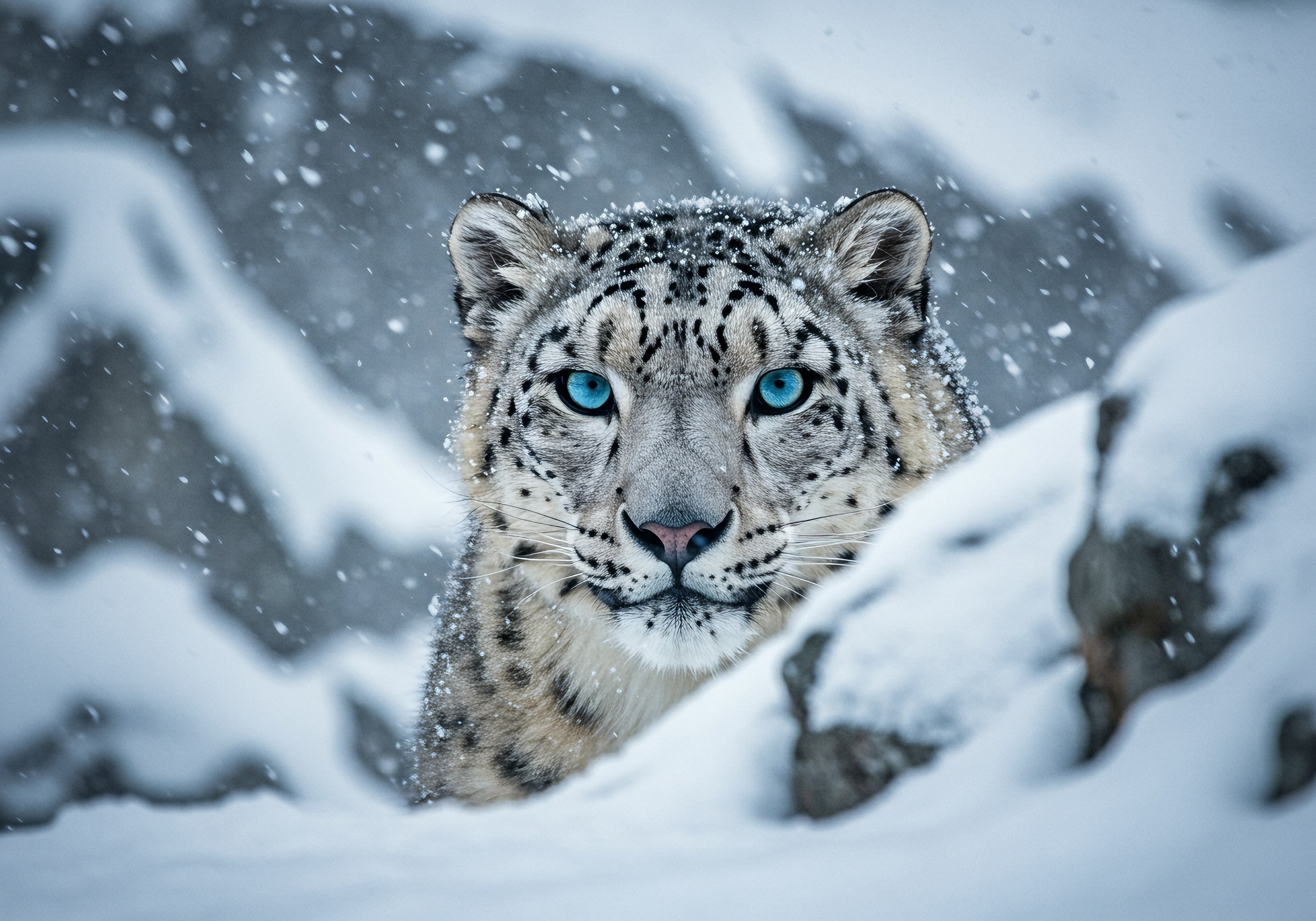
They are called the “ghosts of the mountains,” and it’s no surprise that snow leopards are hard to find. Yet these majestic, thick-furred cats, living in the high mountains of Asia, are disappearing from much of their range. Their prey is declining, they face retaliation killings after livestock losses, and the illegal wildlife trade continues. Climate change, mining, and large infrastructure projects also destroy their habitat. In some places, however, the story is different: snow leopards are recovering, and their numbers are growing. On International Snow Leopard Day, attention turns to recent developments in India and Nepal.
Snow leopards thriving in India’s highlands
About two-thirds of India’s snow leopards live in Ladakh, a trans-Himalayan region of high plateaus, rugged ranges, and icy deserts. A study published in May estimated around 477 snow leopards in the area, based on tracks, droppings, and camera traps. Most sightings came from outside protected zones, raising concerns about conflict. Snow leopards sometimes hunt livestock, especially in winter when wild prey is scarce. Still, coexistence works surprisingly well in Ladakh. Thanks to local conservation programs, sustainable pastoral traditions, and a deep cultural respect for nature, people and big cats live mostly in peace, reported journalist Sneha Mahale.
“Snow leopards are not hunted here,” said study co-author Yadvendradev Jhala from the Wildlife Institute of India. “The mix of Buddhist culture and financial incentives to protect them has increased their population density.” Progress appears elsewhere too. In Himachal Pradesh, another survey estimated 83 snow leopards — up from 51 recorded in 2021, reported journalist Manish Chandra Mishra.
Nepal’s first national count reveals progress
This year, Nepal released its first-ever nationwide snow leopard estimate. The government reported around 397 individuals living across the country’s mountain regions. “This national estimate marks a milestone for conservation in Nepal,” said Ramchandra Kandel, director-general of the Department of National Parks and Wildlife Conservation. “It gives us a clearer picture of the population and guides future protection efforts.”
Researchers tracking four GPS-collared snow leopards made another striking discovery. The animals regularly crossed borders, spending up to a third of their time in India and China, reported journalist Bibek Bhandari. “We now have solid proof,” said study leader Samundra Subba from WWF Nepal. “National borders are human creations — snow leopards do not recognize them.”
“Especially encouraging,” added Charudutt Mishra, executive director of the Snow Leopard Trust, “is that the collared cats faced no man-made barriers during their travels.” He noted that this is rare, since borders are often fenced or blocked.
Between threat and hope in the Himalayas
The future of snow leopards depends on the commitment of the people sharing their range. Where culture, science, and conservation come together, these elusive mountain cats can survive — and even thrive — while humans learn to live alongside them in the frozen heights of the Himalayas.
