


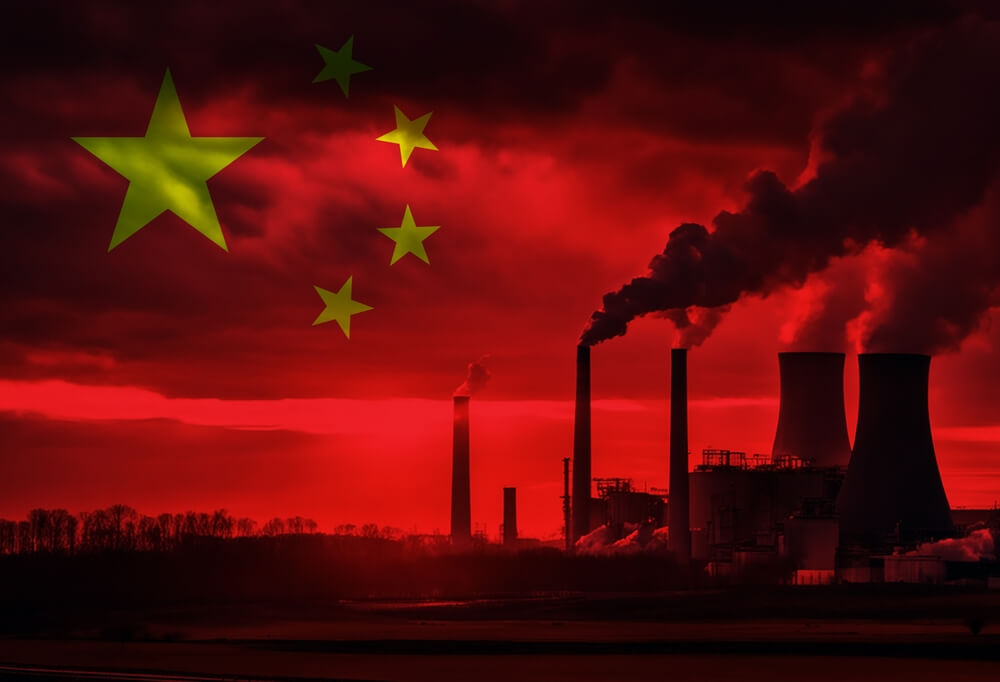
China expanded wind and solar energy at an unprecedented pace in 2025. Yet, the country also commissioned more coal plants than in any recent year. This raises concerns about whether the world’s largest emitter can reduce carbon emissions enough to slow climate change.
More than 50 large coal units started operating in 2025, each with a capacity of at least 1 gigawatt. That number is more than double the annual average over the past decade, according to a research report released on 3 February. One gigawatt of capacity can power anywhere from several hundred thousand to more than two million homes, depending on usage.
China added a total of 78 gigawatts of new coal power capacity, a sharp jump from previous years. The figures come from a joint report by the Centre for Research on Energy and Clean Air, which studies air pollution, and Global Energy Monitor, which tracks energy trends worldwide.
Christine Shearer, a co-author at Global Energy Monitor, called the scale “staggering.” She noted that China added more coal capacity in 2025 than India did over the past ten years combined.
Wind and Solar outpace coal growth
Despite the coal surge, wind and solar capacity grew even faster. This growth reduced coal’s share in China’s total power generation by roughly 1 percent. Renewable energy covered all new electricity demand last year, offsetting coal reliance.
China installed 315 gigawatts of solar panels and 119 gigawatts of wind turbines in 2025, according to the National Energy Administration. These additions mark a historic leap in renewable energy deployment, reflecting the government’s long-term commitment to cleaner power.
Why China still builds coal plants
The surge in coal power raises a critical question: why build so many plants when wind and solar are booming? The answer involves economic growth, energy security, and political priorities.
China remains at an earlier stage of development than the United States or Europe, and it needs more energy to fuel industrial expansion. Rising incomes mean more citizens can afford appliances like air conditioners and washing machines. Factories require reliable electricity, and the government prioritizes power for artificial intelligence projects to maintain technological leadership.
Power shortages in 2021 and 2022 heightened energy security concerns. Some factories paused production temporarily, and at least one city imposed rolling blackouts. The government responded by signaling support for new coal plants, triggering a surge in construction applications and permits.
Qi Qin, a co-author at the Centre for Research on Energy and Clean Air, explained that permits issued in 2022 and 2023 led directly to the capacity added in 2025. “Once permits are issued, projects are difficult to reverse,” she said. Construction began on 83 gigawatts of coal power last year, indicating more plants may come online in 2026.
Coal as a backup for renewables
Officials argue coal remains essential to stabilize power systems dependent on weather-sensitive wind and solar energy. The 2022 shortages partly stemmed from a severe drought that reduced hydropower, a major source in western China.
The National Development and Reform Commission stated that coal should “play an important underpinning and balancing role” while making plants cleaner and more efficient. The China Coal Transportation and Distribution Association added that coal-fired power will remain crucial for system stability even as other energy sources expand.
Risks of oversupply
Analysts warn that the rapid coal buildout could slow the transition to cleaner energy. Political and financial pressures may keep coal plants running, leaving less room for wind, solar, and other sources.
The report recommends retiring inefficient coal plants quickly and committing in the next five-year plan, due for approval in March, to keeping power-sector emissions stable from 2025 to 2030. Qi Qin noted that China’s emissions outcome will depend on whether coal serves strictly as backup rather than as a primary energy source.
