


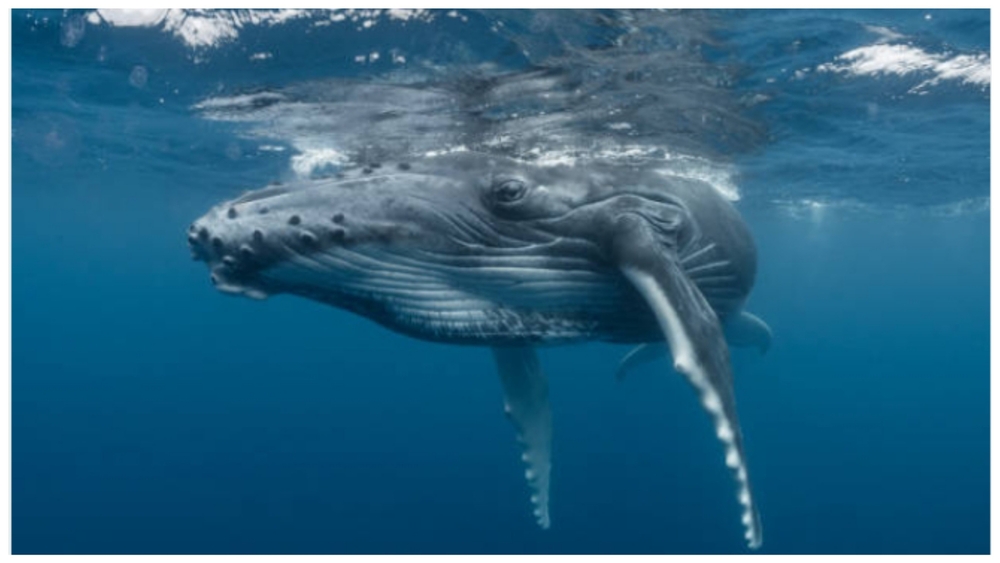
Beaked whales remain among the least understood mammals on Earth. Scientists now use underwater sound to identify these secretive deep divers. The approach opens a rare window into lives hidden far below the surface.
On a bright, calm day in early June 2024, Elizabeth Henderson stood aboard a boat off Baja California. She scanned the glassy sea with powerful binoculars. Her team balanced halfway up the mast and searched patiently.
They hunted for beaked whales, animals famous for extreme diving. Some dive nearly three kilometres below the surface. They stay underwater longer than any other mammal. When they surface, their pale bodies blend easily with waves. Henderson says changing light can make them resemble moving water.
Days passed without success. Then the captain shouted from below. He spotted movement beside the vessel. Two juvenile whales swam calmly along the hull.
A close encounter that challenged assumptions
Scientists long believed beaked whales avoided boats. Henderson saw the opposite that day. The whales showed curiosity rather than fear. They lingered beside the crew.
Henderson works as a bioacoustic scientist with the US Navy Marine Mammal Programme. She studies how marine mammals use sound. The encounter surprised her deeply.
Beaked whales remain poorly known. Scientists currently recognise 24 species. They represent about a quarter of all whale and dolphin species. Researchers have never seen some species alive. Scientists only know them from stranded bodies.
New listening techniques now change that picture. Researchers capture distinctive clicks and squeaks underwater. Each recording adds detail to an incomplete story.
Sounds that led to the wrong species
Henderson’s team expected a different whale that day. They detected a BW43 pulse with a 43 kilohertz peak. Scientists linked this sound to the endangered Perrin’s beaked whale. The team prepared for that possibility.
They collected a small biopsy sample. Laboratory analysis later told another story. The whales belonged to the gingko-toothed beaked whale. The species takes its name from leaf-shaped teeth.
Scientists had never observed this species alive in the wild. Henderson calls the moment unforgettable. She says researchers rarely expect close contact with such animals. Seeing them beside the boat felt extraordinary.
Why scientists overlooked beaked whales
Oliver Boisseau studies marine conservation in the United Kingdom. He explains why scientists ignored beaked whales for decades. These animals live far offshore. They surface briefly and unpredictably. Their behaviour makes observation difficult.
Boisseau says the discoveries still feel astonishing. Scientists described Ramari’s beaked whale only in 2021. Each new species challenges assumptions about modern biology. He says finding car-sized mammals today feels mind-boggling.
When sound becomes a threat
Interest in beaked whales intensified after mass strandings. Many scientists link these events to naval sonar. Researchers still debate the exact mechanism. One theory suggests sonar forces whales to surface too fast. Rapid ascent may create gas bubbles in their blood.
Boisseau describes this as an urgent conservation challenge. Military sound may injure animals that rely heavily on hearing.
Listening instead of looking
Sound also helps scientists protect these whales. Beaked whales use acoustics to navigate, hunt, and communicate. Sound shapes how they experience their world.
Researchers deploy hydrophones deep underwater. Some sit just metres below the surface. Others descend nearly five kilometres. These devices record echolocation clicks and buzzes. Each species produces a unique acoustic signature.
Genetic analysis still plays a crucial role. Scientists fire a crossbow to collect tiny skin samples. They also analyse environmental DNA from seawater. Henderson says genetics completed the identification puzzle.
She stresses ethical responsibility during sampling. Biopsies carry small injury risks. Scientists avoid unnecessary repetition once identification is complete.
Why passive listening matters
Hydrophones cause no harm. They simply listen. Stationary recorders work independently of boats. Scientists prefer them for long-term monitoring.
Once researchers match sounds to species, genetics become unnecessary. Bioacoustics alone can reveal presence and behaviour. Henderson says scientists often no longer need sightings. Listening provides sufficient data.
Sound monitoring also works in rough seas. Researchers avoid reliance on vessels or calm weather. Acoustic recorders gather data continuously. Henderson says this method captures information on any beaked whale species present.
What tags reveal about deep diving lives
Some studies involve tagging whales temporarily. These tags collect sound and movement data. Results show how whales hunt in darkness.
Beaked whales begin clicking only at depth. They use sonar to locate squid and fish. Clicks accelerate into rapid buzzes near prey. This pattern allows precise targeting.
Tags also reveal early deep diving by calves. Young whales follow mothers on long dives. Boisseau says their physiology pushes biological limits. Even small calves manage extreme depths.
Mapping a hidden population
Scientists now focus on distribution. They want to know which species live where. Henderson says researchers still answer basic questions about identity and range.
Her California sighting surprised experts. Scientists believed gingko-toothed beaked whales lived only near Japan and New Zealand. The discovery expanded the known range across the Pacific.
Boisseau conducts acoustic surveys worldwide. He works in the Atlantic, Mediterranean, and Indian oceans. His goal involves estimating population sizes. Current data remains limited.
Without numbers, scientists struggle to assess risk. Boisseau urges caution in management decisions. He says uncertainty should not delay protection.
Human threats beyond sonar
Naval sonar remains controversial. Authorities banned it around the Canary Islands in 2004. No mass strandings have occurred there since. Boisseau believes the ban likely works. He notes ongoing debates about national security.
Some restrictions now apply near Hawaii and California. Fishing poses another growing threat. Beaked whales increasingly entangle in shallow nets. Boisseau calls for better mitigation.
Plastic pollution also harms deep divers. Whales ingest bags, ropes, and bottles. Plastic echoes resemble squid acoustically. This confusion leads to fatal mistakes.
Why protecting beaked whales matters
Protecting beaked whales benefits entire oceans. These animals move nutrients vertically through the water. Scientists call this process the whale pump.
Beaked whales feed at depth and defecate near the surface. This action transports carbon and nutrients upward. Phytoplankton thrive on these nutrients. Phytoplankton absorb carbon and sink it.
Boisseau says this process helps fight climate change. One whale can capture about 33 tonnes of carbon dioxide. Their ecological role extends far beyond their mystery.
Listening to the deep for answers
Scientists still know little about beaked whale lives. Their habits and relationships remain unclear. Acoustic data promises further insight.
Henderson says solving the puzzle excites researchers. Each recording adds another piece. Understanding must advance quickly.
Oceans continue warming and filling with plastic. Boisseau calls beaked whales fascinating and fragile. He wants more people to care. The deep still speaks. Scientists now listen more closely.
