


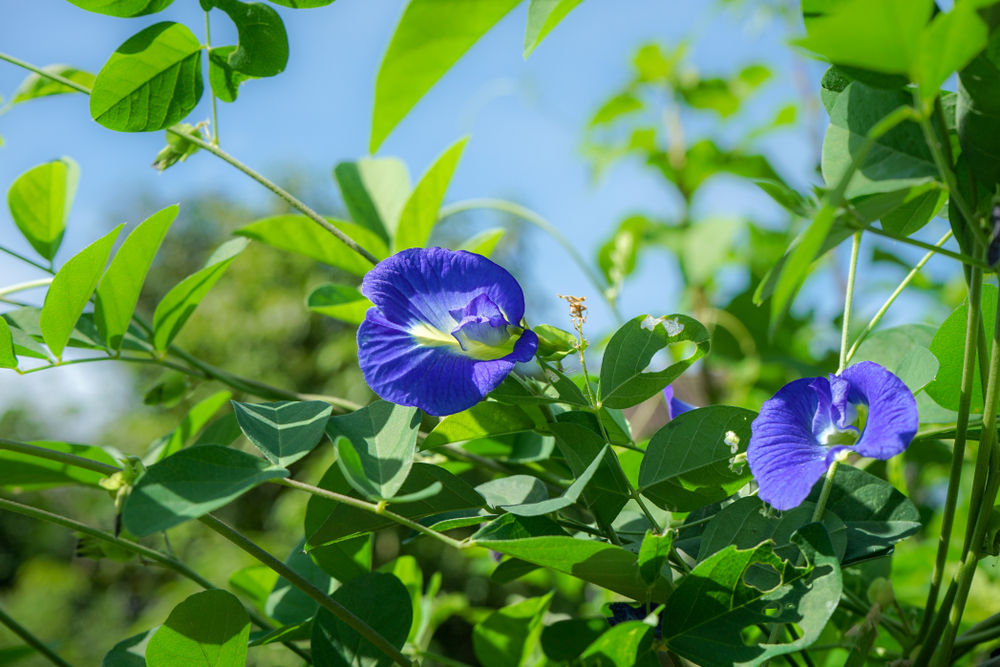
Until recently, the butterfly pea flower ranked as just another climbing plant in rural Assam. Nilam Brahma, who lives in Anthaigwlao village, watched it grow unnoticed for years. Locals treated the vine as ornamental, not commercial. The plant carries a vivid blue flower and grows easily across fences and fields. In India, people also call it aparajita.
About two years ago, Brahma noticed women earning money by selling the flowers. They sold them dried, brewed them into tea, or used them as natural dye. Brahma decided to join them and test the market herself. The results changed her expectations and her confidence. Her first sale brought in $50, which surprised her deeply. The income convinced her she could shape her own future.
From Experiment to Enterprise
The early success pushed Brahma toward entrepreneurship. She applied for a small loan and invested in solar drying machines. The dryers shortened processing time and preserved the flower’s intense colour. They also helped her meet strict quality demands from buyers. What started as a trial quickly became a small business.
For years, Thailand and Indonesia dominated butterfly pea production and consumption. Global demand now grows rapidly and draws attention to India. Entrepreneurs see opportunity as consumers seek natural ingredients worldwide. Tighter regulations in Western markets accelerate this shift. Demand for natural colourants continues to surge.
Regulation Fuels Demand, But Barriers Remain
Varshika Reddy, founder of exporter THS Impex, tracks the global market closely. She links rising demand to changing consumer preferences. Regulators in the US and Europe restrict synthetic food dyes more aggressively. In 2021, US regulators approved butterfly pea flower as a food additive. European regulators later raised safety concerns about its use.
Authorities in the EU and UK still classify butterfly pea as a novel food. That status requires further approval before widespread use. Despite uncertainty, Indian entrepreneurs remain optimistic. Reddy believes India holds strong untapped potential.
She says farmers still view the crop as ornamental or medicinal. India lacks structured markets, official classification, and standard pricing. These gaps leave farmers unsure about returns. Reddy works directly with farmers to improve consistency and confidence. She partners with farming clusters in Uttar Pradesh, many led by women. Her company signs formal contracts and provides agronomy support. The guidance covers irrigation, best practices, and crop-specific techniques.
Discovering the Flower’s Commercial Magic
Nitesh Singh, based near Delhi, discovered the flower’s appeal through colour. Hot water turns the petals blue, while lemon changes it to purple. Singh found the transformation magical and marketable. He believed the flower deserved wider recognition in India. He noted that people ignored its food potential for centuries.
In 2018, Singh founded Blue Tea to build an Indian brand. Early efforts struggled due to poor flower quality. Farmers produced blooms with fewer petals and weak pigment. Sun drying destroyed colour and value. Singh needed richer flowers that retained colour after drying.
Scaling Quality Across the Country
Over seven years, Singh worked closely with farmers nationwide. He started with five farmers and now partners with 600. Training and quality control remain his biggest challenges. Flower plucking plays a critical role in quality. Women perform most of this work.
Singh says women handle delicate flowers with greater care. Their technique avoids plant damage and preserves yield. Blue Tea trains women to identify the right flowers for plucking. After harvest, drying requires strict temperature control. One mistake can destroy colour and medicinal value.
Farmers complete initial drying before sending flowers onward. Blue Tea checks moisture levels and continues drying carefully. The company uses low heat over longer periods. Excessive heat burns flowers and ruins quality.
Science Begins to Catch Up
Researchers now examine butterfly pea for health benefits. Evidence exists, but studies remain limited. V Supriya, an associate professor in Chennai, reviewed existing research. She found very few studies focused on butterfly pea. Most experiments involved animals, not humans.
Supriya led a small human study on pre-diabetic participants. Those who drank butterfly pea tea showed better sugar control. Others showed weaker results. She believes researchers overlooked the flower for too long. Emerging human trials could boost its popularity significantly.
A Crop That Changed Rural Lives
Pushpal Biswas owns a small farm in West Bengal. He learned about butterfly pea through Blue Tea. Previously, he grew rice and vegetables with unstable returns. Unsold produce often caused losses.
The new crop changed his fortunes over seven years. Biswas describes butterfly pea as easy to grow. Scientific methods raised his output from 50kg to 80kg. Increased income allowed him to lease more land. His landholdings, production, and income all expanded steadily.
Nearby villages soon noticed the results. More farmers joined butterfly pea cultivation. Biswas says the crop created more than income. It built a shared network and a supportive community. Farming turned into a collective business family.
