


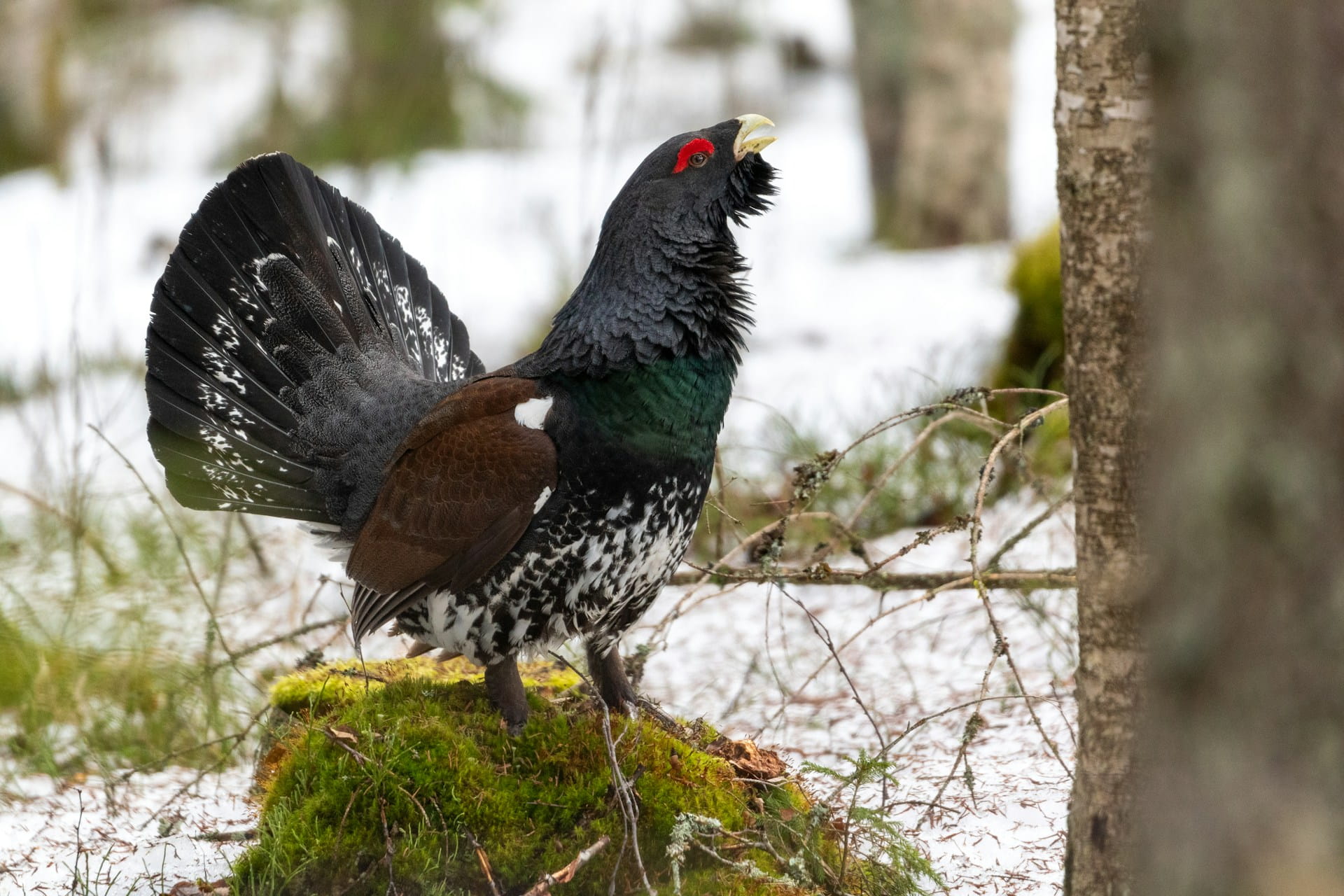
After decades of decline, the endangered capercaillie shows small signs of recovery in Scotland.
Numbers at RSPB Abernethy rose from 20 males in 2020 to 30 in 2025.
This 50% increase offers a lifeline for a species with only 532 birds left in the wild.
The capercaillie lives only in the Caledonian pine forests of the Scottish Highlands.
More than 20,000 birds existed in the 1970s.
Researchers count males at spring lek sites, where they perform jumps and clicking displays to attract females.
Wetter weather, habitat loss, predation, fence collisions and human disturbance drive the decline.
Low genetic diversity may also weaken the population.
Conservationists improved habitat at Abernethy through active management.
They used a remote-controlled mower to reduce heather and encourage blaeberry growth.
Blaeberry feeds adults and supports caterpillars that chicks need for protein.
The work also creates dry open ground where chicks can warm after rain.
Virtual fence collars allow targeted cattle grazing without dangerous deer fences.
Abernethy now holds over 20% of Scotland’s lekking males.
Managers report more chicks surviving to full size.
Similar increases appeared in other forests, including Strathspey.
Conservationists stress that recovery still depends on long-term habitat restoration across all sites.
