


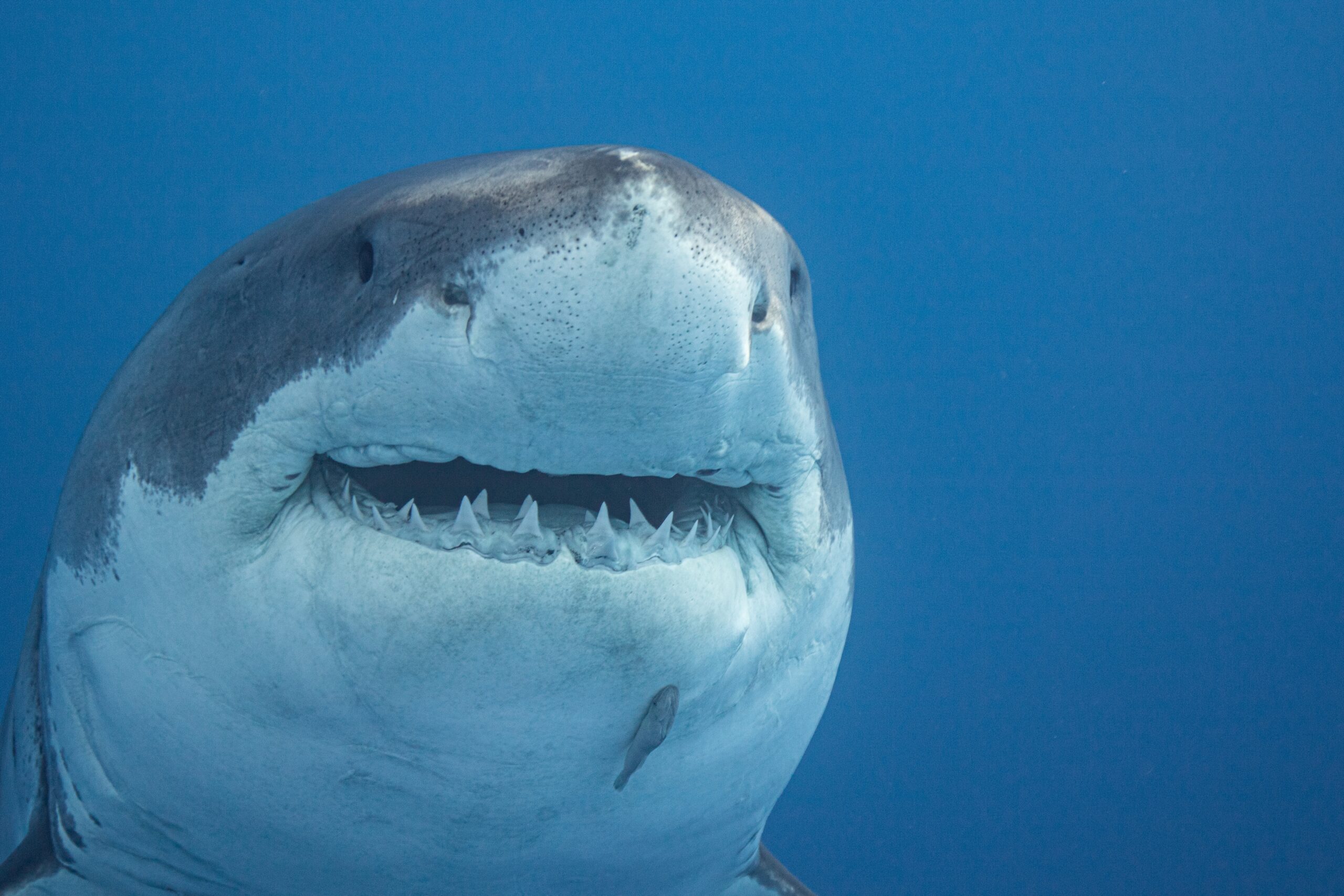
Ocean Acid Weakens Top Predators’ Weapons
Scientists warn that some of the ocean’s fiercest hunters may lose their bite. Rising acidity makes shark teeth weaker and more prone to break, threatening their hunting ability.
Sharks famously replace their teeth continuously, growing new ones as old ones wear out. This regeneration helps them capture prey efficiently, supporting survival at the top of the marine food chain.
New research suggests this natural tooth replacement may not be enough. Rising ocean acidity could make teeth brittle faster than sharks can grow them. Researchers in Germany tested shark teeth under different acidity levels and found significant structural weakening in more acidic water.
“Shark teeth, despite being highly mineralized, remain vulnerable to corrosion in future acidic oceans,” said Maximilian Baum, biologist at Heinrich Heine University Düsseldorf. “These teeth are perfect for cutting flesh, not resisting acid. Even nature’s sharpest weapons can fail.”
From Root to Crown, Damage Spreads
Ocean acidification occurs when CO2 emissions lower the ocean’s pH. Today, the global ocean averages a pH of 8.1. By 2300, scientists predict it could drop to 7.3, nearly ten times more acidic.
The study focused on Blacktip reef sharks. Divers collected over 600 discarded teeth from an aquarium. Researchers selected 16 intact teeth for pH experiments and 36 for circumference measurements. They incubated the teeth for eight weeks in separate 20-liter tanks.
“This project started as a bachelor’s thesis and became a peer-reviewed publication,” said Prof. Sebastian Fraune, senior author at HHU. “Student curiosity can spark real scientific discovery.”
Teeth exposed to lower pH suffered visible surface damage, including cracks, holes, and root corrosion. Teeth at higher pH levels maintained smoother surfaces and smaller circumferences. While surface changes may slightly improve cutting, they also make teeth weaker and more likely to break.
Small Damage, Big Consequences
The experiment studied discarded teeth, meaning it did not account for repair in living sharks. “Living sharks might remineralize or replace teeth faster, but this process likely demands more energy in acidic waters,” Fraune said.
Blacktip reef sharks breathe with open mouths, keeping teeth constantly exposed. Even moderate acidification can damage sensitive species or produce cumulative effects over time. “Maintaining ocean pH near 8.1 is crucial for predators’ teeth,” Baum noted.
The research focused on chemical damage to non-living tissue. Future studies must examine live sharks, their teeth chemistry, and mechanical resilience. The findings suggest microscopic damage alone may threaten species that rely on teeth for survival.
“Climate change impacts cascade through entire food webs and ecosystems,” Baum concluded, highlighting how acidifying oceans could alter marine life fundamentally.
