


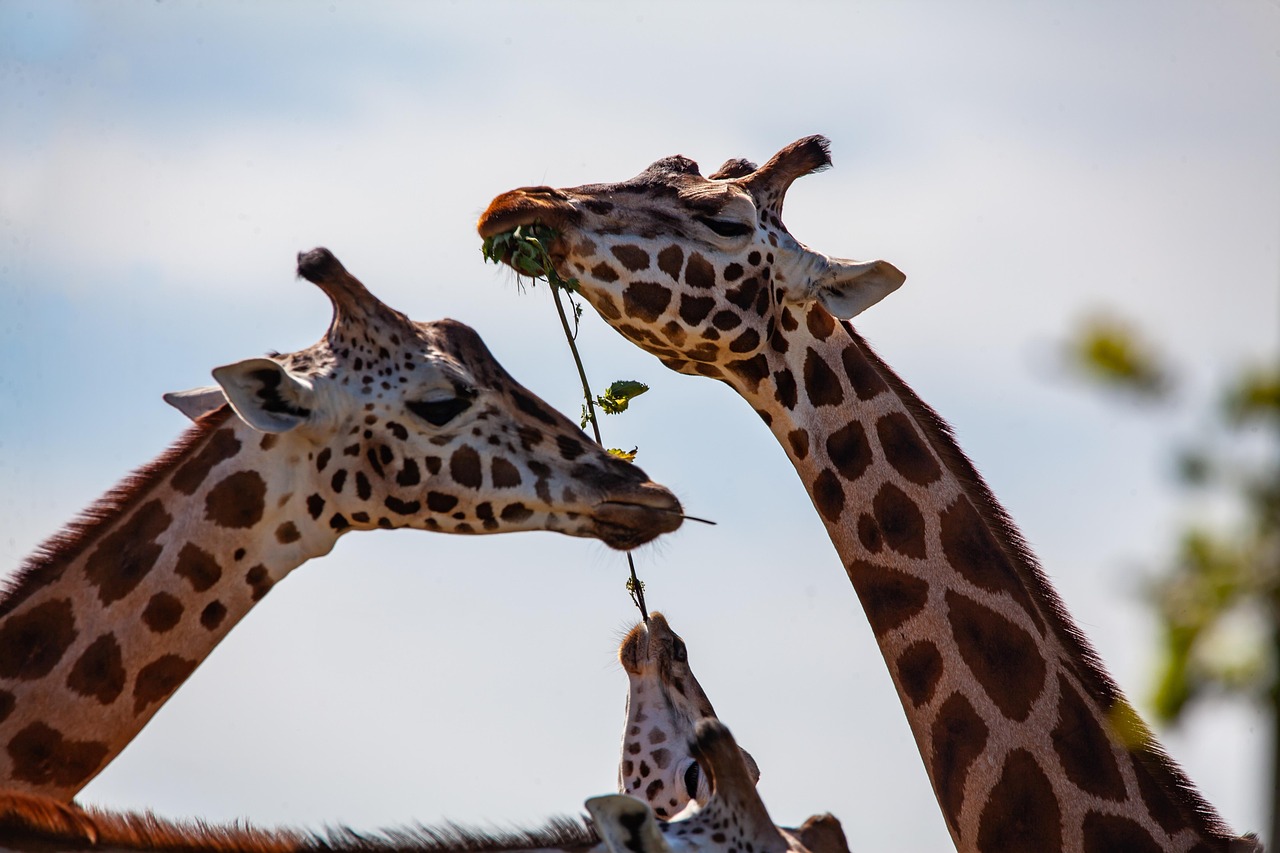
Giraffes rank among the most iconic and beloved animals on the planet. For years, experts believed they belonged to one single species.
Now researchers from the International Union for Conservation of Nature confirm something surprising. They have officially identified three additional species of the world’s tallest mammal.
This recognition comes after years of speculation. Earlier studies already suggested that giraffes might not be one species but four. The latest assessment gives this theory a formal scientific seal.
How researchers reached their conclusion
Scientists compared skull sizes and head shapes of giraffes from across Africa. They discovered enough genetic differences to justify splitting them into four separate species.
They also studied Africa’s geography, including deserts, rivers, and valleys. These natural barriers likely prevented giraffe populations from mixing. Over time, the groups evolved apart, creating distinct species.
The Southern giraffe
The Southern giraffe roams across South Africa, Angola, southern Botswana, Namibia, southern Zimbabwe, Zambia and southwestern Mozambique.
Two major rivers, the Kunene and Zambezi, shaped its separation. Dense Congo Basin rainforests added another barrier, isolating this giraffe from others.
The Reticulated giraffe
The Reticulated giraffe inhabits the savannas and grasslands of Kenya, Somalia and Ethiopia.
The Tana River, Ethiopian highlands and nearby human settlements likely divided these giraffes from northern relatives. Their migration patterns allowed occasional contact with others, yet cross-breeding remained rare.
The Northern giraffe
The Northern giraffe lives in western Ethiopia, central and western Kenya, eastern South Sudan and Uganda.
Its separation comes from natural borders such as the Nile River and Lake Victoria. Migration routes reinforced this isolation and shaped a unique species.
The Masai giraffe
The Masai giraffe is famous for its striking leaf-like coat pattern. It lives in Kenya, Tanzania and Uganda.
Lake Victoria and the Nile River divide it from the Northern giraffe. Although its unique coat suggests distinctiveness, scientists caution that patterns vary widely within populations and even change with age.
Why classification matters for conservation
The International Union for Conservation of Nature stresses the importance of these findings. Identifying genetic differences helps protect giraffes more effectively.
“The more precisely we understand giraffe taxonomy, the better equipped we are to assess their status and implement effective conservation strategies,” explained Michael Brown, co-author of the report.
Until now, giraffes as one species were listed as vulnerable to extinction. Some sub-groups showed population increases, but the broader picture remained unclear.
The IUCN will now re-evaluate the risk level of each of the four species and their sub-groups. With this sharper understanding, conservationists hope to secure stronger protection for these gentle giants.
