


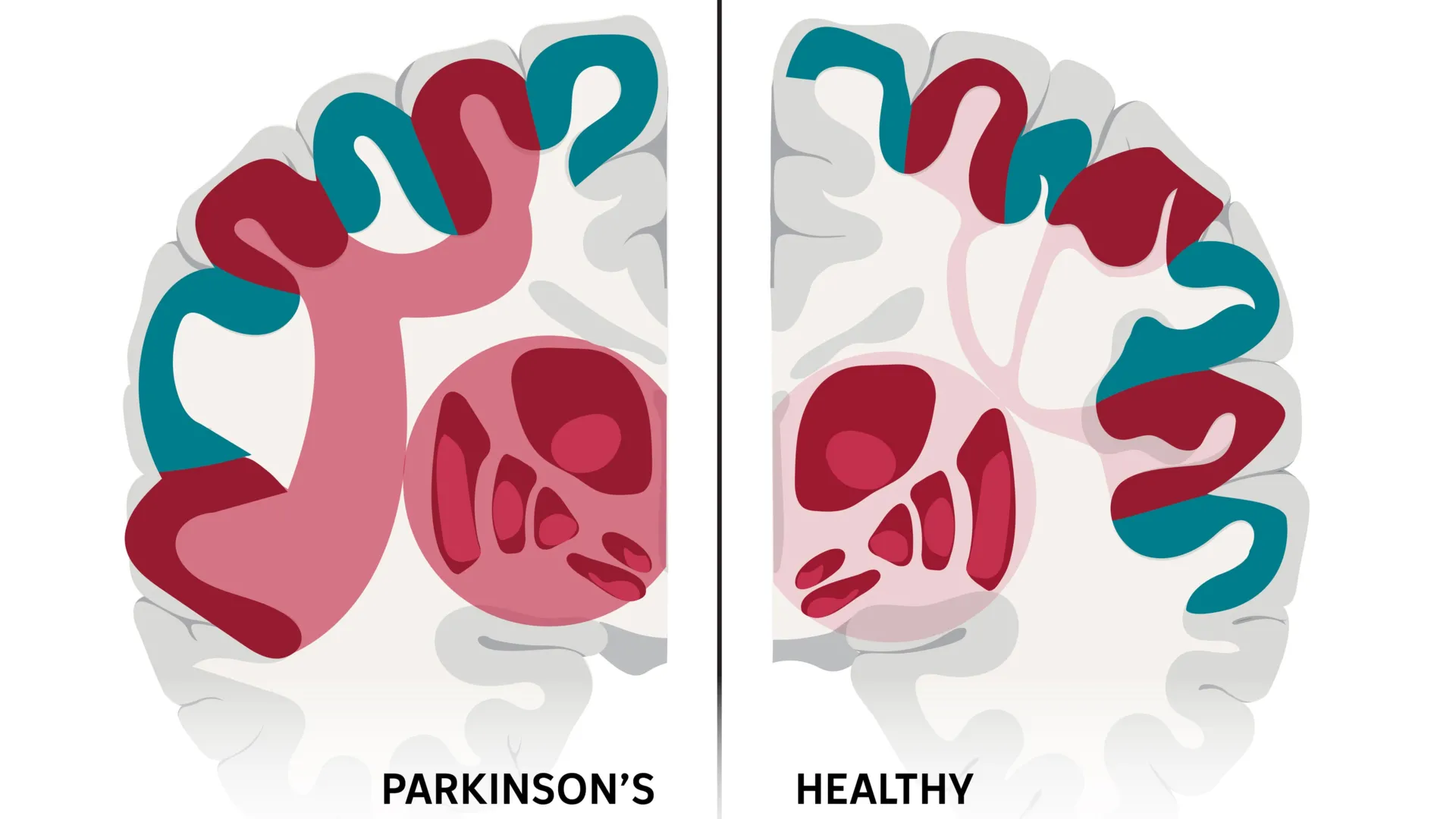
Scientists have made a major Parkinson’s research breakthrough by identifying a specific brain network linked to the disease. Their study also found that non-invasive stimulation of this network significantly improved symptoms in patients.
Parkinson’s disease is a progressive neurological disorder that affects movement, causing tremors, stiffness, and difficulty with balance. Current treatments often manage symptoms but do not stop disease progression. This discovery could open a new path for therapies.
The research team mapped brain activity in Parkinson’s patients, pinpointing a network of interconnected regions involved in motor control. Targeting this network with non-invasive stimulation led to noticeable improvements in movement and coordination.
Non-invasive brain stimulation uses mild electrical or magnetic signals to activate targeted areas without surgery. Patients in the study experienced reduced tremors and better motor function after sessions, suggesting a promising alternative to current treatments.
Experts say this breakthrough could change how Parkinson’s is treated. By focusing on precise brain networks, therapies may become more effective and personalized. This approach may also reduce side effects often seen with medications.
The study highlights the growing role of neuroscience and technology in combating neurodegenerative diseases. Mapping brain networks allows researchers to better understand how Parkinson’s develops and progresses, providing insights for future interventions.
Researchers hope to expand trials to larger groups of patients. If results remain positive, non-invasive stimulation could become a standard therapy alongside medication and physical therapy. Early detection and targeted treatment could improve quality of life for millions living with Parkinson’s.
The discovery also opens opportunities for further research. Scientists plan to explore how this brain network interacts with other neural circuits and how stimulation may affect long-term disease progression.
Health professionals note that breakthroughs like this demonstrate the importance of innovation in neurological research. Combining brain mapping with non-invasive treatment could provide safer, more efficient options for patients worldwide.
Parkinson’s research breakthrough underscores the need for continued investment in neuroscience and technology. New therapies based on brain network targeting may revolutionize care and offer hope to those affected.
This study marks a significant step toward understanding and managing Parkinson’s disease. The combination of brain network identification and non-invasive stimulation presents a potential roadmap for future treatments.
By advancing knowledge of how specific brain networks influence symptoms, scientists are moving closer to therapies that do more than manage disease—they could alter its course. Patients and researchers alike see this as a major milestone in Parkinson’s care.
