


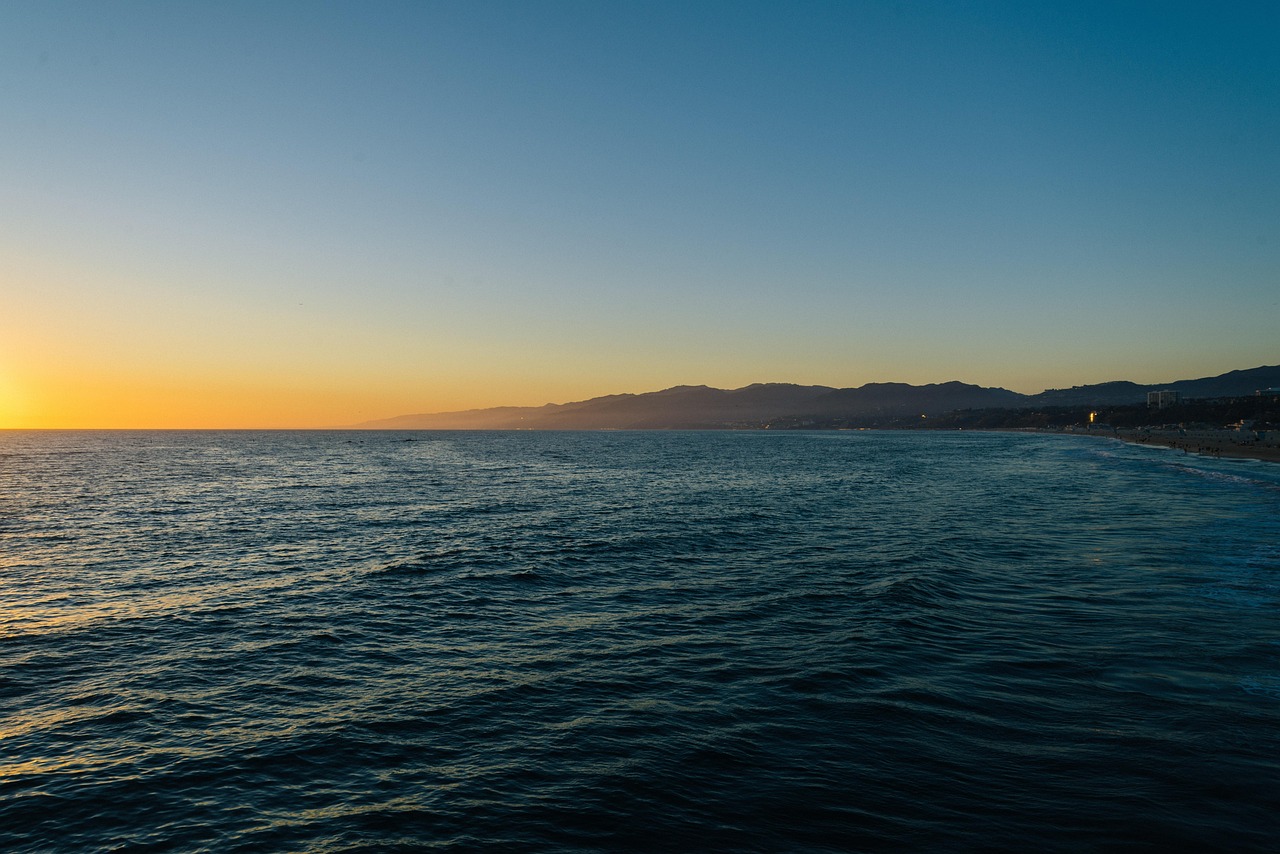
The north Pacific has experienced its warmest summer ever, according to analysis of a mysterious marine heatwave that continues to puzzle climate scientists. Sea surface temperatures between July and September rose more than 0.25°C above the previous high in 2022, spreading across an area roughly ten times the size of the Mediterranean.
While climate change increases the likelihood of marine heatwaves, scientists struggle to explain why the north Pacific has stayed so hot for so long. Some researchers suggest that this extra heat in the so-called “warm blob” could bring a colder start to winter in the UK.
Unusual warming in the north Pacific
“There’s definitely something unusual going on in the north Pacific,” said Zeke Hausfather, a climate scientist at Berkeley Earth, a US research group. He added that such a jump in temperatures across such a large region is “quite remarkable.”
Researchers analysed data from the European Copernicus climate service to calculate average temperatures between July and September across the north Pacific, a region stretching from the east coast of Asia to the west coast of North America. The analysis shows that the area has warmed steadily over the past two decades, but 2025 stands out even among recent years.
Global warming and unexpected spikes
Rising sea temperatures are expected, as global warming from human carbon emissions has already tripled the number of extreme heat days in oceans worldwide, according to research published earlier this year. Yet the 2025 temperatures exceeded most climate model predictions. Berkeley Earth’s analysis suggests that the observed temperatures in August had less than a 1% chance of occurring in any given year.
Natural weather patterns partly explain the extreme heat. Weaker-than-usual winds this summer allowed more solar energy to remain at the sea surface instead of mixing with cooler deep waters. Dr. Hausfather noted that this alone cannot fully explain the exceptional conditions. “It certainly is not just natural variability. There’s something else going on here as well,” he said.
Shipping fuels and cleaner air as hidden drivers
One possible factor is the recent shift in shipping fuels. Before 2020, high-sulphur engine oils produced aerosols that reflected sunlight and moderated ocean warming. Removing this cooling effect in shipping hotspots like the north Pacific may have amplified human-caused warming. “Sulphur seems the primary candidate driving this warming in the region,” said Dr. Hausfather.
Efforts to reduce air pollution in Chinese cities may have contributed as well. Polluting air once reflected sunlight like shipping aerosols, and cleaning it inadvertently allowed more ocean heating.
Impacts on global weather
The north Pacific heatwave has already influenced weather worldwide, boosting summer temperatures in Japan and South Korea and intensifying storms in the US. “In California, supercharged thunderstorms occurred because the warm waters provided heat and moisture,” said Amanda Maycock, climate dynamics professor at the University of Leeds.
She explained that atmospheric rivers—bands of air carrying high moisture from warm oceans—can dump heavy rainfall or snow when they reach land. Long-term forecasting is difficult, but extreme heat in the north Pacific could affect the UK and Europe in the coming months. Teleconnections, links between distant weather patterns, allow Pacific warmth to influence conditions downstream in the north Atlantic and Europe.
“Warm conditions in the north Pacific can generate wave motions in the atmosphere, favoring high-pressure systems over Europe and drawing cold Arctic air,” Prof. Maycock said. This could bring colder weather in early winter, though outcomes remain uncertain. Later in the season, a warm north Pacific can instead encourage milder, wetter conditions in parts of Europe.
La Niña adds complexity
Meanwhile, surface waters in the eastern tropical Pacific remain unusually cool, signaling a weak La Niña. These natural patterns, alongside El Niño events, can interact with global warming to shift weather swings. NOAA expects weak La Niña conditions to persist for months.
The Met Office notes that La Niña generally increases the risk of a cold start to UK winter while also raising the chance of a mild end. “These two drivers in the north and tropical Pacific will act together this winter,” Prof. Maycock said. “Since La Niña is weak, extreme north Pacific warmth may dominate winter forecasts.”
