


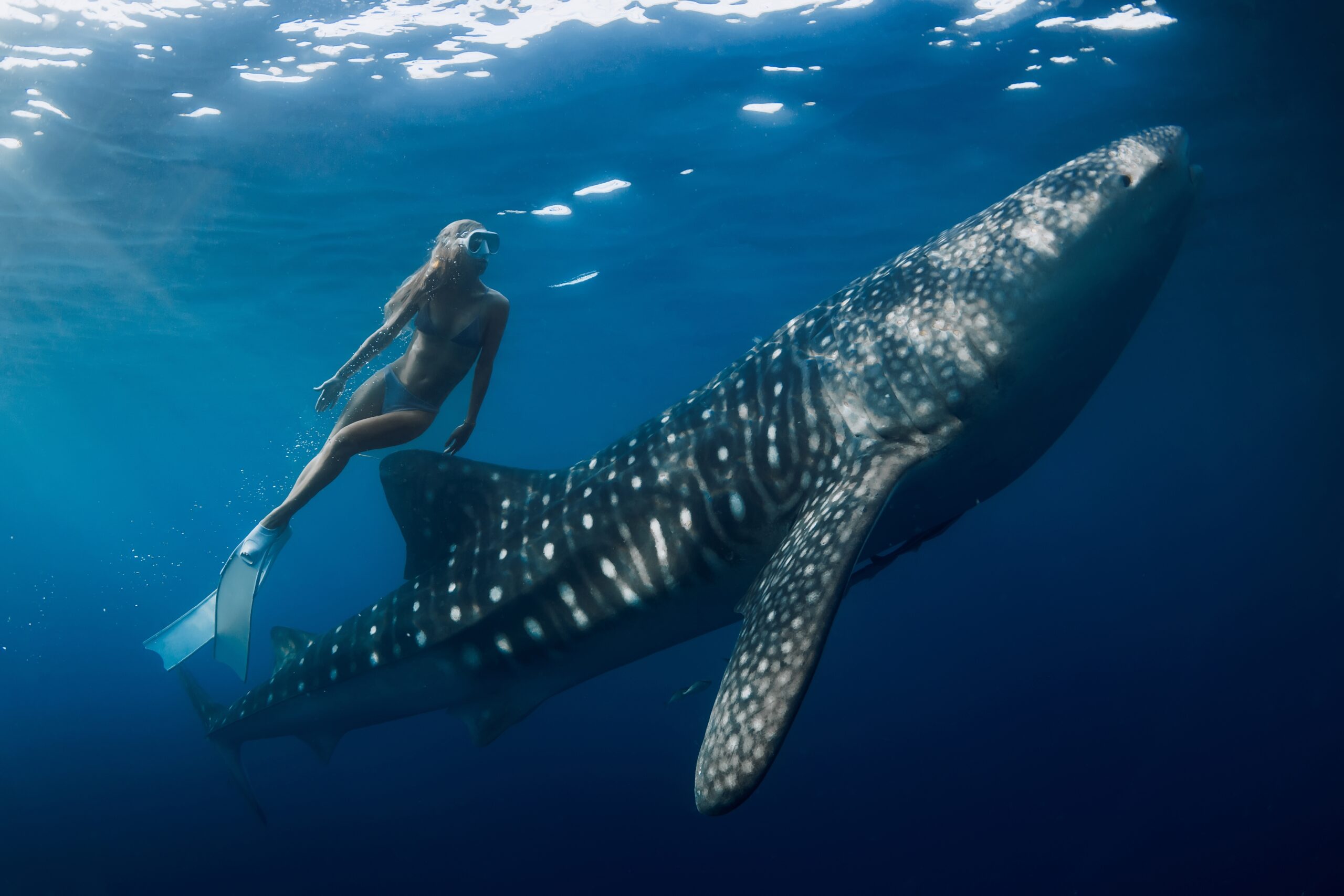
Human activity leaves visible marks on endangered whale sharks off Indonesian Papua, but small changes in fishing practices could protect them.
Whale sharks, the world’s largest fish, hold endangered status on the IUCN Red List. Populations have fallen over 50% globally in the last 75 years and by up to 63% in the Indo-Pacific. These sharks take up to 30 years to reach sexual maturity, which slows recovery from hunting, habitat loss, and fishing net entanglement.
Human Activity Causes Most Injuries
Researchers recently studied whale sharks in the Bird’s Head Seascape of West Papua. They found that 62% carry scars from preventable human causes. Simple interventions could drastically reduce these injuries.
“We observed scars mainly from collisions with bagans—traditional fishing platforms—and whale shark-watching boats,” said Dr. Edy Setyawan of the Elasmobranch Institute Indonesia, the study’s lead scientist.
Most injuries were minor abrasions. Serious wounds from natural causes, predator attacks, or propellers were rare.
Tracking Whale Sharks Across the Bird’s Head Seascape
Between 2010 and 2023, researchers monitored whale sharks in Cenderawasih Bay, Kaimana, Raja Ampat, and Fakfak. The region contains 26 marine protected areas and serves as a hotspot for tropical marine life.
Scientists identified individual sharks using their unique patterns of white spots and stripes. They recorded sightings, GPS coordinates, sex, maturity, size, behavior, and injuries.
They tracked 268 unique sharks, with 98% observed in Cenderawasih Bay and Kaimana. Sightings clustered near bagans, where sharks fed on baitfish such as anchovies, herrings, and sprats. Sharks often fed directly from bagans, damaging nets. Most were juveniles, four to five meters long, and 90% were males.
Over half of the sharks, 52.6%, were resighted at least once over periods up to 11 years. One young male appeared 34 times in three years.
Of the 206 sharks with injuries, 80.6% had wounds caused by humans, and 58.3% showed likely natural injuries. Severe human-caused trauma—lacerations, amputations, or blunt trauma—appeared in 17.7% of sharks. Minor abrasions from rubbing against bagans or boats occurred frequently.
Where Are the Adult Sharks?
The study also highlighted the distribution of older, mature sharks. Adult females tend to inhabit deeper ocean waters, feeding on krill and schooling fish. Younger males prefer shallow, plankton-rich areas that support faster growth, explained co-author Mochamad Iqbal Herwata Putra of Konservasi Indonesia.
Satellite tracking confirmed that females and adults often move around deep-sea features such as canyons and seamounts.
“Sharks in Cenderawasih and Triton Bay show high residency and resighting rates. Local communities and governments should see them as tourism assets,” said Dr. Mark Erdmann, Shark Conservation Director for Re:wild.
Protecting Whale Sharks from Future Harm
Most whale shark sightings occurred near bagans, and tourism continues to rise. Without action, the risk of injuries from fishing platforms and boats will increase.
Researchers propose small modifications to bagans, such as removing sharp edges from nets and boat outriggers. “These simple changes could greatly reduce whale shark scarring in the region,” Erdmann said.
