


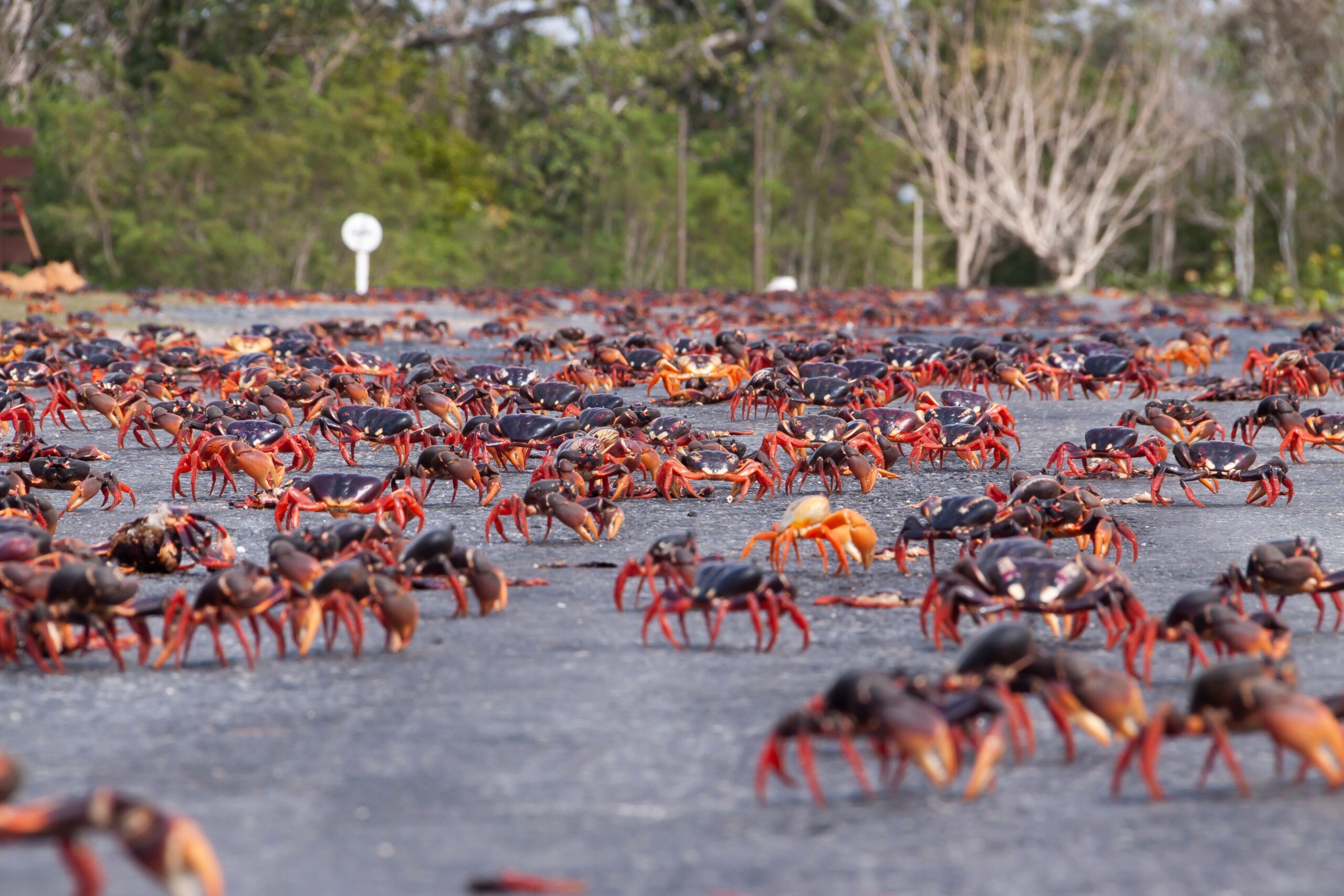
Christmas Island is once again turning scarlet as over 100 million red crabs make their spectacular annual migration from the rainforest to the sea, a natural event that delights conservationists and tourists alike.
For local rangers, the sight is more than a visual wonder — it’s proof that years of work to protect the island’s iconic crustaceans are paying off. Once devastated by invasive yellow crazy ants, which spray formic acid that can kill the crabs, the population is now rebounding thanks to a successful biocontrol program introduced in 2016.
Scientists released Malaysian micro-wasps to target the lac scale insects that feed the ants. The effort has significantly reduced ant numbers and allowed the crab population to recover from historic lows in the early 2000s, when nearly two-thirds of the crabs were wiped out.
“Fast-forward to 2025 and red crab numbers could be breaching the 180 million mark — a phenomenal recovery in just 10 years,” said Brendon Tiernan, of Christmas Island National Park.
The migration, triggered by the first heavy rains of the wet season and aligned with the lunar cycle, began slightly earlier this year due to warmer waters and a negative Indian Ocean Dipole, which bring increased rainfall.
To protect the crabs, rangers rake them off busy roads, while residents like eco-lodge owner Chris Bray have even built special “crab mobiles” — bumper attachments that safely nudge the crustaceans aside.
While scientists say climate change may affect future migrations by altering rainfall patterns, this year’s migration is a hopeful sign. “We haven’t won the war,” Tiernan said, “but we’ve had a significant impact — and the crabs are back in force.”
