


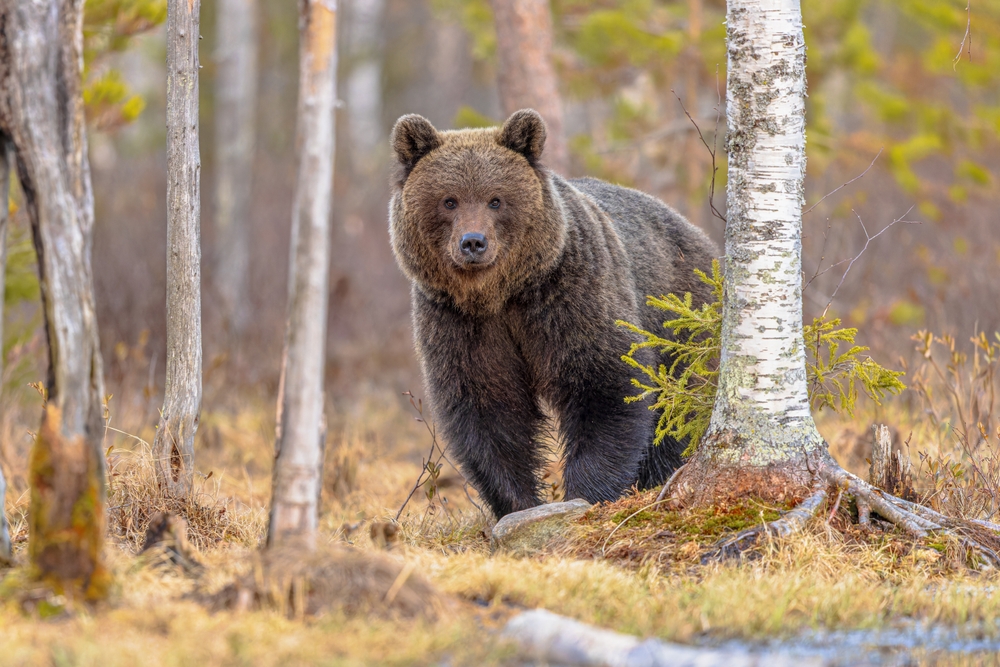
Italian brown bears living close to villages have changed their behaviour through long contact with humans. A new genetic study shows these bears have become smaller and less aggressive over time. Researchers link these changes directly to centuries of coexistence with people. The findings arrive as communities across Italy and Europe face growing bear populations after successful conservation efforts.
Scientists published the research in Molecular Biology and Evolution. They focused on the Apennine brown bear, a rare population living only in central Italy. This group remains small and geographically isolated. Researchers say its long separation from other bears shaped its unique traits.
A population shaped by history
Researchers traced the Apennine brown bear’s divergence to between 2,000 and 3,000 years ago. During that period, expanding human settlements increasingly altered forests and landscapes. Farming, deforestation, and population growth reduced bear habitats. These pressures separated the Apennine bears from other European brown bears.
The bears have lived in isolation since Roman times. Lead author Andrea Benazzo links their decline to agricultural expansion and forest clearance. He says rising human density played a key role. These forces pushed bears into closer contact with people rather than complete disappearance.
Smaller bodies and calmer behaviour
The study shows clear physical and behavioural differences. Apennine brown bears now have smaller bodies than other brown bears. They also show distinct head and facial features. Researchers observed notably lower aggression levels compared with European, North American, and Asian populations.
Scientists say these traits reflect adaptation, not weakness. The bears adjusted to survive near humans instead of competing with them. This shift likely reduced deadly conflicts over generations.
Genes reveal the cost of coexistence
Researchers examined the genetic basis of these changes. They produced a chromosome-level reference genome for the Apennine brown bear. They also re-sequenced genomes from several individuals. Scientists compared these results with bears from Slovakia and with American brown bear genomes.
The analysis revealed reduced genetic diversity and higher inbreeding. These factors increase extinction risk. However, researchers also found strong selection signals in genes linked to reduced aggressiveness.
Behavioural change supports survival
Co-author Giulia Fabbri says the genetic data shows clear behavioural adaptation. The bears carry selective signatures tied to calmer responses. Researchers believe human-driven selection shaped these traits. Even small and isolated populations can evolve rapidly under pressure.
The team argues these changes helped the species persist. Reduced aggression lowered conflict levels. This adaptation supported long-term survival alongside humans.
Lessons for modern conservation conflicts
Another researcher, Giorgio Bertorelle, highlights the broader implications. He says human-wildlife contact often threatens species survival. However, it can also favour traits that reduce conflict. These traits may prove crucial for coexistence in crowded landscapes.
He warns against diluting such genetic variants through restocking. Conservation plans must protect behavioural adaptations, not just population size.
Rising tensions across Europe
Northern Italy now faces growing tensions over Alpine brown bears. The population rebounded after nearing extinction, thanks to a European Union-funded project. Increased bear numbers led to more encounters with humans.
In 2023, a bear identified as JJ4 killed a runner. The same animal had injured a father and son in 2020. Similar concerns appear in northwestern Greece after hunting bans allowed bear numbers to recover.
Farmers and rural residents say they fear for their livelihoods and safety. Conservation success now forces governments to balance protection with public security.
