


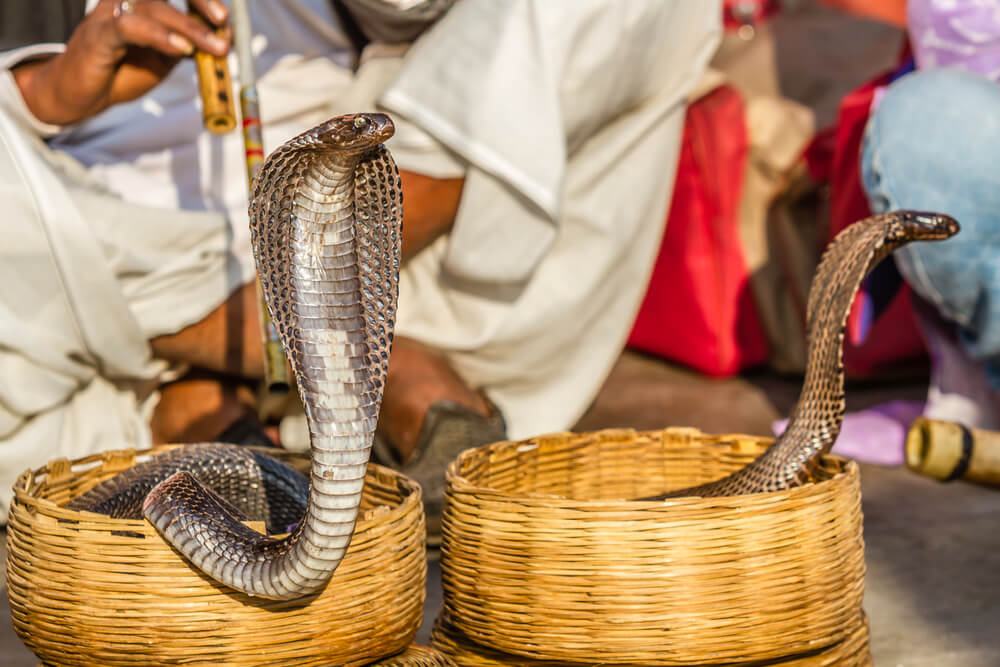
Devendra worked as a farmer in India and still remembers the moment of the bite. A snake sank its fangs into his leg while he picked mulberry leaves. He went to a hospital four days later when the pain became unbearable. The delay cost him his leg, he says in a short film by the Global Snakebite Taskforce. The initiative works to reduce deaths and injuries from snakebites.
Devendra survived, but many others do not. The federal government reports around 50,000 snakebite deaths each year. That figure represents roughly half of global deaths. Other estimates suggest even higher numbers. Between 2000 and 2019, India may have recorded 1.2 million deaths. A 2020 study estimated an average of 58,000 deaths annually.
Hospitals struggle to deliver life-saving antivenom
A new report by the Global Snakebite Taskforce reveals severe healthcare barriers. Ninety-nine percent of health workers face difficulties administering antivenom. Antivenom contains antibodies that neutralise snake venom. Researchers surveyed 904 medical professionals across India, Brazil, Indonesia and Nigeria. These countries suffer the highest snakebite burdens. The study found shared problems across all regions. Hospitals lack infrastructure, antivenom supplies remain limited and training stays insufficient.
Nearly half of respondents linked treatment delays to serious patient complications. These included amputations, surgeries and lifelong mobility impairments.
A neglected disease with global consequences
In 2017, the World Health Organization classified snakebite poisoning as a highest-priority neglected tropical disease. The agency cited the high global death toll. Around 5.4 million people suffer snakebites each year worldwide. More than 100,000 people die annually. Snakebites disproportionately affect poor rural communities. Low- and middle-income countries bear the greatest burden.
In India, deaths and injuries cluster in central and eastern regions. Dr Yogesh Jain reports this trend from Chhattisgarh state. He serves as a practitioner and taskforce member. Farm workers face the highest risk. Poor tribal communities remain especially vulnerable.
A national plan faces uneven execution
India launched the National Action Plan for Prevention and Control of Snakebite Envenoming in 2024. The government aims to halve snakebite deaths by 2030. The plan prioritises surveillance, antivenom availability and research. It also targets medical training and public awareness. Experts praise the strategy but criticise its inconsistent implementation.
Jain says society views snakebites as a poor person’s problem. This perception limits public outrage and political action. Every second matters during treatment, he adds. Venom enters the bloodstream within minutes. It attacks nerves, cells or circulation, depending on the species. Delays cause respiratory failure, paralysis, tissue destruction or organ failure.
Distance and delays cost lives in rural India
Rural patients often struggle to reach hospitals quickly. Poor roads, distant facilities and missing ambulances slow care. In September, a pregnant woman died en route to a hospital in Gujarat. Her family carried her five kilometres in a cloth sling. No vehicle could reach their hamlet.
Some states now stock antivenom in primary health centres. Proper administration remains difficult. Many health workers lack professional training. They fear adverse reactions during treatment. Antivenom requires intravenous delivery over one hour. Many centres cannot manage dangerous side effects.
Faith healers and late hospital visits increase risk
Many rural families still rely on faith healers or traditional remedies. They seek hospital care only after symptoms worsen. Jain warns that such delays often prove fatal.
Antivenom quality presents another major challenge. India currently produces antivenom for four snake species. These include the spectacled cobra, common krait and two vipers. Manufacturers inject snake venom into horses to produce antibodies. Doctors then use those antibodies for human treatment.
Dozens of venomous species remain untreated
India hosts many venomous snakes beyond the four targeted species. These include several pit vipers in northern and southern states. North-eastern regions host many additional species. A study by the All India Institute of Medical Sciences in Jodhpur highlighted the gap. Doctors treated 105 patients with unknown snake species. Two-thirds responded poorly to existing antivenom. Researchers called for urgent region-specific antivenom in western India.
The Liana Trust has studied non-targeted venoms for five years. The organisation aims to develop new antidotes. Progress remains slow due to labour-intensive research. Co-founder Gerry Martin urges stronger state action.
Political will defines survival
In 2024, Karnataka declared snakebites a notifiable disease. Health professionals must now report every case. Martin urges other states to follow this model. Mandatory reporting can reduce under-counting. Jain agrees with the approach. Snakebite deaths begin where political will ends, he says. Governments must not allow poverty to dictate healthcare quality. Poor communities deserve effective health systems.
