


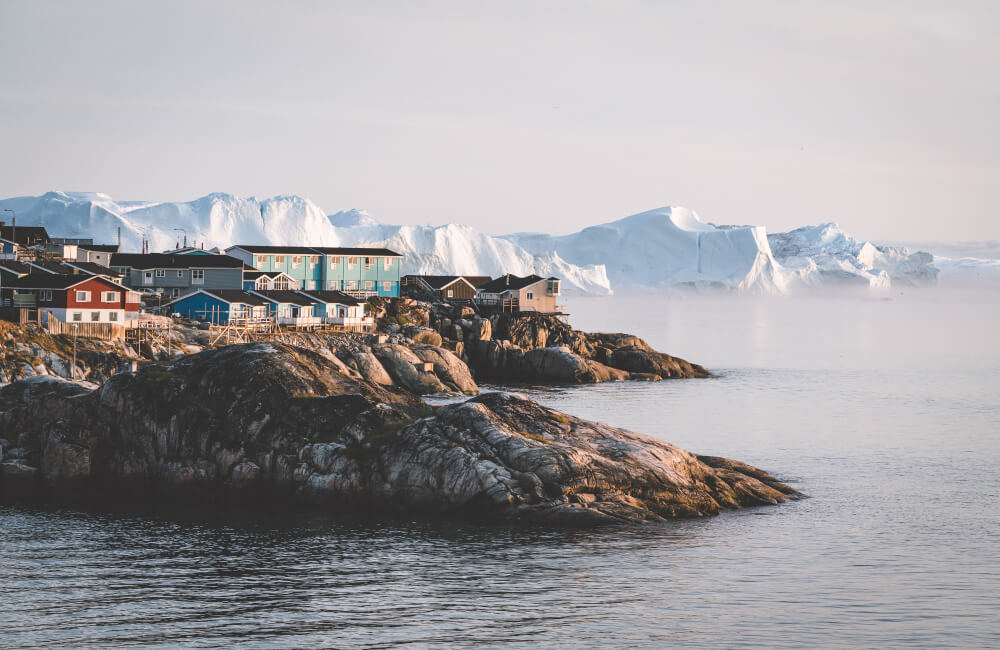
Iceland experienced its hottest year on record in 2025, yet scientists warn northern Europe could face a severe cold shock. Researchers express concern over a major Atlantic ocean current that could collapse, potentially plunging the region into a new Ice Age.
According to the Icelandic Met Office, the national average temperature reached 5.2°C, 1.1°C higher than the 1991-2020 average. This marks the warmest year since Iceland began keeping records. Almost every month registered “well above average” temperatures, with spring standing out. A ten-day heatwave in mid-May pushed temperatures to 26.6°C at Egilsstaðir Airport.
Annual rainfall remained below the ten-year average across most of Iceland, though some regions still exceeded the 1991-2020 norms. Scientists note that every 1°C rise in air temperature allows the atmosphere to hold around seven percent more moisture, often triggering heavier rainfall.
The threat of an AMOC slowdown
Experts warn that global warming might paradoxically cause extreme cooling in northern Europe. The concern centers on the Atlantic Meridional Overturning Circulation (AMOC), a vast system of ocean currents moving warm water north and cold water south. Accelerated Arctic ice melt and Greenland’s ice sheet releasing freshwater could disrupt this current. If the AMOC weakens or collapses, scientists fear it could spark a “modern-day ice age,” sending countries like Iceland into intense cold. Historical records show the AMOC collapsed before the last Ice Age, around 12,000 years ago.
In September 2025, Iceland’s National Security Council officially classified a potential AMOC collapse as a security risk.
Could Iceland become one giant glacier?
A report published by the Nordic Council on 5 February warns that the AMOC collapse could produce extreme impacts in Nordic countries, contrasting with the general warming trends. Climate models suggest Iceland’s winter temperatures could plummet to -45°C, and sea ice might surround the island for the first time since the Viking era. Hildigunnur Thorsteinsson, director general of the Icelandic Meteorological Office, told the Washington Post, “At that point, Iceland would be one giant glacier.” Scientists stress that while this is one possible scenario, it can no longer be dismissed as an unlikely fear.
Aleksi Nummelin, Research Professor at the Finnish Meteorological Institute, adds: “The AMOC is a key part of the climate system in the Nordic region. Its potential weakening or collapse is a risk we must take seriously.”
How Iceland could avoid a deep freeze
The Nordic Council report urges urgent measures to reduce emissions and meet net negative targets. Scientists warn that exceeding 1.5°C above pre-industrial temperatures increases the likelihood of an AMOC tipping point. Researchers call for long-term funding and the development of an AMOC early warning system that combines Earth observations with model simulations.
“This early warning system should guide policy decisions and enable rapid action,” the report states. It highlights the EU Ocean Act as a framework to coordinate monitoring and mitigation efforts. The study follows a 2024 letter from climate scientists suggesting that risks of an AMOC collapse may have been underestimated.
