


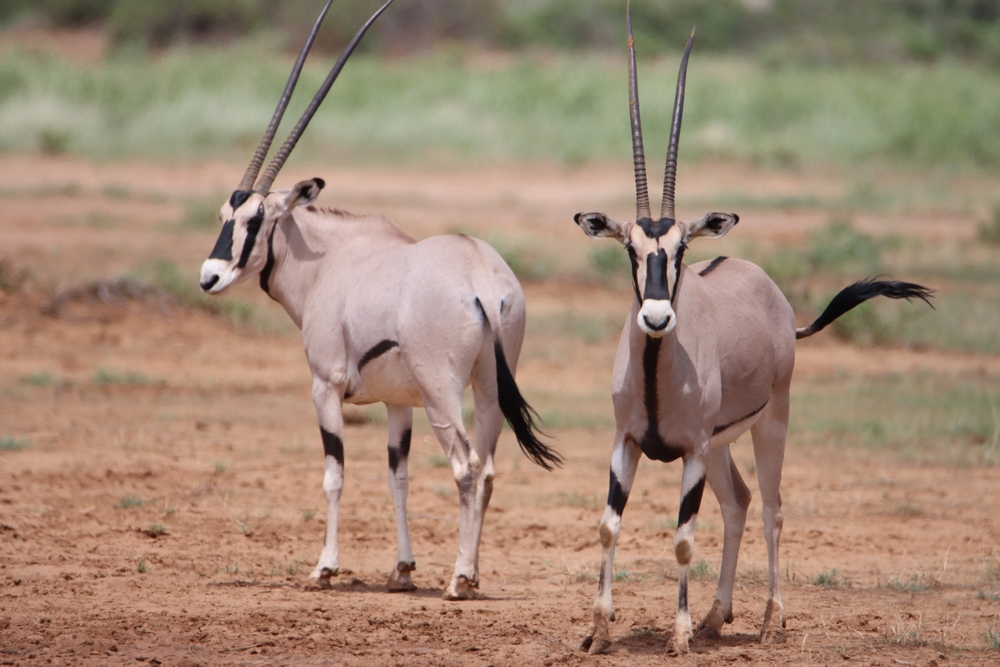
The Comeback of the “Extinct” Oryx
The scimitar-horned oryx has returned from extinction through global breeding efforts. Conservationists now hope the species can slow the Sahara’s advance.
A Harsh Landscape Reveals Its Secrets
In 2012, Marie Petretto and John Newby travelled to central Chad. They aimed to see the landscape as an antelope might. The Ouadi Rimé-Ouadi Achim Reserve looks empty at first, yet it covers diverse drylands larger than Ireland.
Their team documented grasslands, hidden gorges and wadis that bloom after fierce summer rains. Petretto saw almost 100 gazelles sprint past and noted acacia trees packed with vultures. These trees worked like beach umbrellas in deadly heat. The wadis held moisture for months and supported plants vital to wildlife.
These signs convinced the team. This could host a bold experiment: the return of the oryx, a tall desert antelope with long curved horns. The species survived drought and heat but existed only in captivity by 2012.
Breeding a Future
In England, Petretto visited the international network that guarded the species for decades. At Marwell Wildlife Park, oryx grazed beside zebras and rhinos. Males clashed horns to settle their hierarchy, a normal ritual.
Marwell’s founder created one of the first zoos focused on breeding endangered species. Oryx numbers had crashed from about one million to a tiny remnant. Yet the animals adapted well to Britain’s cool climate. Their natural desert skills, like wide hooves and heat tolerance, remained intact.
Zoos used detailed studbooks to avoid inbreeding. Keepers tracked every birth, every lineage and every move. The early population included fewer than 50 founders, many from Chad. Today, the studbook lists more than 3,000 animals across 182 institutions. Another 10,000 live in private US estates, offering genetic backup.
Reintroduction Lessons
Marwell sent oryx back to North Africa long before the major project in Chad. In 1985, ten young oryx entered a fenced area in Tunisia. They learned quickly and survived without major issues. Other parks in Tunisia and Morocco followed with similar trials. These sites taught experts how to form stable herds and how to manage soft releases with temporary feeding.
The species offered clear advantages. Habitat loss had not caused its decline, so vast Sahelian areas remained suitable. The main threat had been overhunting with modern weapons.
Local enthusiasm grew, especially in Tunisia, yet drought posed new challenges. The Sahara expanded about 10% in the past century, and the Sahel suffered heavy degradation. Projects like the Great Green Wall aim to restore ecosystems, though progress varies.
How Oryx Support the Land
Experts believe oryx could strengthen fragile landscapes. Overgrazing by livestock removes vegetation and exposes soil to drifting sand. In reintroduction areas, plant cover improved after barriers protected land.
Oryx contribute through seed dispersal and nutrient cycling. They eat grasses, herbs and seed pods, then spread the seeds over long migrations. One study found that seeds eaten by related species germinated far more successfully. This supports natural regeneration.
Return to Chad
On 14 March 2016, a cargo plane brought 25 oryx to Chad. The group came from a genetically diverse “World Herd” coordinated across Europe, the Gulf and the US. Conservationists lined up to open the crates. Many questions remained about the animals’ ability to adapt and navigate a vast wild landscape.
Tracking collars showed quick learning. The animals adjusted movement patterns to Chad’s three seasons. Newby called this their “apprenticeship”, a process of trial and error across huge distances.
So far, teams have released 347 oryx. Between 550 and 600 now roam freely in Chad. The species moved from “extinct in the wild” to “endangered” in 2023, a historic upgrade.
The Next Challenge
Every release represents years of preparation, from health checks to custom transport crates. The dramatic moment of freedom hides long, complex work.
Newby warns that success depends on human choices. The oryx adapted well, but their future relies on local communities that must value the animals alive rather than as meat or leather.
“The first phase succeeded,” he says. “They returned, they breed and they remain stable. But that is only the beginning. The hardest part lies ahead, and it depends on people learning to live with wildlife.”
