


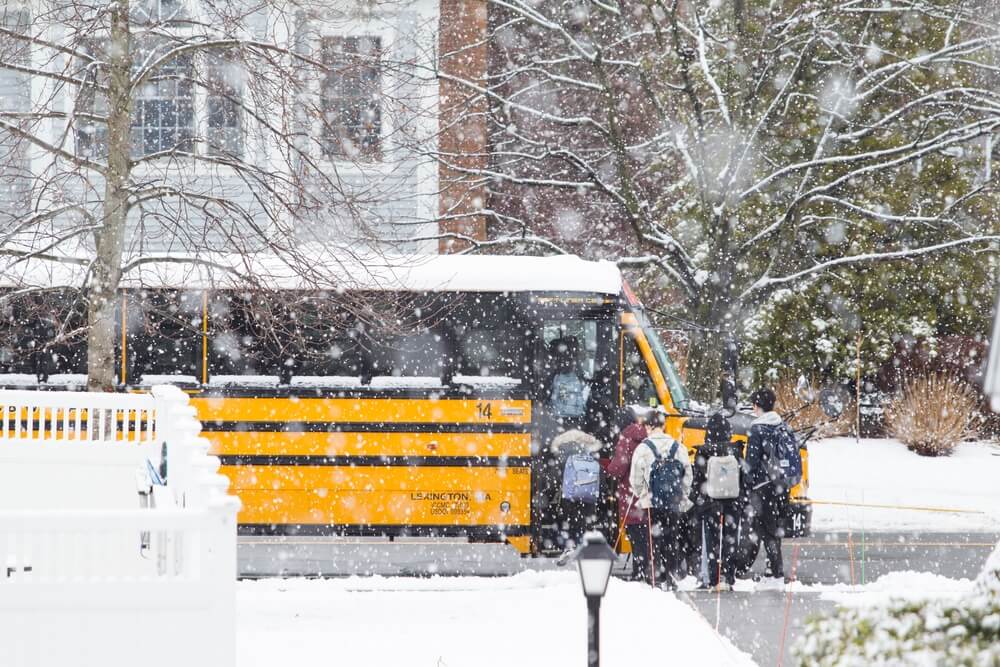
A powerful winter storm has begun pounding the north-east United States, leaving tens of thousands without electricity and prompting New York City to enforce a strict travel ban. Officials reported widespread disruptions as heavy snow, strong winds, and coastal flooding began to hit the region.
Widespread warnings and emergency measures
Weather authorities issued alerts for roughly 59 million residents, while multiple states declared emergencies. Several jurisdictions imposed travel restrictions or bans to keep people off dangerous roads. Thousands of flights were canceled as airports struggled to operate amid the storm. Forecasters predict that the nor’easter will affect the US north-east and Canada’s maritime provinces from Sunday evening into Monday. Experts call it the most powerful storm of its kind in nearly ten years.
Snow and wind batter the region
The storm has already dumped several inches of snow across the north-east, including 10 inches (25 cm) in Manorville, New York, and Howell, New Jersey, by midnight local time. The US National Weather Service (NWS) warned that snowfall could reach 2-3 inches per hour, with some areas accumulating 1-2 feet (30-60 cm). Officials described travel as “nearly impossible” and “extremely treacherous.” NWS meteorologist Cody Snell emphasized that storms of this magnitude rarely hit such densely populated areas.
Power outages and flight chaos
Nearly 90,000 homes lost power in New Jersey alone, with tens of thousands more affected in Delaware, Maryland, and Virginia, according to PowerOutage. Airlines canceled about 5,500 flights on Sunday and delayed hundreds more, while Monday’s travel plans faced additional cancellations. New York’s John F. Kennedy and LaGuardia airports suffered the worst impact.
New York City imposes full travel ban
The city implemented a full travel ban from Sunday evening until noon Monday, as forecasts predicted 18-24 inches of snow and temperatures as low as -6°C (20°F). Mayor Zohran Mamdani ordered streets, highways, and bridges closed except for emergencies. Schools also remained shut. The heaviest snow, up to 28 inches (70 cm), was expected overnight into Monday.
New York City faces its first blizzard warning in nine years and the second major snowstorm under Mamdani’s administration. The city endured a deadly cold snap in January that claimed 19 lives. Brooklyn resident Brandon Smith said commuters would struggle to reach work, despite suspended roads.
Closures and cancellations
Broadway canceled all Sunday evening performances, while the New York Racing Association scrapped eight horse races at Aqueduct Racetrack. Governor Kathy Hochul declared a statewide emergency and put 100 National Guard members on alert. She warned that residents in Long Island, New York City, and lower Hudson faced being in the storm’s direct path.
Officials expect wind gusts of 65-70 mph (104-112 km/h) along the coast, with downed trees and power outages likely. Massachusetts, Delaware, New Jersey, and Rhode Island also declared states of emergency. Boston closed its schools, and Rhode Island activated the National Guard while banning travel and closing state offices. Governor Dan McKee urged residents to stay home, describing the response as “all-hands-on-deck.”
New Jersey Governor Mikie Sherrill halted state transport services, warning the storm could rival the one in 1996. Connecticut Governor Ned Lamont suspended commercial vehicle travel on highways until further notice. Pennsylvania Governor Josh Shapiro issued a disaster declaration to give state agencies extra resources.
Storm impacts reach beyond the north-east
The nation’s capital expects milder conditions, yet school districts around Washington DC announced closures. Federal offices allowed workers to start later, take unscheduled leave, or work remotely. In Canada, Nova Scotia’s east coast faces the worst impact, with amber weather warnings predicting outages, roof damage, and falling debris from Monday morning through early Tuesday.
