


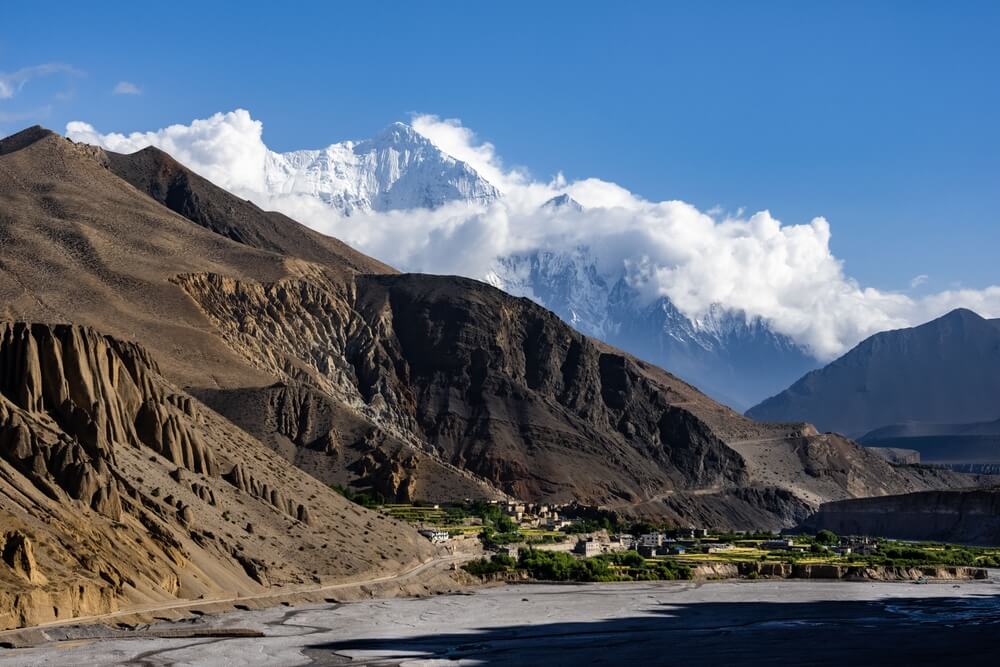
Much less winter snow now falls on the Himalayas, leaving vast stretches bare and rocky during a season once defined by snow. Meteorologists say recent winters no longer resemble the historical norm. Most winters over the past five years recorded snowfall well below the average measured between 1980 and 2020.
Rising temperatures worsen the situation. Limited snowfall melts rapidly, while lower elevations increasingly receive rain instead of snow. Scientific assessments link this shift partly to global warming. Researchers also confirm the emergence of winter “snow droughts” across many Himalayan areas.
Accelerated glacier melting already threatens India’s Himalayan states and neighboring countries. Experts say shrinking winter snowfall now intensifies this long-running crisis. Reduced ice and snow reshape the mountains and endanger ecosystems. Hundreds of millions of people depend on these fragile systems.
Water systems face mounting pressure
Winter snow plays a vital role in regional water security. Spring warming melts accumulated snow and feeds major rivers. This runoff supplies drinking water, irrigation, and hydropower across South Asia. Scientists warn that declining snowfall directly threatens these lifelines.
Lower winter precipitation also dries forests and landscapes. Experts say these conditions increase wildfire risks across the region. Vanishing glaciers and reduced snow weaken mountain stability. Ice and snow once acted as natural cement. Their loss now fuels rockfalls, landslides, glacial lake outbursts, and destructive debris flows.
Sharp precipitation decline alarms scientists
India’s Meteorological Department recorded almost no precipitation across northern India in December. Officials expect severe deficits to continue. Large parts of northwest India may see 86% less rainfall and snowfall between January and March. Affected areas include Uttarakhand, Himachal Pradesh, Jammu and Kashmir, and Ladakh.
Meteorologists calculate these deficits against the long period average. This benchmark uses 30 to 50 years of data. North India’s average precipitation between 1971 and 2020 measured 184.3 millimetres.
Experts stress that this pattern extends beyond a single bad season. Multiple datasets now confirm declining winter precipitation across the Himalayas. Kieran Hunt from the University of Reading says evidence consistently shows reduced winter moisture.
Long-term data confirms falling snowfall
A 2025 study co-authored by Hunt analysed four datasets from 1980 to 2021. All showed decreasing precipitation across the western and parts of the central Himalayas. Separate analysis using ERA-5 reanalysis data reached similar conclusions.
Hemant Singh from the Indian Institute of Technology in Jammu reports a 25% snowfall decline. His findings compare the last five years against the 1980–2020 average. Meteorologists also observe similar trends in Nepal, home to the central Himalayas.
Nepal has seen no rainfall since October. Researchers expect the remainder of winter to stay dry. Binod Pokharel from Tribhuvan University says this pattern repeated across most winters in the past five years. Scientists note that occasional heavy snowfalls still occur. These events remain isolated extremes, not widespread seasonal coverage.
Snow persistence hits record lows
Scientists also track snow persistence, measuring how long snow remains on the ground. The winter of 2024–2025 recorded a 23-year low. Snow persistence dropped nearly 24% below normal, according to ICIMOD.
Four of the past five winters between 2020 and 2025 showed below-normal persistence across the Hindu Kush Himalaya region. ICIMOD researcher Sravan Shrestha links this trend to declining winter snowfall and precipitation anomalies.
A 2025 study co-authored by Singh highlights growing snow droughts. These shortages affect elevations between 3,000 and 6,000 metres most severely. ICIMOD warns that snowmelt contributes roughly one quarter of annual runoff across 12 major river basins. Seasonal snow anomalies now threaten water security for nearly two billion people.
Weaker weather systems deepen the crisis
Scientists link much of the decline to weakening westerly disturbances. These Mediterranean low-pressure systems once delivered vital winter rain and snow. They supported crops and replenished mountain snowpacks.
Research findings remain mixed. Some studies detect clear changes in these systems, while others show limited shifts. Hunt says winter precipitation changes must relate to westerly disturbances. He explains that these systems produce most Himalayan winter precipitation.
Researchers suspect two key changes. Westerly disturbances now appear weaker and may track further north. Both trends reduce moisture uptake from the Arabian Sea. India’s weather department has already labelled this winter’s disturbances as feeble.
Scientists continue investigating the causes behind declining winter precipitation. Yet one reality already stands clear. The Himalayas now face a dual threat. Rapid glacier loss coincides with shrinking snowfall. Experts warn that this combination will bring far-reaching and lasting consequences.
