


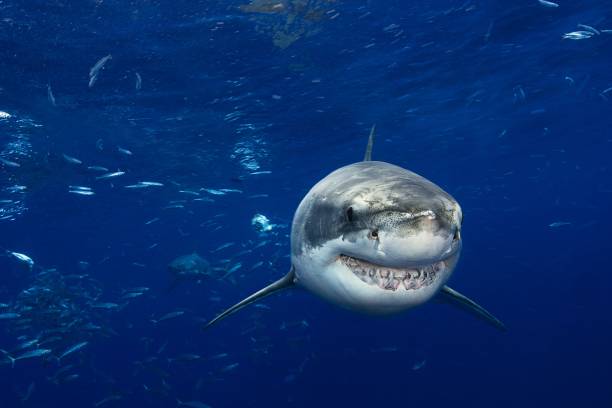
Great white sharks in the Mediterranean Sea face a growing threat of extinction, researchers warn. Illegal fishing contributes heavily to their decline, putting one of the ocean’s top predators at risk.
US scientists, collaborating with the UK-based Blue Marine Foundation, conducted research revealing that some of the most threatened shark species are being sold openly in North African fish markets. Great whites belong to more than 20 Mediterranean shark species protected under international law, making it illegal to fish or trade them.
Despite these protections, researchers monitoring ports along the North African Mediterranean coast documented at least 40 great white sharks killed in 2025 alone. Social media footage confirms protected sharks arriving dead in regional ports. One video shows a large great white hauled ashore from a fishing boat in Algeria. Another shows what appears to be a short-finned mako shark, also protected, being prepared for sale in Tunisia.
Last stronghold of Mediterranean sharks
Lead researcher Dr Francesco Ferretti, from Virginia Tech, says many shark populations, especially great whites, have declined dramatically in the Mediterranean over recent decades. “No other stretch of water is fished like the Mediterranean Sea,” he explained while working off the coast of Sicily. “Industrial fishing has intensified, and extinction is plausible in the near future.”
The Mediterranean white shark population now carries a Critically Endangered status from the International Union for Conservation of Nature. To study these predators, Dr Ferretti’s team focused on the Strait of Sicily, a known last stronghold for several threatened shark species. They aimed to fit a satellite tracking tag onto a white shark, a first in the Mediterranean.
The team brought over three tonnes of fish bait, including frozen mackerel and tuna scraps, plus 500 litres of tuna oil to attract sharks from hundreds of metres away. Despite two weeks of baiting, seawater DNA sampling, and underwater cameras, they found no sharks to tag. They only glimpsed a blue shark briefly on camera.
“It’s disheartening,” said Dr Ferretti. “It shows how degraded this ecosystem has become.” While searching, they learned that a juvenile great white had been killed in a North African fishery just 20 nautical miles from their research site. It remains unclear whether the catch was accidental or deliberate. The team estimates over 40 great white sharks have been caught along the North African coast, a serious threat for a critically endangered population.
Sharks for sale
Researchers, alongside North African colleagues, monitor fishing ports in the region. Their investigation confirms that protected sharks are still caught, landed, and offered for sale in countries such as Tunisia and Algeria. Social media footage shows a great white landed in Algeria and a short-finned mako shark displayed for sale in a Tunisian market.
International rules protect 24 threatened shark species, including mako, angel, thresher, and hammerhead sharks. The EU and 23 Mediterranean nations signed an agreement prohibiting the retention, transfer, sale, or display of these species. Sharks must be released unharmed where possible. However, the rules cannot fully prevent accidental bycatch, and enforcement varies by country.
James Glancy from Blue Marine reported multiple white sharks in Tunisian markets. He sees a paradoxical hope in their presence. “It shows wildlife remains, and with protection, recovery is possible,” he explained.
What can be done
In poorer North African communities, fishers often face a stark choice: feed their families or return threatened sharks to the ocean. Sara Almabruk from the Libyan Marine Biology Society says most catches are accidental but adds that survival needs drive fishers’ decisions. “Supporting them with sustainable fishing practices can prevent white shark catches,” she said.
James Glancy emphasizes the importance of regional cooperation. “If Mediterranean countries work together, there is hope,” he said, adding that urgent action is required to prevent further decline.
