


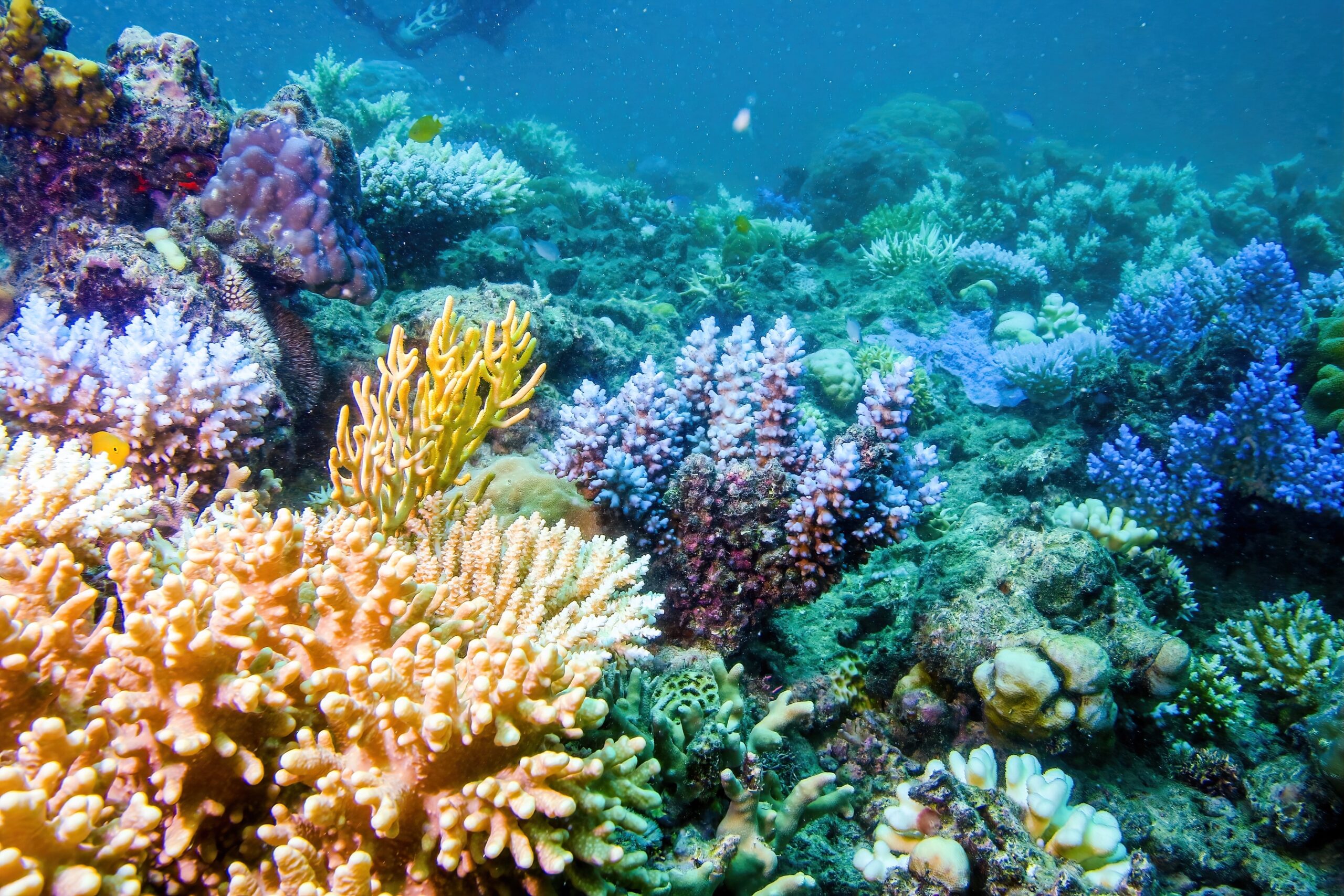
New modelling from the University of Queensland has found the Great Barrier Reef could suffer a “rapid coral decline” by 2050, but may still recover if global heating is limited to under 2C.
The study, published in Nature Communications, challenges previous assumptions that the reef’s collapse would be irreversible beyond 1.5C of warming. However, scientists warn that the reef’s natural resilience will be overwhelmed if temperatures rise much higher.
“If we stay on the pathway we’re on, it’s a very bad and grim future for corals,” said Prof Peter Mumby, who co-led the research. Current global climate policies are expected to lead to about 2.8C of warming by 2100.
The modelling considered the eco-evolutionary dynamics of all 3,800 reefs, including how heat-tolerant corals pass traits to offspring and how cooler “refuge” reefs can help reseed others. The results show coral cover could halve by 2040 even under optimistic scenarios.
If global temperatures remain below 2C, the reef could gradually recover to near-historic levels. But if emissions stay at current levels, average coral cover may drop to just 4% by the end of the century.
Dr Yves-Marie Bozec, lead author, said: “We ran all of those factors with the most up-to-date climate projections – and the news was not good.”
Experts say the findings reinforce the need for global emissions cuts alongside local conservation. “Curbing emissions has to remain our number-one priority,” Mumby said. “That will have a bigger effect than any other activity.”
