


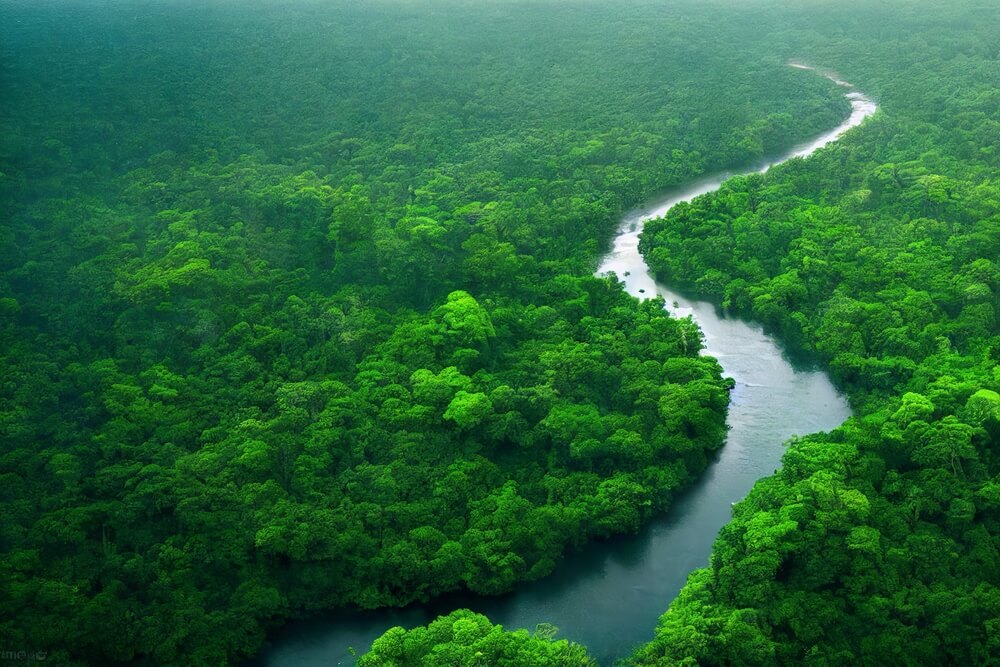
Four decades of forest data show climate change quietly reshapes tree diversity across the Amazon and Andes. Some forests lose species, while others gain them. Shutterstock provided the image credit. A new study in Nature Ecology and Evolution documents major recent shifts in tropical tree diversity as global conditions change.
Dr. Belen Fadrique from the University of Liverpool led the research. The team used 40 years of detailed tree records. Hundreds of botanists and ecologists collected these data in long-term forest plots. The records form one of the most comprehensive assessments of tree diversity change in Earth’s richest forests.
Overall Stability Masks Regional Losses and Gains
Researchers examined tree diversity across South America as a whole. They found overall species richness remained mostly stable. This balance hides sharp regional differences across forests.
Several large areas experienced declining tree diversity over time. Other regions recorded clear increases in species numbers. These opposing trends show climate change affects tropical forests unevenly rather than uniformly.
Hotter and Drier Forests Lose Species
The analysis linked species losses to higher temperatures and drier conditions. Stronger seasonal climate swings also increased losses. Forests with healthier and naturally dynamic ecosystems often gained species during the same period.
The Central Andes, the Guyana Shield, and Central Eastern Amazon showed the strongest declines. Most monitoring plots in these regions recorded losses. The Northern Andes and Western Amazon showed increases in most plots. Rising temperatures influenced diversity broadly, while rainfall levels and seasonality shaped regional patterns.
Northern Andes Emerges as a Climate Refuge
The study identified the Northern Andes as a potential refuge for tree species under climate pressure. As conditions worsen elsewhere, this region may shelter displaced species.
The team analyzed data from the South American tropics, which host more than 20,000 tree species. The dataset covered ten countries and included 406 long-term floristic plots. Scientists repeatedly measured these plots since the 1970s and 1980s. These rare records allowed tracking species richness changes and identifying environmental drivers at continental scale.
How Plant Species Respond to a Warming Climate
Plant species face limited options under climate change. They can shift their geographic ranges as conditions change. They can also adapt where they already grow. Species that fail to move or adapt often decline, raising extinction risks.
Dr. Fadrique holds a Dorothy Hodgkin fellowship with the Royal Society and the University of Liverpool. She works in the Department of Geography and Planning. She conducted this research during a Marie Curie fellowship at the University of Leeds. She explained that the findings reveal profound changes in forest composition and species richness across multiple scales.
Flavia Costa, a professor at INPA in Brazil, said the study highlights uneven climate impacts. She stressed the need for region-specific monitoring and conservation across tropical forests.
Professor Oliver Phillips from the University of Leeds leads the pan-Amazon RAINFOR network. He warned that deforestation adds serious pressure. He said protecting forests links directly to biodiversity protection and climate action. He emphasized protecting forests where the Amazon meets the Andes. Standing forests can offer long-term refuge for species from nearby lowlands.
What the Team Plans to Study Next
The researchers will continue studying climate-driven changes in tropical tree diversity. Dr. Fadrique said future work will examine complex compositional shifts. The team will study which species disappear or arrive and their functional traits. They will also test whether these trends signal large-scale homogenization across the Andes-Amazon region.
More than 160 researchers from 20 countries contributed to the project. South American universities and partners provided many contributions. Research networks supported the work, including RAINFOR, Red de Bosques Andinos, the Madidi Project, and the PPBio network.
