


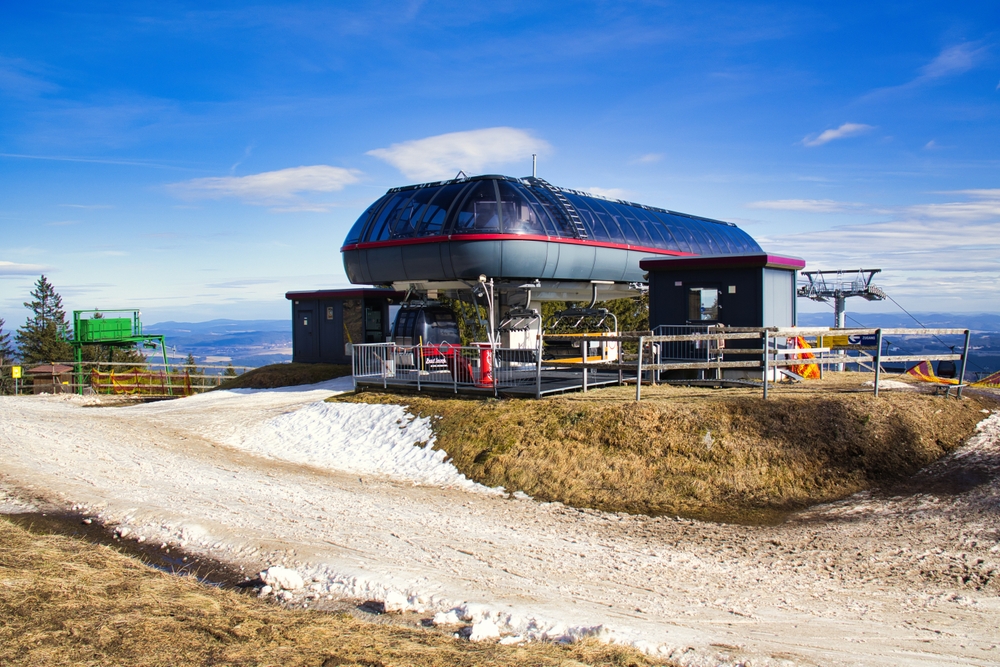
Rising temperatures and inconsistent snowfall are forcing ski resorts across Europe to rethink how they operate. With the Winter Olympics set to begin in Milan-Cortina on 6 February, the Dolomites are currently blanketed in snow, but such conditions are becoming less reliable. Many resorts now rely on artificial snow to keep slopes open, a process that is expensive and environmentally taxing, often pushing up the price of ski passes. For many Europeans, skiing is becoming both less predictable and less affordable.
Climate Change Threatens Winter Sports
Even Italy’s famed Belluno region is experiencing warmer winters and shrinking natural snowfall, a problem affecting the entire Alpine region. The International Olympic Committee has acknowledged that global warming, mainly caused by fossil fuel use, is changing the landscape of winter sports.
Since 1924, 21 locations have hosted the Winter Olympics. A 2021 study suggests that by 2050 only four of these sites Lake Placid, Lillehammer, Oslo, and Sapporo will remain suitable. If global temperatures rise by 4 degrees Celsius, almost all other former Olympic locations will lose the snow required to host the Games, with only Sapporo remaining viable by 2080. Even if global warming is limited to 2 degrees Celsius under the Paris Agreement, only nine Olympic sites would remain usable in 2050.
The Alpine Economy Faces Daily Challenges
For communities that rely on skiing, these issues are a constant concern. Europe’s winter tourism industry generated about €180 billion in 2022, with the Alps at its center. The region is home to 80 million people and contains critical water resources and rich biodiversity. Germany has the most ski resorts in Europe, followed by Italy and France. Research shows that more than half of Europe’s 2,234 ski resorts are at high risk of low snow if temperatures rise by 2 degrees Celsius. In the French Alps and the Pyrenees, the situation is even more severe. At a 4-degree rise, nearly all European resorts could lose reliable snowfall.
The Cost of Artificial Snow and Rising Ski Passes
Artificial snow is not a simple solution. Producing 30 centimeters of snow on one hectare requires about one million liters of water, equivalent to the annual use of a city of 1.5 million people. Snow cannons also consume electricity, generating greenhouse gas emissions and worsening the climate crisis. Supplying all Alpine resorts with artificial snow would require around 600 GWh, enough to power 130,000 four-person households for a year.
The cost of skiing reflects these challenges. Since 2015, the average cost of skiing in Europe has risen 34.8 percent, far above inflation, with the steepest increases in Switzerland, Austria, and Italy. For many visitors, major resorts are becoming increasingly unaffordable, raising questions about the long-term future of winter tourism in Europe.
