


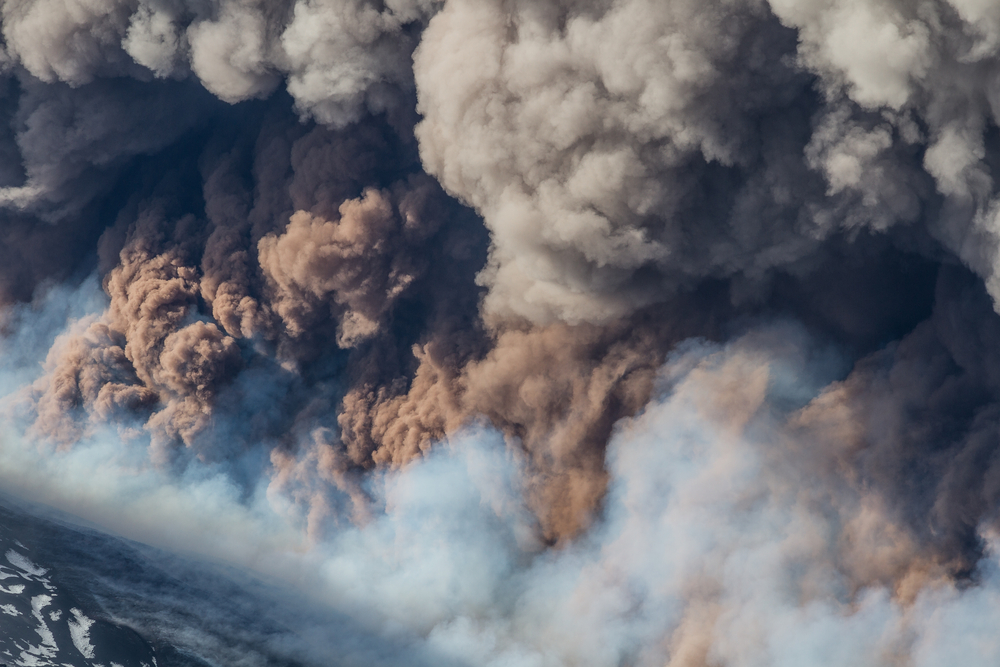
Ash cloud reaches India
A plume of volcanic ash from Ethiopia swept across the Red Sea through Oman and Yemen before reaching Delhi, according to the India Meteorological Department. The Hayli Gubbi volcano erupted on Sunday morning after several thousand dormant years and sent a towering ash column into the atmosphere. Several Indian flights were cancelled, delayed or rerouted as aviation officials asked airlines to avoid affected routes. Experts said the level of ash contamination remains unclear but Delhi’s already poor air quality should not worsen.
Threats to aircraft and satellite systems
Volcanic ash contains tiny abrasive particles that damage aircraft engines, contaminate airfields and sharply reduce visibility. These risks make ash clouds dangerous for flight operations. The IMD director general said the affected altitude ranges between 8.5km and 15km above sea level. He explained that the cloud will briefly disrupt satellite functions and flight paths but should not influence weather or local air quality. He added that the ash reached northern India on Monday night and appears to drift towards China.
How long the ash could linger
The private agency Skymet Weather said predicting dispersal times remains difficult. However, the IMD expects Delhi’s skies to clear by Tuesday evening. Aviation disruptions continue as Air India cancelled 11 flights while IndiGo, Akasa Air and KLM also faced operational challenges. IndiGo stated on X that it is monitoring developments with global aviation bodies. Mumbai Airport advised passengers to check flight status before travelling.
Regulators issue safety instructions
India’s aviation regulator asked pilots to report any suspected ash encounters, including engine anomalies or cabin smoke or odour. It also directed airlines to inspect aircraft operating near affected zones and to delay or suspend operations to impacted airports if conditions worsen. Volcanic ash contamination falls under low, medium and high categories, each linked to limits on how long aircraft can safely fly in those conditions. The contamination level in this case remains unknown. A Skymet Weather expert explained that measuring contamination requires advance sensor deployment, which proved impossible during this sudden eruption.
A rare and noisy awakening
A geophysics professor at Addis Ababa University said the event stands out because the volcano remained dormant for thousands of years. He said the eruption was unusually noisy but did not trigger major seismic activity. The Hayli Gubbi volcano lies near Erta Ale, a region known for active volcanic formations. Volcanic ash clouds remain rare, yet past events show their global impact. When Iceland’s Eyjafjallajökull volcano erupted in 2010, it caused the worst aviation disruption in Europe since World War Two.
