


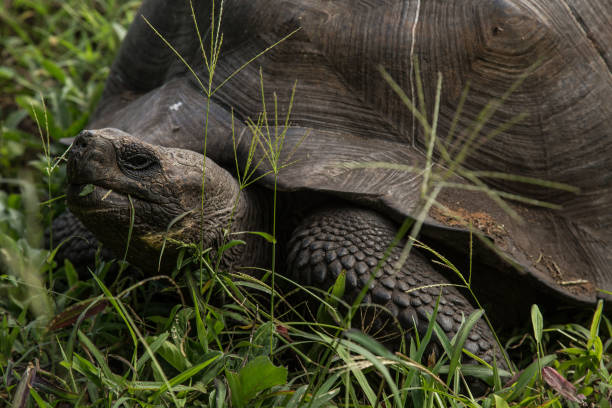
Giant tortoises are roaming Floreana island in the Galápagos for the first time in more than 180 years, marking a major conservation milestone.
Conservationists call the release of 158 captive-bred juvenile tortoises a breakthrough for ecosystem restoration and species revival on the island.
A milestone in ecological restoration
The Floreana Ecological Restoration Project, led by the Galápagos National Park Directorate, organized the reintroduction. It follows a “back-breeding” programme that began in 2017. Scientists discovered tortoises on nearby Isabela island carrying Floreana giant tortoise ancestry, creating a unique chance to revive the extinct subspecies.
Floreana’s native species, Chelonoidis niger niger, disappeared in the 1840s after sailors removed thousands of tortoises for food during long voyages. The new release restores a lost chapter in the island’s natural history.
Hope for global conservation
“The restoration of Floreana has reached a hugely significant milestone, with 158 captive-bred giant tortoises released into the wild this week,” the Galápagos Conservation Trust said in a statement. The trust added that this moment brings hope for restoring islands worldwide.
Dr Jen Jones, GCT chief executive, described the release as “truly spine-tingling.” She said it validated two decades of collaboration between scientists, charities, and the local community.
From hybrid discovery to wild release
The project became possible after scientists discovered tortoises with Floreana ancestry on Wolf Volcano, Isabela island, in 2008. Researchers selected 23 hybrids with the closest genetic links to the extinct subspecies and began breeding them in captivity on Santa Cruz island.
By 2025, the programme had produced more than 600 hatchlings, with several hundred now large enough to survive in the wild. The project demonstrates how careful breeding and selection can bring extinct populations back to life.
Ecosystem engineers shaping the landscape
The Galápagos Conservation Trust called giant tortoises “ecosystem engineers.” Their activity shapes landscapes, disperses seeds, and restores degraded habitats, giving them an outsized role in ecological recovery. Their return to Floreana marks not just a species comeback but also a step toward repairing entire ecosystems.
