


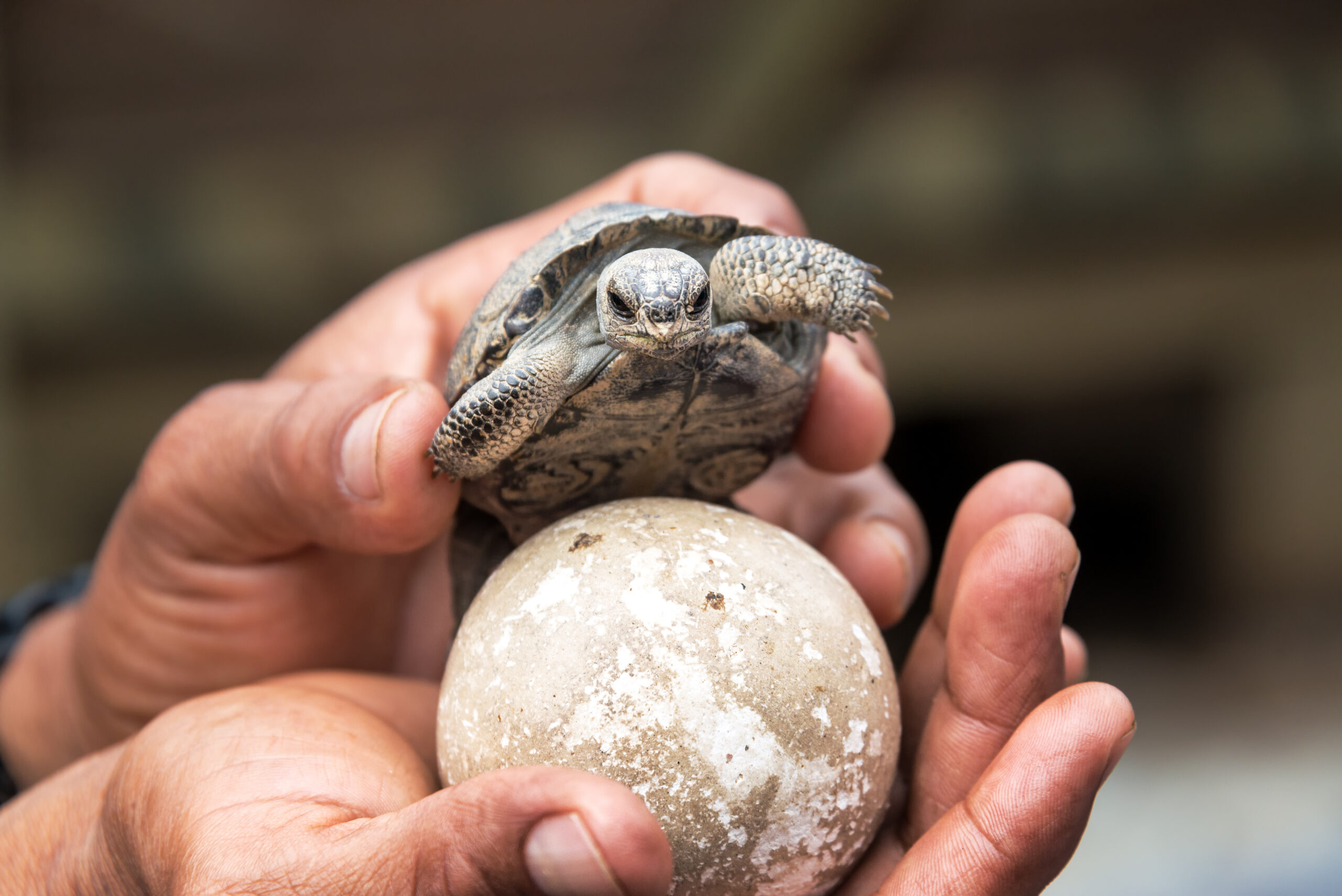
Giant tortoises are roaming Floreana Island again for the first time since the 1840s.
Whalers had driven the original population to extinction by taking them for food on long voyages.
Conservationists released 158 juveniles bred from tortoises with Floreana ancestry.
Scientists found those partial descendants on Wolf Volcano in 2008.
A selective “back-breeding” programme began in 2017 to recreate the lost subspecies.
More than 600 hatchlings have since been produced.
The return forms part of the Floreana Ecological Restoration Project.
An invasive species campaign removed most rats and feral cats from the island.
Native wildlife has already begun to recover, including the rediscovered Galápagos rail.
Giant tortoises are a keystone species that reshape habitats as they graze and spread seeds.
Their presence helps plants, reptiles, birds and invertebrates thrive.
Local residents say the healthier ecosystem also supports farming, fishing and tourism.
The next phase aims to reintroduce other lost species such as the Floreana mockingbird.
Researchers call the tortoises’ return a major step in rebuilding the island’s natural systems.
