


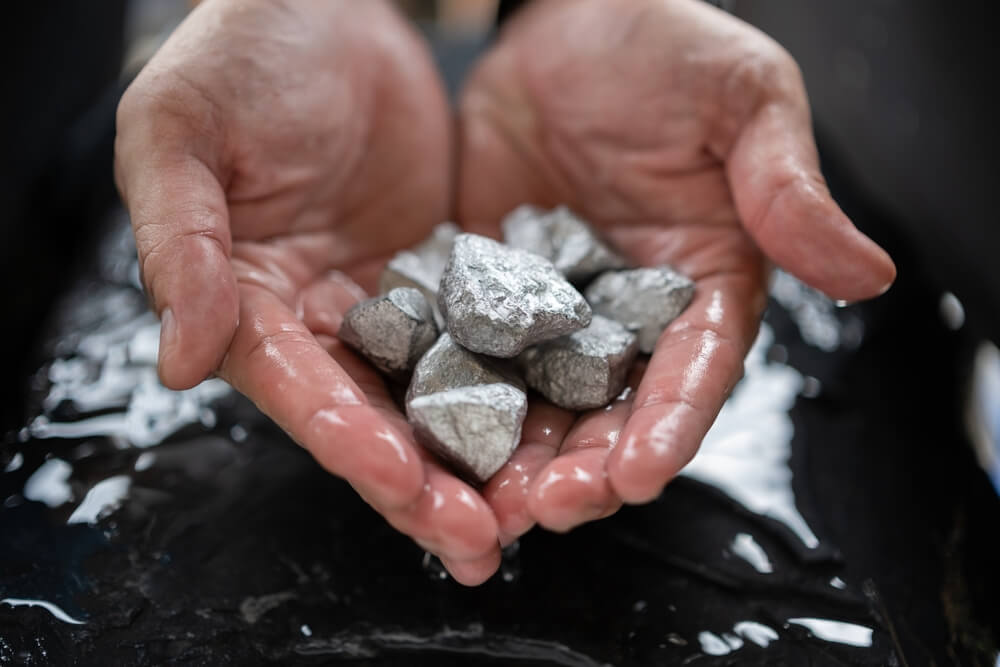
As countries compete for rare earth deposits, researchers reveal these valuable elements hide in plain sight. Scientists say we can extract them without conventional mining.
Fungi Could Unlock Hidden Resources
In a Vienna lab, two scientists watch a fungus grow. Its mycelium spreads through tiny networks, searching, feeding, and absorbing nutrients. Some fungi also soak up materials humans need.
The team grows the fungus on special clay infused with rare earth elements. These metals power batteries, magnets, and renewable energy devices. Researchers hope the fungus can extract rare earths efficiently. “You might actually recover resources,” says Alexander Bismarck, head of polymer and composite engineering at the University of Vienna.
Rare earths include 17 metallic elements such as dysprosium, yttrium, and scandium. Despite the name, these elements are abundant but exist in low concentrations, complicating large-scale extraction.
Rising Global Demand
Interest in rare earths is growing worldwide. Former US President Donald Trump proposed a $12 billion strategic reserve and sought access to deposits in Ukraine and Greenland. China dominates the industry, producing 70% of mined and 90% of processed rare earths globally.
Scientists explore innovative extraction methods. These include using fungi or separating rare earths from industrial waste. Developed economies could harvest these elements domestically, reducing global competition and reliance on imports.
“If we look at waste with fresh eyes, we see a different picture of scarcity and abundance,” says Julie Klinger, environmental studies professor at the University of Wisconsin-Madison.
Scaling Up Fungal Extraction
The fungus takes weeks to grow in the lab. Bismarck and colleague Mitchell Jones envision using fungi on large scales to recover rare earths from contaminated lands. “We could collect biomass using standard agricultural machinery,” Jones says, but cautions the concept remains speculative.
Fungi can be repurposed for mineral recovery while aiding ecosystems. They resist dark, grow faster than most plants, and can clean industrial sites. Researchers call this approach “mycomining” and published a 2024 paper outlining the process.
After harvesting, fungi could generate biogas or be burned as fuel. Rare earths could then be extracted from the ash. Scientists note fungal concentrations remain lower than those in e-waste, and scaling up could alter natural ecosystems.
Industry and Start-Ups Join the Search
Oona Snoeyenbos-West from the University of Arizona plans a start-up for bioremediation and mineral recovery using fungi. She targets rare earths and copper, sourcing fungi from industrial sites adapted to absorb high concentrations of metals.
Other companies and researchers explore waste-based extraction. Flash joule heating can recover rare earths from magnets, coal ash, and bauxite residue. This method heats materials using electricity, bonds target elements with chlorine, and captures them as vapor. The process uses less energy than traditional mining and remains portable.
Mining Waste Holds Unexpected Riches
Millions of tonnes of coal ash and red mud in the US contain concentrated rare earths. Studies estimate the value of these materials at billions of dollars. Companies like ElementUSA aim to extract gallium, scandium, and iron from these residues, while repurposing carbon and producing biogas from fungi.
Past efforts, like extracting rare earths from fluorescent light bulbs, faded as LEDs replaced them. But large-scale tailings, coal ash, and red mud remain untapped potential for sustainable extraction.
A Future of Symbiosis
Economically viable extraction could allow countries to meet rare earth demand domestically while cleaning contaminated sites. Industries and environmentalists could collaborate rather than compete. Julie Klinger calls this a “kind of symbiosis,” transforming fungi from a nuisance into an ally.
