


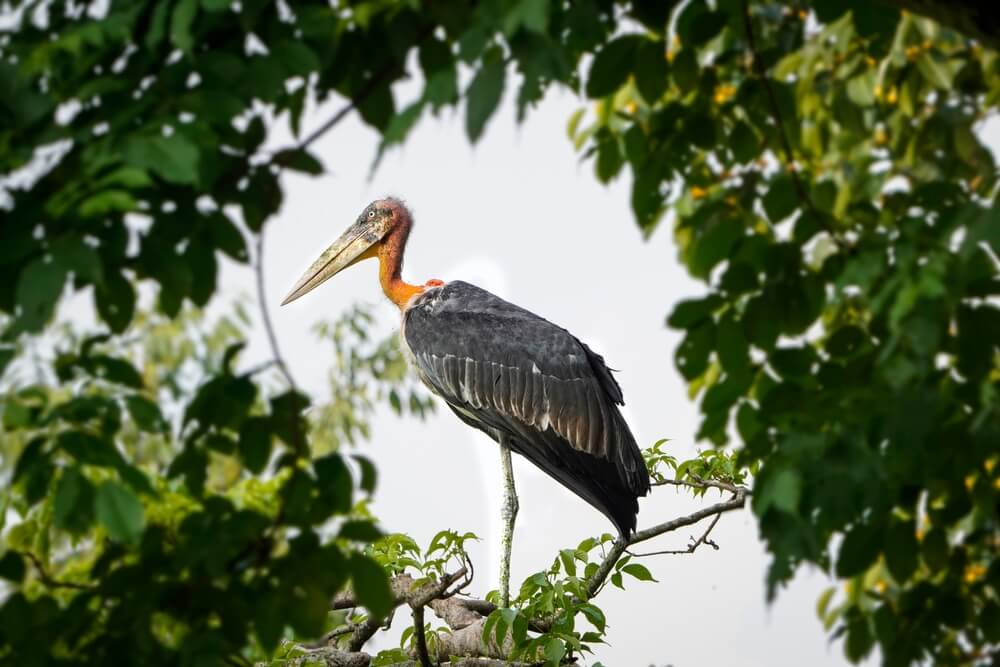
Once feared as a symbol of bad luck, India’s endangered hargila stork now has devoted protectors. Thanks to local women, its population is slowly rebounding.
Witnessing Devastation on the Brahmaputra
On a sweltering January afternoon in 2007, biologist Purnima Devi Barman arrived in Dadara village along Assam’s Brahmaputra River. Surrounding her were emerald wetlands and tropical forests, yet all she saw was destruction. Villagers had cut down a towering kadamba tree, scattering leaves, twigs, and nesting material across the ground. Among the debris lay dead greater adjutant storks, some of Assam’s most distinctive and endangered birds. A few chicks survived, and Barman held a baby bird against her chest, feeling its heartbeat and pain. Already raising twins, she felt the trauma deeply. At the time, she was pursuing a PhD in wildlife conservation, studying these storks, but the scene demanded more than observation.
The Unique Role of the Hargila
Locally known as the hargila, or “bone-swallower,” these storks can grow up to 5 feet tall. They play a crucial role in wetlands, cleaning up carcasses and recycling nutrients back into the soil. Once common across Asia, the birds now survive only in Assam, Bihar, and parts of Cambodia. Hunting, egg collecting, and habitat destruction have severely reduced their numbers. The International Union for the Conservation of Nature lists the species as Near Threatened.
From Fear to Advocacy
Villagers once feared hargilas, considering them unlucky and often hunting them for meat or folk medicine. Their nests frequently appeared on private property, and their droppings added tension. These threats could have led to extinction if not for a group of local women who changed the storks’ fate. Persistent conservation has raised the population in Assam from 450 birds in 2007 to around 1,800, with sightings now in eight regions.
The All-Women Hargila Army
For her PhD, Barman studied the stork’s habits and its role in maintaining wetland health. She soon realized that changing attitudes toward the birds was just as important as scientific study. Barman began reshaping the hargila’s image, speaking of their value and insisting they were not ill-omened. She then visited villages, speaking with women about how they would feel if their own babies suffered the same way as the stork chicks. Many women resonated with her words.
Pratima Kalita Rajbongshi recalls villagers once throwing stones at hargilas. In 2009, after attending a Barman-led meeting, she decided to protect the birds. “When our babies are sick, we care for them, but we hurt the birds and their chicks,” she said. “That day I joined the Hargila Army.”
Celebrating the Stork
Members of the Hargila Army began incorporating the birds into traditional celebrations like baby showers. Women donned large hargila costumes and danced, transforming the bird into a symbol of joy. Barman formed small groups, employing women to sew the bird’s image onto sarees, quilts, and cushion covers. Cooking competitions and community events followed, linking conservation with daily life.
The movement grew. Today, 20,000 women from 47 villages actively protect the hargila, signing pledges to safeguard it. Women previously excluded from public spaces now found voices, creativity, and livelihoods through the initiative. Lavita Baishya, a member from Dadara, discovered a love for sewing and embroidery, later opening a tailoring center and selling hargila-themed merchandise. All profits benefit the women.
Conservation Meets Community
Research shows that combining folklore, tradition, and craft helped engage communities and support conservation. Deepa Moni Doley from New Delhi highlights how Barman’s communication strategy empowered locals. Barman earned recognition as one of Time magazine’s women of the year in 2025. Community activism also shifted men’s attitudes toward the birds.
UN Environment Programme director Susan Gardner praises the project’s blend of conservation and economic opportunity. Barman’s twin daughters now contribute, publishing a newsletter on the women’s efforts.
Ongoing Challenges
Despite success, threats remain. Development projects encroach on wetlands, reducing biodiversity. Protecting nesting trees like the towering silk cotton and kadamba trees is critical. Illegal timber mills cut trees without licenses, limiting roosting spaces for colonial nesting hargilas. Many remaining trees stand on private lands, making public awareness essential.
Kadamba trees, vital for nesting, hold cultural significance with their fragrant, spherical flowers associated with Lord Krishna. Conserving both hargilas and their trees remains central to the Army’s mission. Barman emphasizes women’s collective power: “The first step is to raise your voice. When women unite, we can protect anything.”
