


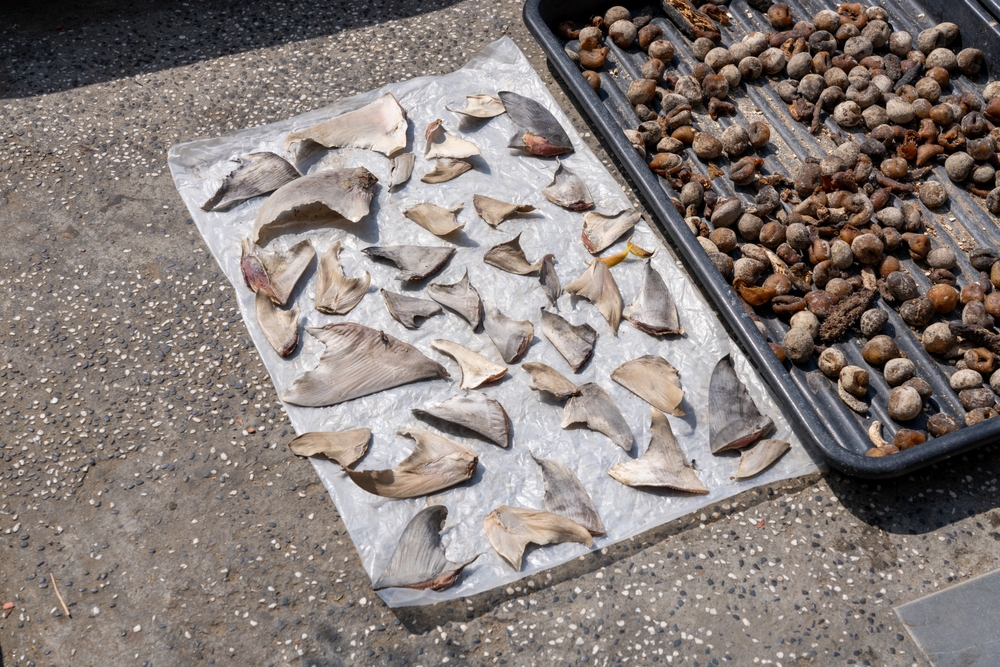
U.S. authorities helped Peru seize about 10,000 shark fins destined for China, one of Latin America’s largest wildlife trafficking cases.
Police arrested three men linked to a transnational network involved in illegal fishing and smuggling.
Peru’s Organized Crime Investigation Division led the operation, targeting fins from threatened species including blue and thresher sharks.
Cruel Trade Fuels Extinction
Traffickers slice fins off live sharks, discarding them to die from blood loss, suffocation, or predation.
Shark fins sell for up to $100 a bowl in Chinese cuisine, maintaining high profits for traffickers.
The illegal wildlife trade generates up to $20 billion annually, rivaling drug and arms trafficking in scale.
Conservation and Enforcement Challenges
Authorities laundered fins using falsified documents to disguise Ecuadorian origins, storing them in Callao for export.
Experts warn shark decline disrupts marine ecosystems, threatening reefs and fisheries, since many species reproduce slowly.
The bust shows law enforcement progress but underscores global challenges, including high demand, corruption, and limited oversight.
