


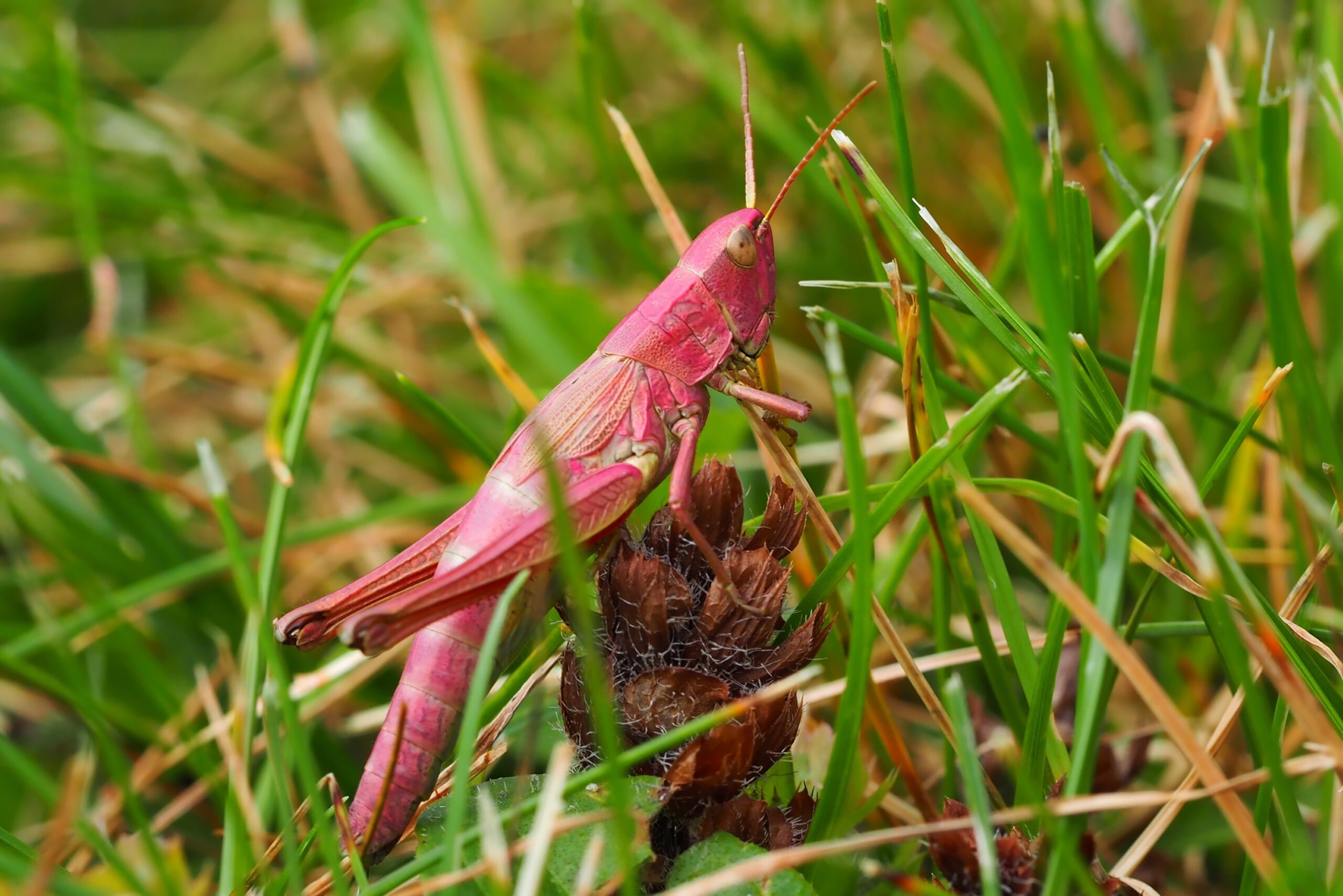
A rare pink grasshopper has been spotted sunbathing near a river in New Zealand’s South Island.
Researchers from the Department of Conservation were carrying out their annual grasshopper survey near Lake Tekapo in the MacKenzie Basin when they found the dark pink female. The insect belongs to the robust grasshopper species, New Zealand’s largest lowland grasshopper, which is usually grey or brown to blend in with river stones in its limited habitat.
Jen Schori, a conservation ranger involved in the survey, said she had heard rumours of pink individuals but had never seen one. The colour is believed to result from a genetic mutation called erythrism, which increases red pigment while reducing typical colouring.
Only an estimated 250–1,000 adult robust grasshoppers remain. The endangered species faces threats from habitat loss, warming temperatures and predators. Females, twice the size of males, rely heavily on sunlight to warm up enough to feed and develop their eggs.
Schori described the insects as uniquely prehistoric-looking and noted that despite being strong jumpers, they are poor at landing and highly vulnerable. The bright pink specimen is expected to be at even greater risk from predators.
In 2018, part of the grasshopper’s habitat was placed inside a predator-proof enclosure, creating what is believed to be the world’s first insect sanctuary. However, the pink grasshopper was found outside the protected area and must survive on her own.
Schori hopes the rare insect may breed: “Maybe she will, and we’ll see more pink ones.”
