


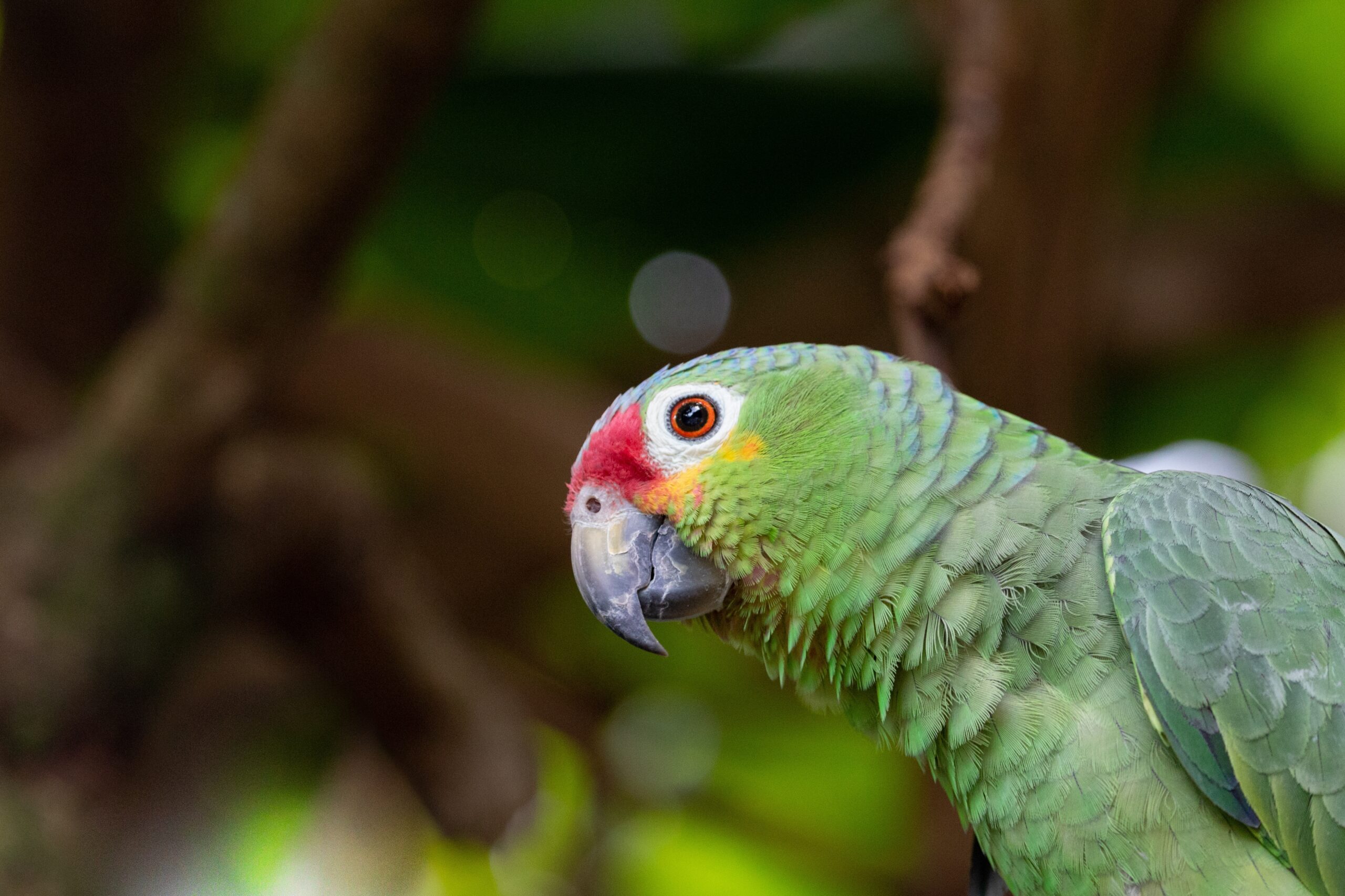
Los Angeles is home to thousands of loud, bright green parrots — many of them red-crowned parrots — that now flourish across the city after escaping the pet trade decades ago. Originally imported from Mexico and South America, some were freed accidentally, such as during a pet-store fire. Adaptable and intelligent, they spread across the LA basin, feeding on ornamental plants and facing few predators. Because they don’t compete with native birds, they aren’t considered invasive.
Scientists at Occidental College, led by John McCormack and research assistant Diego Blanco, are now studying these parrots to understand how they’ve adapted, evolved and even hybridized. The project began when a parrot that hit a campus window showed traits of two species — red-crowned and lilac-crowned parrots — that would never interact in the wild. Using historical bird specimens from Mexico, researchers compared modern LA parrots to their original populations and discovered ongoing hybridization and surprising genetic adaptations to California’s climate.
These feral parrots may also become conservation lifelines. Their wild populations in Mexico are endangered due to habitat loss and trapping, and LA’s population may now be larger than the one in their native range. Scientists suggest that, if necessary, the LA parrots could someday help repopulate Mexico.
Researchers are also tracking other species like the Nanday parakeet, which has adapted to California sycamore trees and may soon expand its range north.
While some Angelenos find the flocks noisy, many admire them. Their social behavior, long-distance communication and bright presence have made them a beloved part of the city. Still, the birds face risks — including lack of legal protection and occasional human harm.
Watching them fly over Pasadena, Blanco reflects on their unexpected role in the city: a living slice of the tropics, thriving in an urban landscape far from home.
