


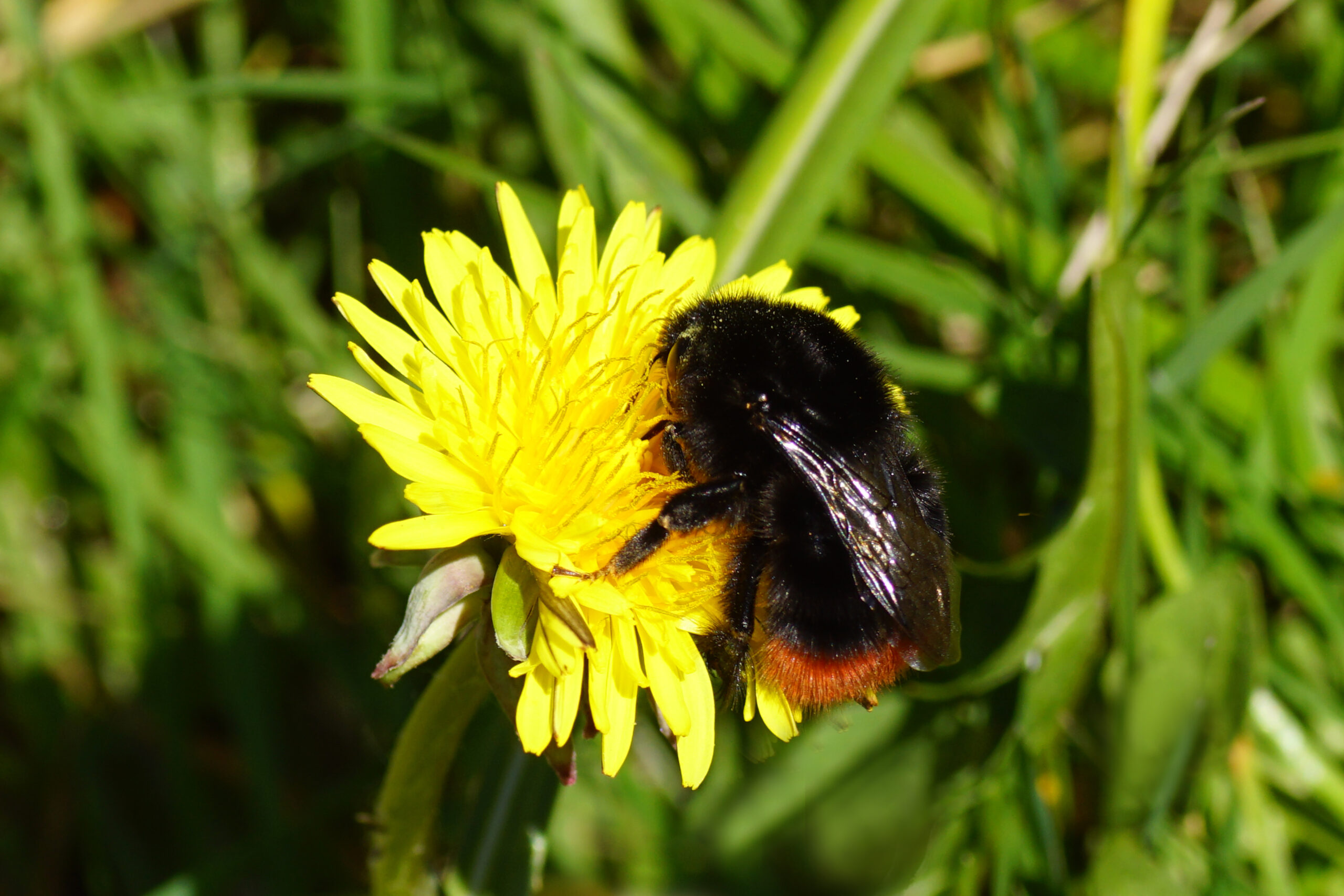
Britain’s once-common red-tailed bumblebee (Bombus lapidarius) has declined sharply over the past 30 years, largely due to intensive farming that has stripped away its habitat. But researchers believe an unlikely ally — solar farms — could aid the species’ recovery.
A study of more than 1,000 solar farms found that sites managed for wildlife, with wildflower planting and hedgerows, hosted more than twice as many bumblebees as those covered only in turf. While the boost in numbers was mainly within the farms themselves, scientists say that creating a network of pollinator-friendly solar farms could significantly improve bee populations across the UK, especially in areas surrounded by intensive agriculture.
As most bumblebees die off by November and new queens hibernate until spring, such wildlife-focused solar sites could offer crucial foraging grounds once the insects re-emerge — turning clean energy projects into unexpected sanctuaries for pollinators.
