


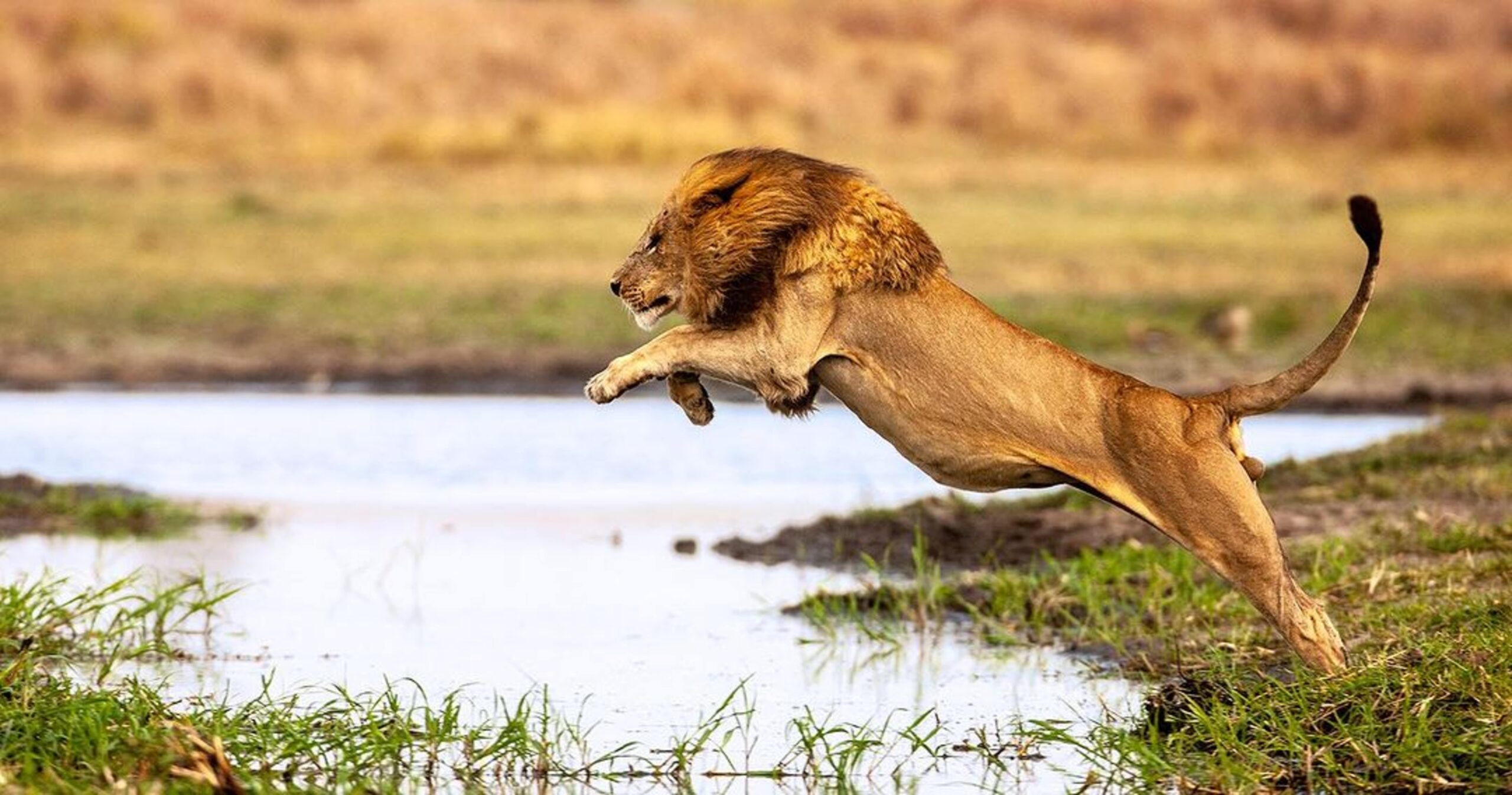
In Namibia, a group of desert lions has left the dunes for the Atlantic coast. They have become the world’s only maritime lions. A Belgian photographer captured their astonishing new life by the sea.
A lioness at the edge of the world
On a pebbled beach in Namibia, a lioness stares into the horizon. Behind her, wild waves crash against the shore. Beside her lies her prey – the carcass of a Cape fur seal. Photographer Griet Van Malderen captured this extraordinary moment. The image shows Gamma, one of Namibia’s desert lions that learned to hunt seals to survive along the Skeleton Coast. Her photo earned high praise in London’s renowned Wildlife Photographer of the Year competition, organised by the Natural History Museum.
“She guarded the seal all day,” Van Malderen recalls. She spent several days watching Gamma from her car, waiting for the perfect moment. “It’s amazing to see how their behaviour is changing,” she says.
From the desert to the sea
Only twelve desert lions now roam the Skeleton Coast. The entire Namibian population numbers about eighty. In 2017, they began moving from the arid desert to the ocean in search of food. They adapted quickly, changing their diet and lifestyle to survive in this harsh new habitat. “The photo shows how resilient these animals are,” says Van Malderen. “They changed their environment to survive. These lions are tough. Life is a struggle, and they keep fighting.”
Van Malderen has followed Gamma since she was a cub. She first saw her at three months old. Now, at three and a half years, Gamma hunts fearlessly, capable of killing up to forty seals in one night.
A strange sight on the beach
“We’re so used to seeing lions in savannahs or on rocky plains,” says Natalie Cooper, a senior researcher at the Natural History Museum. “It’s striking to see one on a beach. It feels unusual and almost unreal.”
Philip Stander, a conservation expert tracking Namibia’s desert lions since 1980, says Gamma belongs to the first generation raised by the sea. He calls Van Malderen’s photo “significant” because it shows Gamma’s first day alone on the beach.
In the 1980s, desert lions once lived near the Skeleton Coast. But drought and human conflict pushed them deep into the desert. Now, more than three decades later, they have found their way back.
Masters of survival
“These lions live in one of the most unforgiving terrains on Earth,” says Stander, founder of the Desert Lion Conservation Trust. “A vast sea of sand dunes with almost no vegetation.” He calls them “super athletes.” Desert lions have the largest home range of any lions, covering around 12,000 square kilometres. In comparison, a Serengeti lion typically roams only 100 square kilometres. These lions even survive without drinking water. “They get most of their hydration from their prey,” says Stander.
Unlike their savannah cousins, desert lions travel in small groups. “Where prey is scarce, prides shrink and travel far for food,” explains Cooper. “These lions move across immense distances to survive.”
The photographer’s challenge
Capturing these lions on camera is no easy feat. “They are always on the move,” says Van Malderen. “They don’t rest under trees. They hunt, walk and survive. That’s what makes them fascinating.”
In 2015, the lions reached the sea again. Drought had wiped out their inland prey – ostriches, oryxes and springboks. The seals became their salvation. “Climate change pushed them to the edge,” says Van Malderen. “They adapted in extraordinary ways to survive on the beaches.”
She finds it remarkable to witness this evolution. The first desert lioness studied decades ago specialised in hunting giraffes. “Now the seal colony gives these lions a new lifeline,” she says. Two cubs were born on the coast in March 2025. “It will be fascinating to see how they grow up.”
Protecting Namibia’s maritime lions
Namibia’s desert lions are the only known lions that hunt marine prey. “We call them maritime lions,” says Stander. “They have learned to understand the ocean ecosystem.”
A recent study by Stander showed that cormorants, flamingos and seals make up 86% of their diet. “Even if the population is small, we hope they will recover,” he says. “But they need protection.”
Rangers now use fireworks to scare lions away from villages along the Skeleton Coast. A virtual fencing system alerts teams when lions cross certain areas. It helps protect both people and lions.
A lesson in resilience
Photography plays a vital role in their protection. Van Malderen hopes her images inspire action. “My photos show the beauty and fragility of these animals,” she says. “Their resilience is a lesson to us all. We must adapt and act before it’s too late.”
Stander agrees. “The photo teaches us that animals can recover if given the chance. They can regain their strength and beauty. We just have to let them.”
