


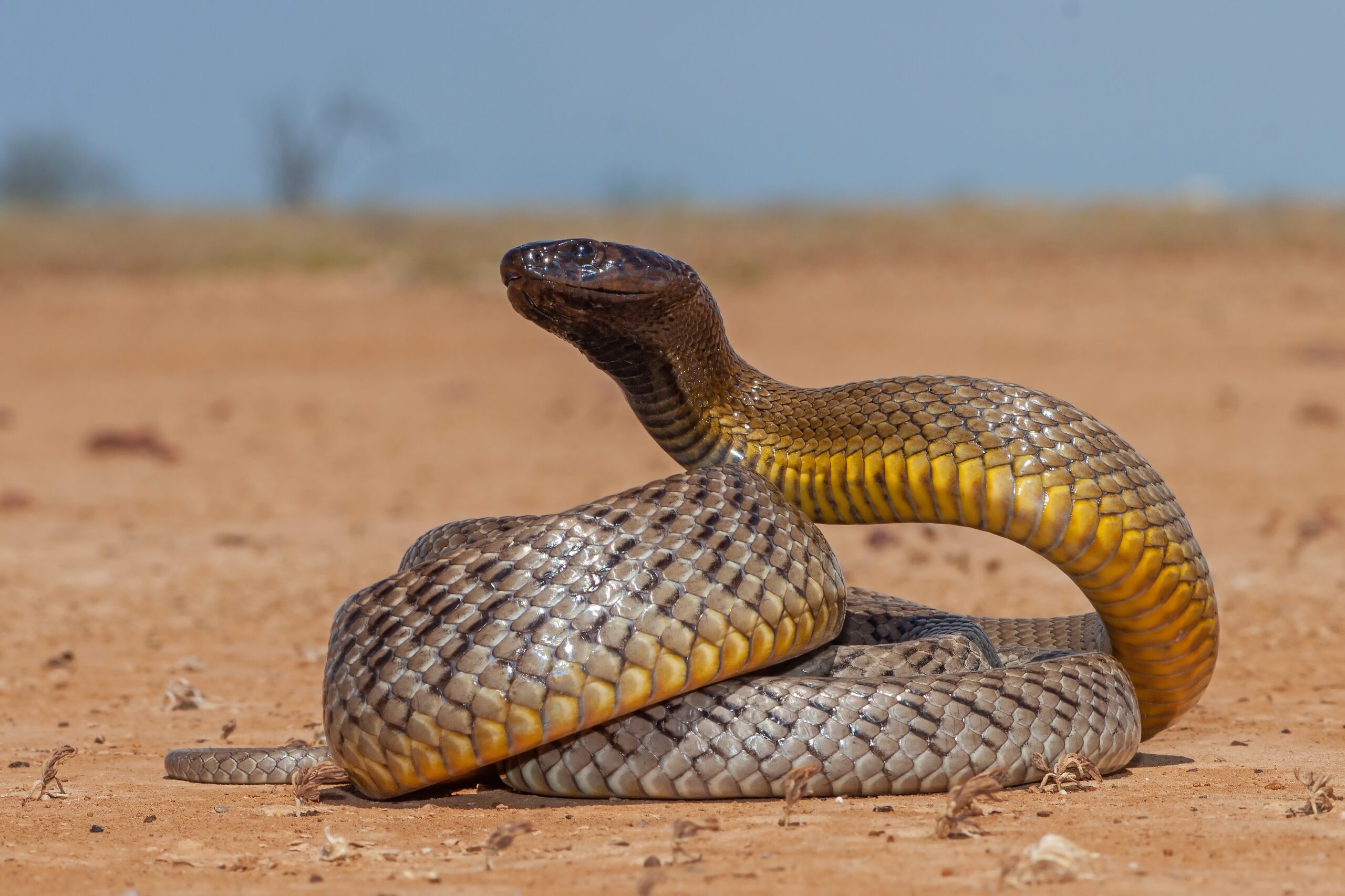
Australia has a reputation for dangerous wildlife, and with good reason. The continent is home to sharks, spiders, and snakes, but also creatures like the box jellyfish, whose tentacles contain thousands of venomous stinging cells, and the blue-lined octopus, one of the most toxic animals on the planet. Even the platypus is venomous, with males delivering venom via spurs on their hind legs.
The abundance of venomous species can be traced back to Australia’s geological history. About 100 million years ago, Australia separated from the supercontinent Gondwana. Many venomous species, such as trap-jaw ants and venomous cephalopods, were already established and simply adapted to the new continent.
Australia’s venomous snakes, however, have a more recent origin. Around 40 million years ago, a single venomous ancestor swam from Asia, giving rise to the 220 snake species present today, 65% of which are venomous. Over time, these snakes diversified, developing potent and highly specific venoms. The inland taipan, for example, has the most toxic venom of any snake in the world.
Despite the dangerous reputation, serious harm to humans is rare. Most injuries occur among farmers or people who deliberately handle or provoke these animals.
