


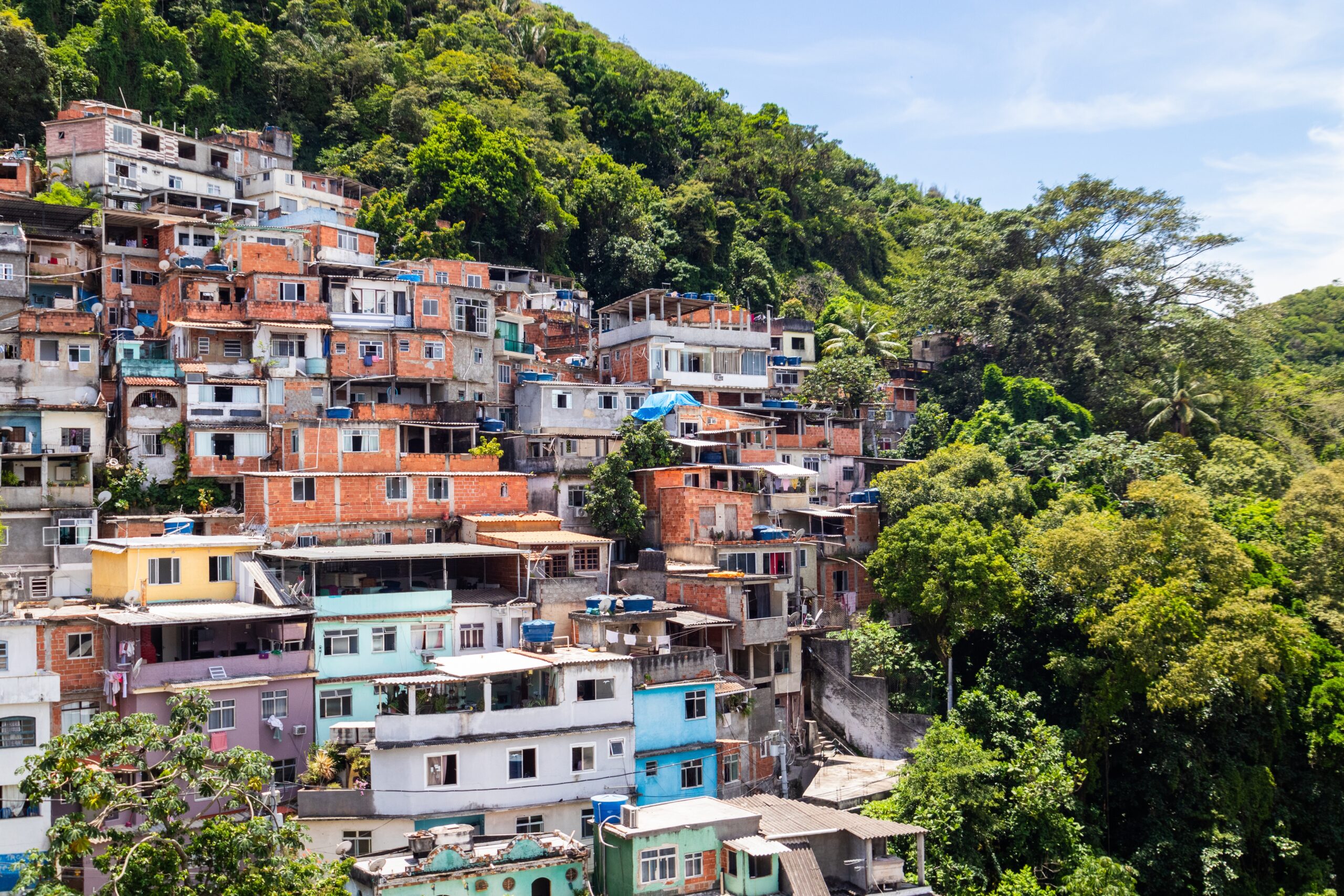
In Brazil’s crowded favelas, green space is a rare luxury, but Vila Nova Esperança in São Paulo proves that sustainable initiatives can enrich residents’ lives.
“You have to remove the seeds before they flower,” says Maria de Lourdes Andrade Silva, carefully pinching buds off a basil plant. She tends a vibrant community garden at the edge of the favela, a labour of love spanning over a decade. “If you leave it to flower, it will use all its energy and die,” she adds.
When I visited this half-hectare garden in 2022, it was full of herbs, vegetables, and vibrant life. Before Silva’s intervention, the area had been a dumping ground for rubbish and debris.
Originally from Itaberaba, Bahia, Silva moved to the favela in 2003, never having lived in one before. Favelas house more than 8% of Brazil’s population and often grow on unstable land without formal infrastructure. This leaves communities vulnerable to landslides, flooding, and limited access to sanitation.
Taking Action Against Eviction
In 2006, Silva, then a florist, learned authorities planned to remove favela families. The settlement sits near an environmental protection zone, and officials cited its litter and poor sanitation as a threat to the surrounding ecosystem. Their plan included eviction, restoration, and reforestation of the area, affecting 600 families.
“I thought, ‘I have to do something to protect my home and everyone else’s,'” Silva recalls. She led a community cleanup to prove residents could positively impact their environment.
Silva now guides visitors through the garden, ducking under passionfruit vines and past neat rows of seedlings. “The community was completely full of rubbish,” she says. City waste collection did not reach this informal settlement, so in 2006 she organized regular cleanup drives and built a waste bin shelter for the favela.
Residents often degrade their surroundings not out of neglect, Silva explains, but due to lack of access to waste services. In 2013, she rallied over 200 residents at a meeting to start a community garden for environmental education.
Growing Community Through Green Space
Cícera Maria Lino, a long-time resident, joined Silva’s efforts. “It was a big fight against eviction, but Lia gave us the energy to keep going,” she says. Some residents initially opposed the garden, preferring new houses or selling land for income. After a community vote, most supported the project.
Silva started with only a handful of volunteers. “I had no idea it would snowball this far,” she admits. The community reached out to NGOs and universities to build sustainable practices. Batista Santos, a security guard, joined in 2020 during the pandemic and credits the garden with changing his life. Today, he serves as vice president of the resident association, while Silva remains president.
Scarce Space and Rising Population
Favelas rarely have green spaces. Between 2010 and 2022, nearly five million people moved into Brazilian slums due to urbanization, low wages, and lack of affordable housing. Population density in São Paulo favelas is four times that of formal urban areas.
Alexandra Aguiar Pedro, an urban planner, explains that informal expansion leaves little room for vacant spaces. A 2016 study found 84% of favela homes have no surrounding open space. Recreational areas are mostly limited to soccer fields. Wolfgang Wende, a German researcher, emphasizes that residents must feel ownership over green areas to protect them from expansion.
A Prize-Winning Transformation
The Brazilian government’s “favela upgrading” program aims to formalize settlements and provide infrastructure. Critics argue top-down efforts often fail to address poverty. Silva credits the garden’s success to full community involvement. “People need a voice,” she says.
The project won the 2014 Milton Santos Prize for social development. It brought formal water, sewer, electricity connections, and paved roads. However, eviction threats persisted. Armed men attempted forced removals in 2011, and although some families left, most residents stayed. A 2012 court ruling allowed them to remain.
The garden became a source of fresh vegetables, fruits, and herbs, available to volunteers or sold at affordable prices. Theresa Williamson, an urban planner, highlights the role of such gardens in achieving food sovereignty.
Expanding Green Initiatives
The community built a sustainable library using recycled materials and wattle-and-daub techniques from Brazil’s northeast. A community kitchen opened in 2018, teaching residents to prepare non-conventional edible plants, or “pancs,” which are highly nutritious and easy to grow in small spaces.
The kitchen also fosters entrepreneurship, with residents selling cakes and “marmitas,” providing both income and food security. Silva emphasizes the health benefits of medicinal plants grown in the garden. Government programs now offer employment in urban agriculture, and the kitchen serves over 200 families daily. Workshops in sewing and crochet help women gain new skills and economic independence.
Women-Led Community and Lasting Impact
Women lead most volunteer efforts in the garden and kitchen, creating safe spaces and fostering social cohesion. Volunteers report improved mental and physical health. In 2018, Silva established the Lia Esperança Institute to share the community’s lessons with other favelas, schools, and universities across Brazil.
Despite the 2012 ruling, eviction fears remain. Families continue to leave under pressure, and residents live with constant insecurity. Public agencies and housing authorities are involved in negotiations, but environmental regulations limit new occupation.
Lino believes the garden secured the community’s survival. “If it wasn’t for the garden, they would have removed us,” she says. Silva reflects on the power of collective effort. “I can’t do it alone,” she concludes.
